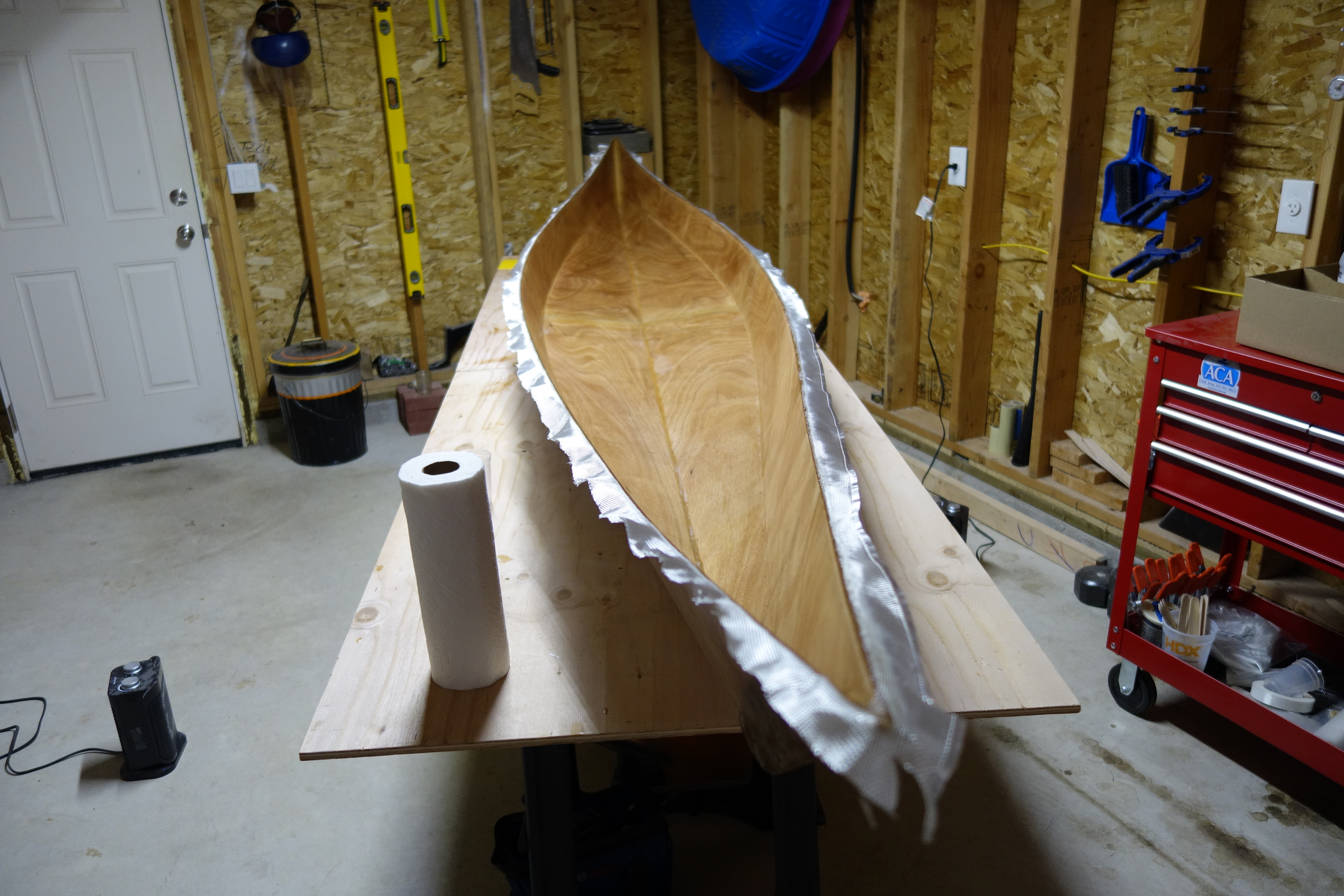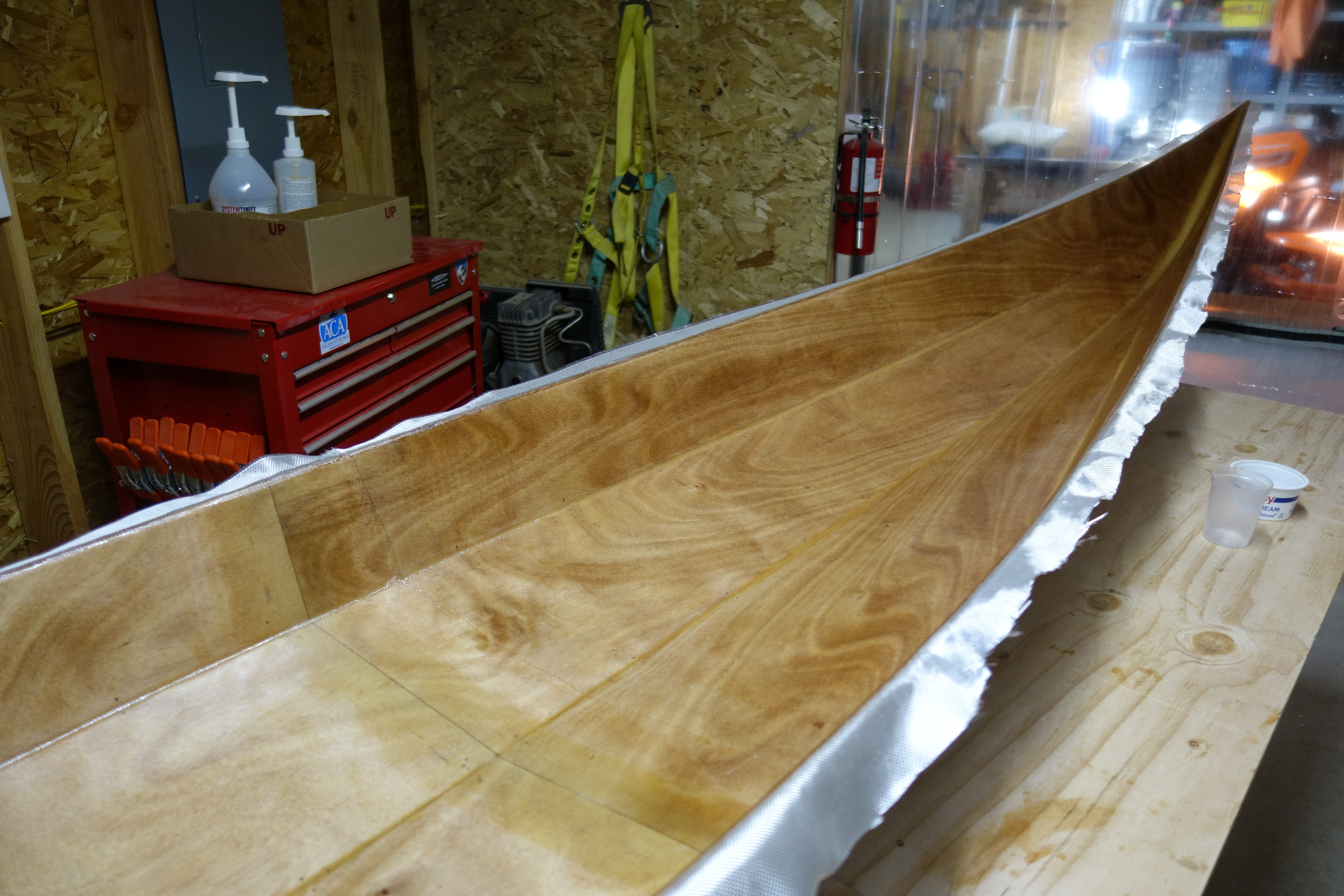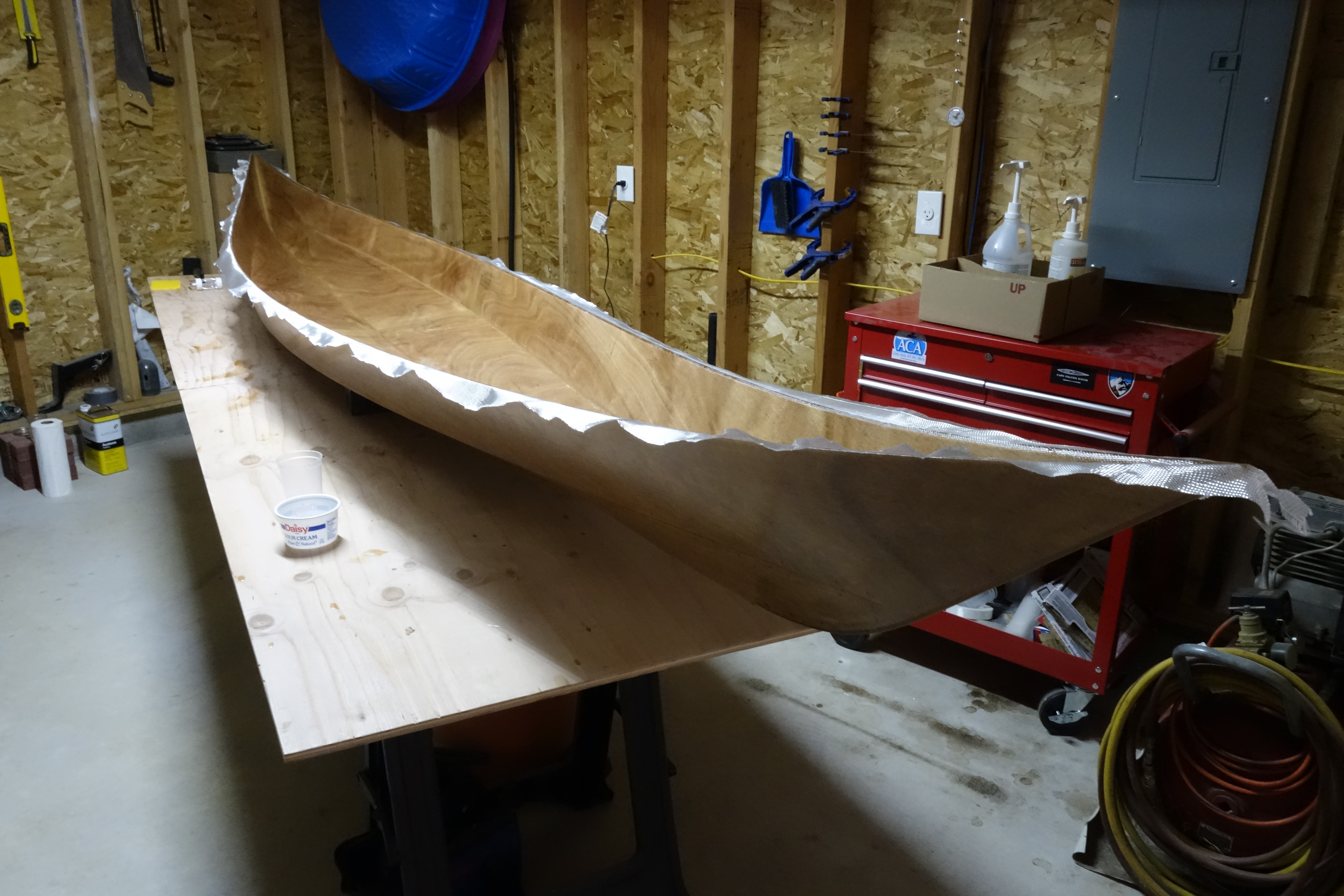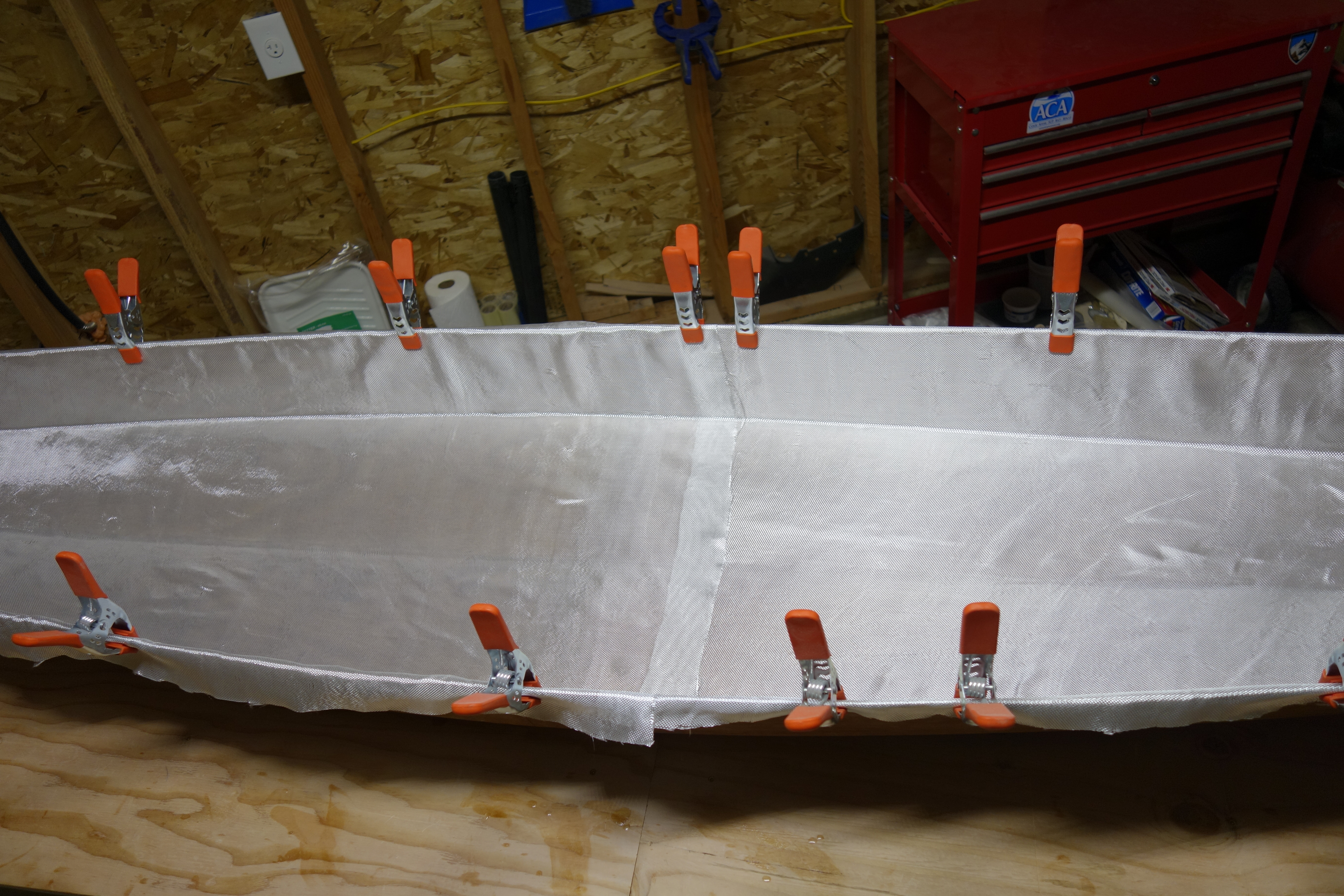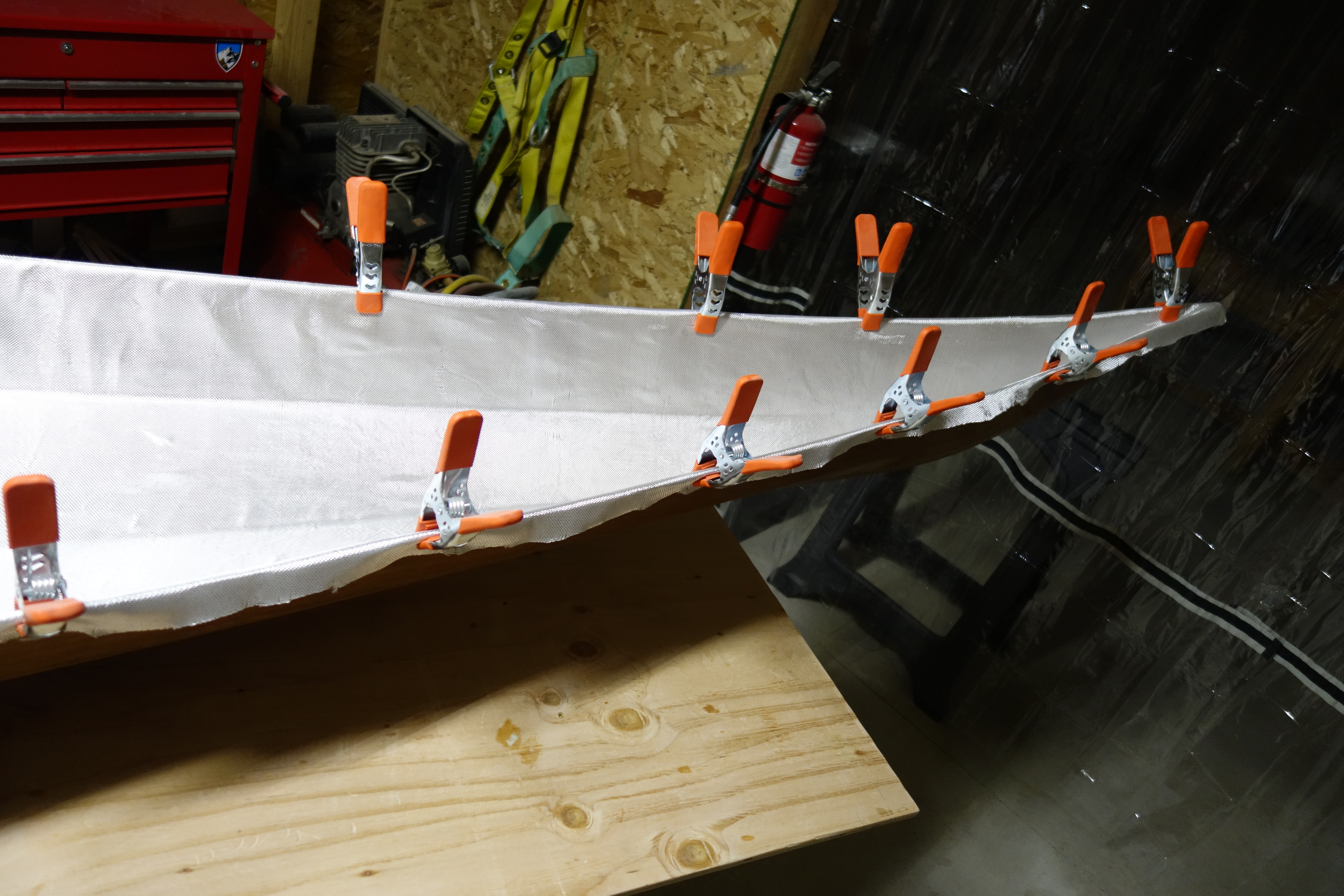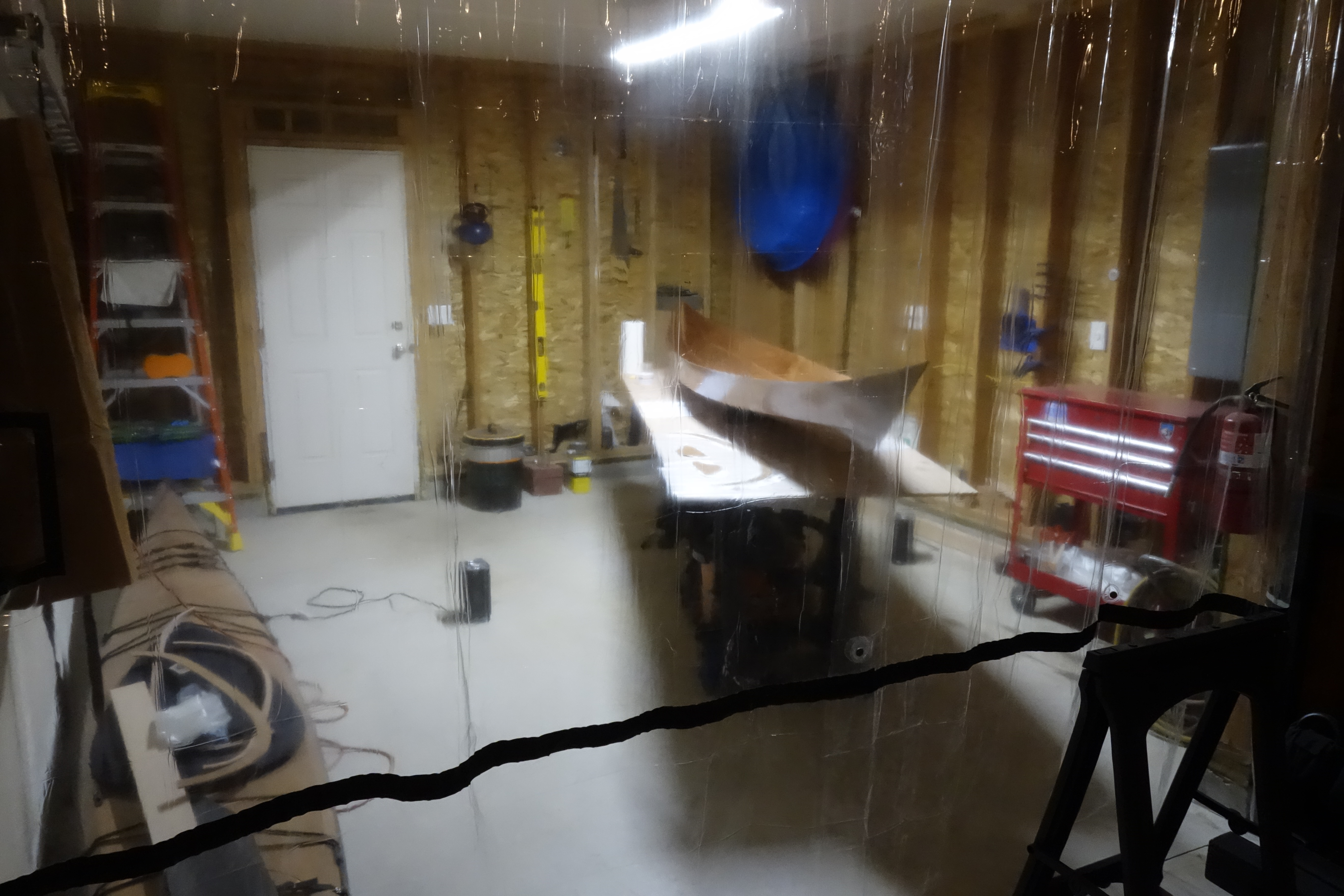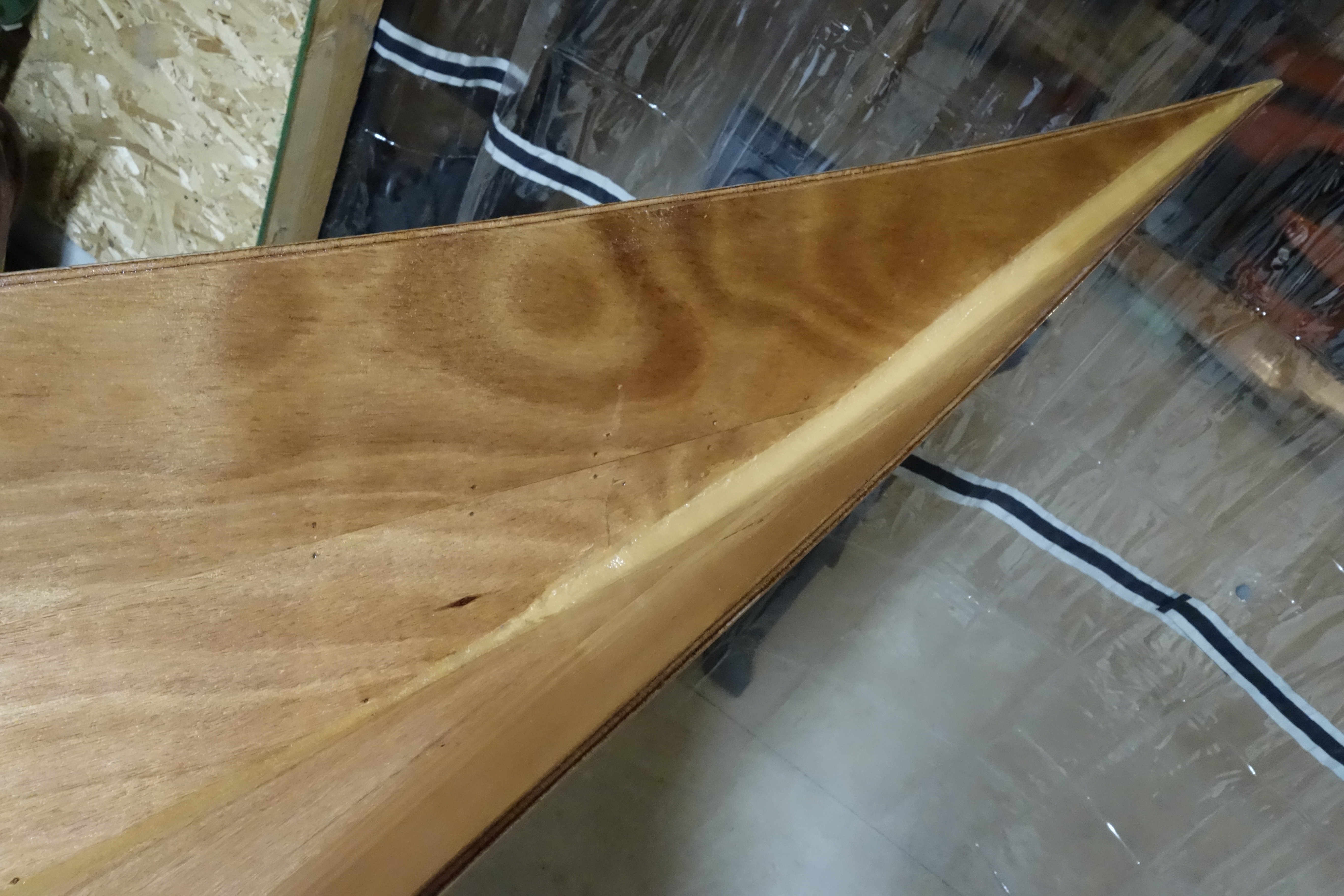
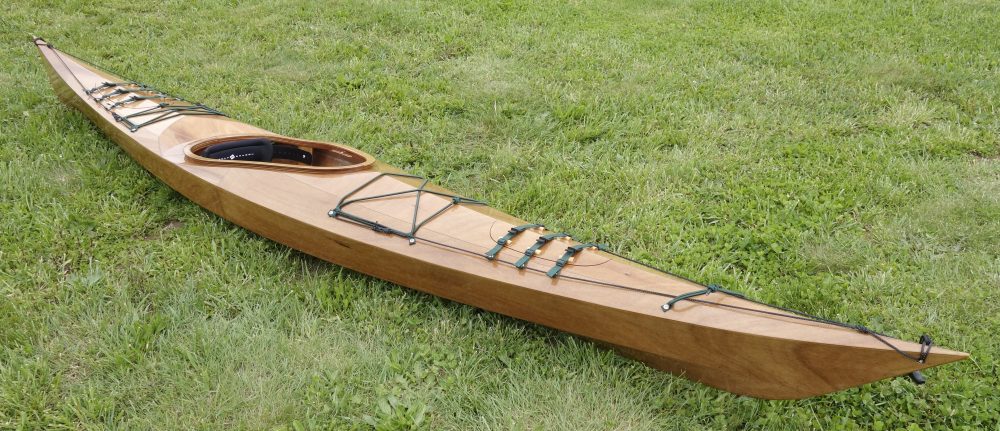
Now that the kayak is one piece, the shop gets re-organized.

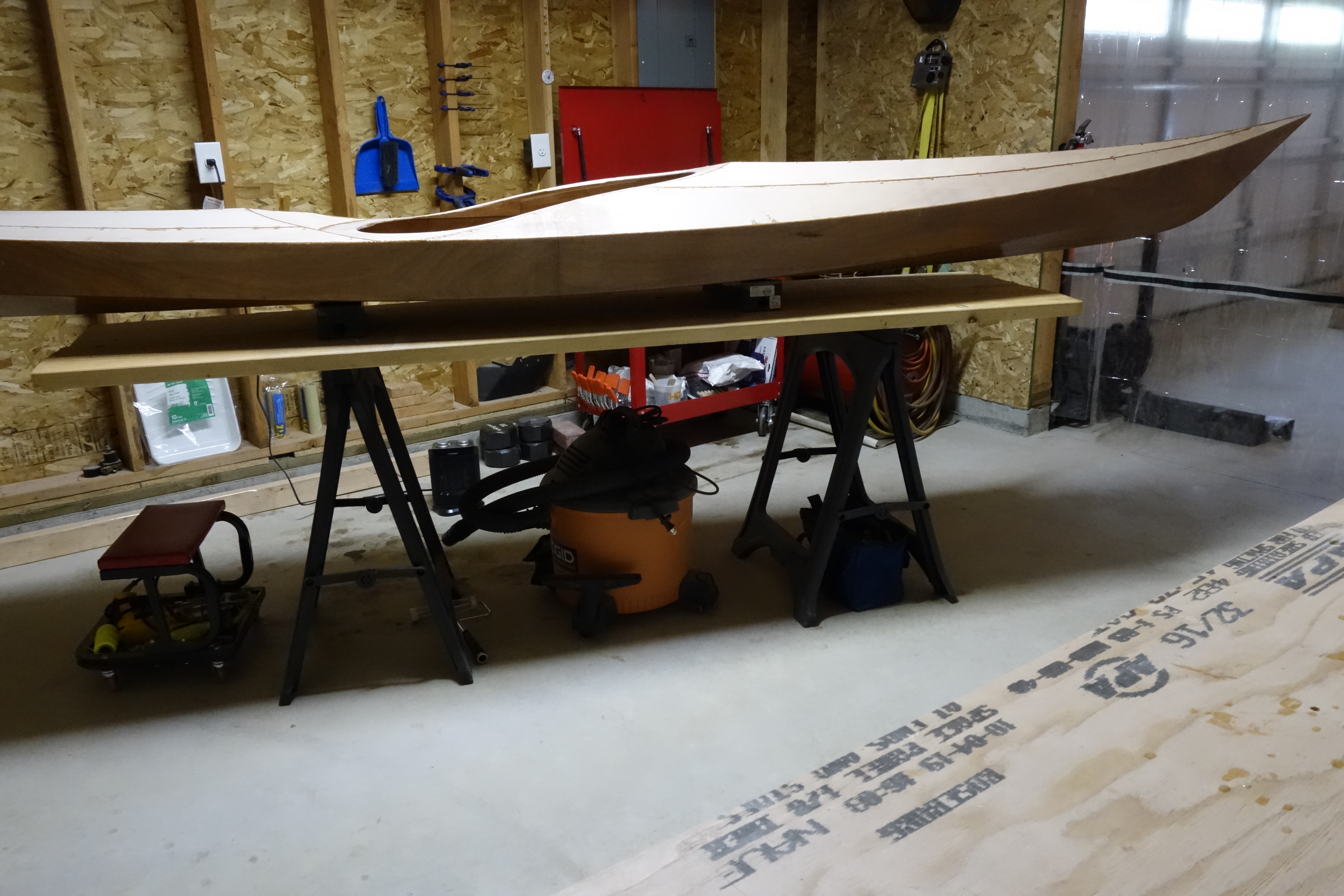
Through the curtain again. The table under the kayak has been disassembled and only the 2 X 12s remain, which will make finishing the kayak easier.
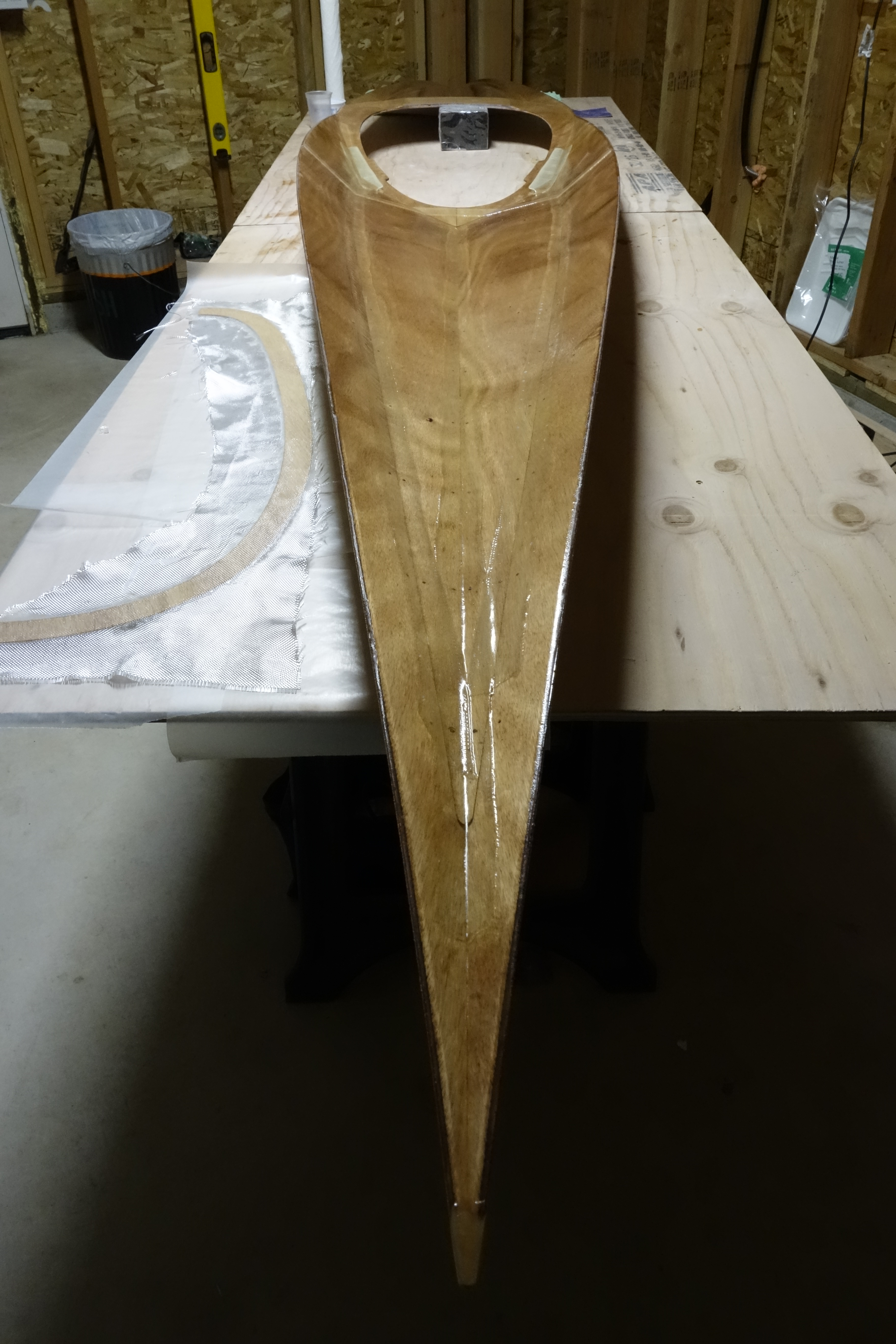
One of the plywood pieces from under the kayak is now being used as a table to finish fiberglassing the small parts like the bulkheads and cockpit coaming pieces, etc.
Ready for sanding prior to fiberglassing.

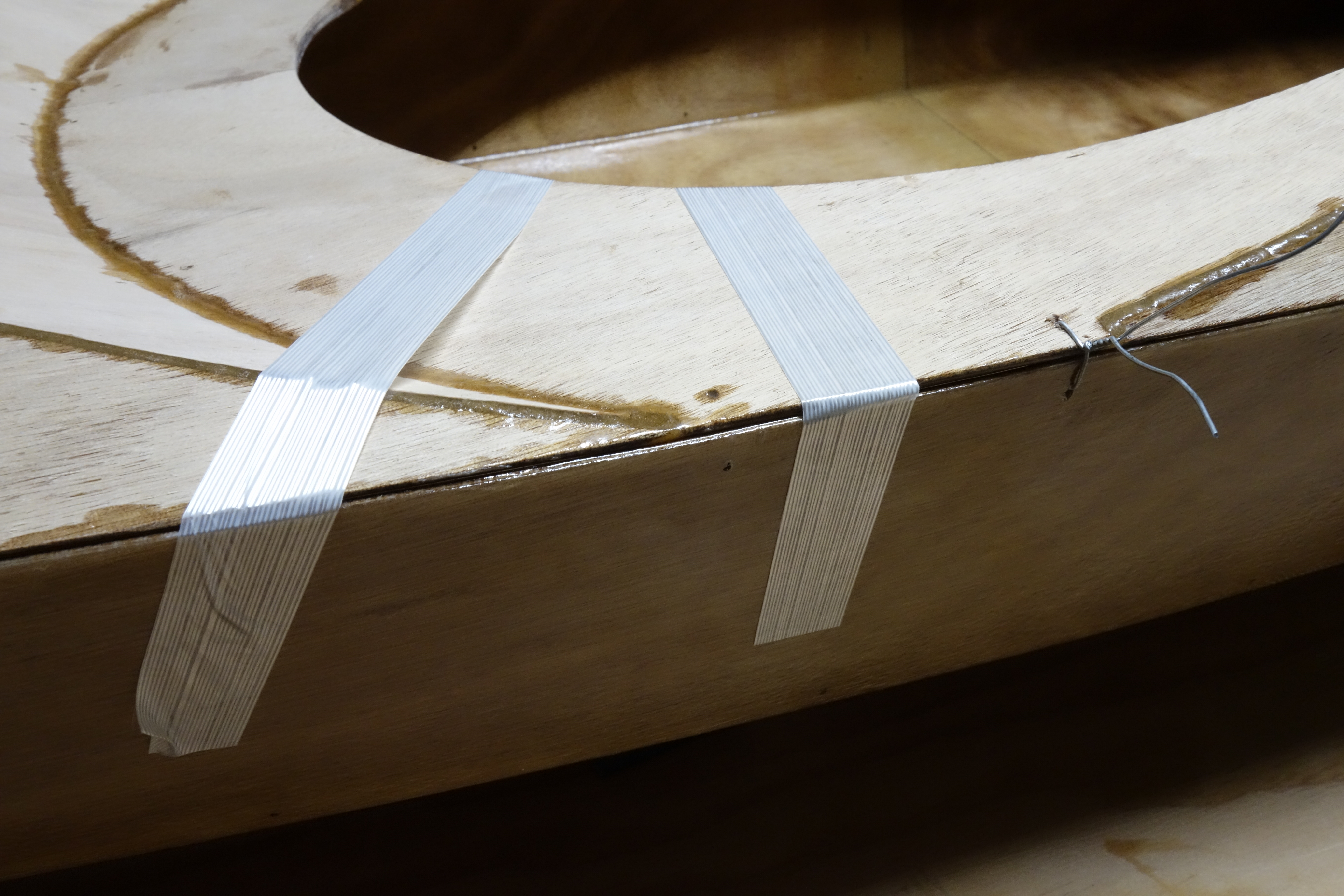
Gluing the deck to the hull.

Major milestone. Gluing the deck to the hull! The kayak will be one piece by the end of the day.
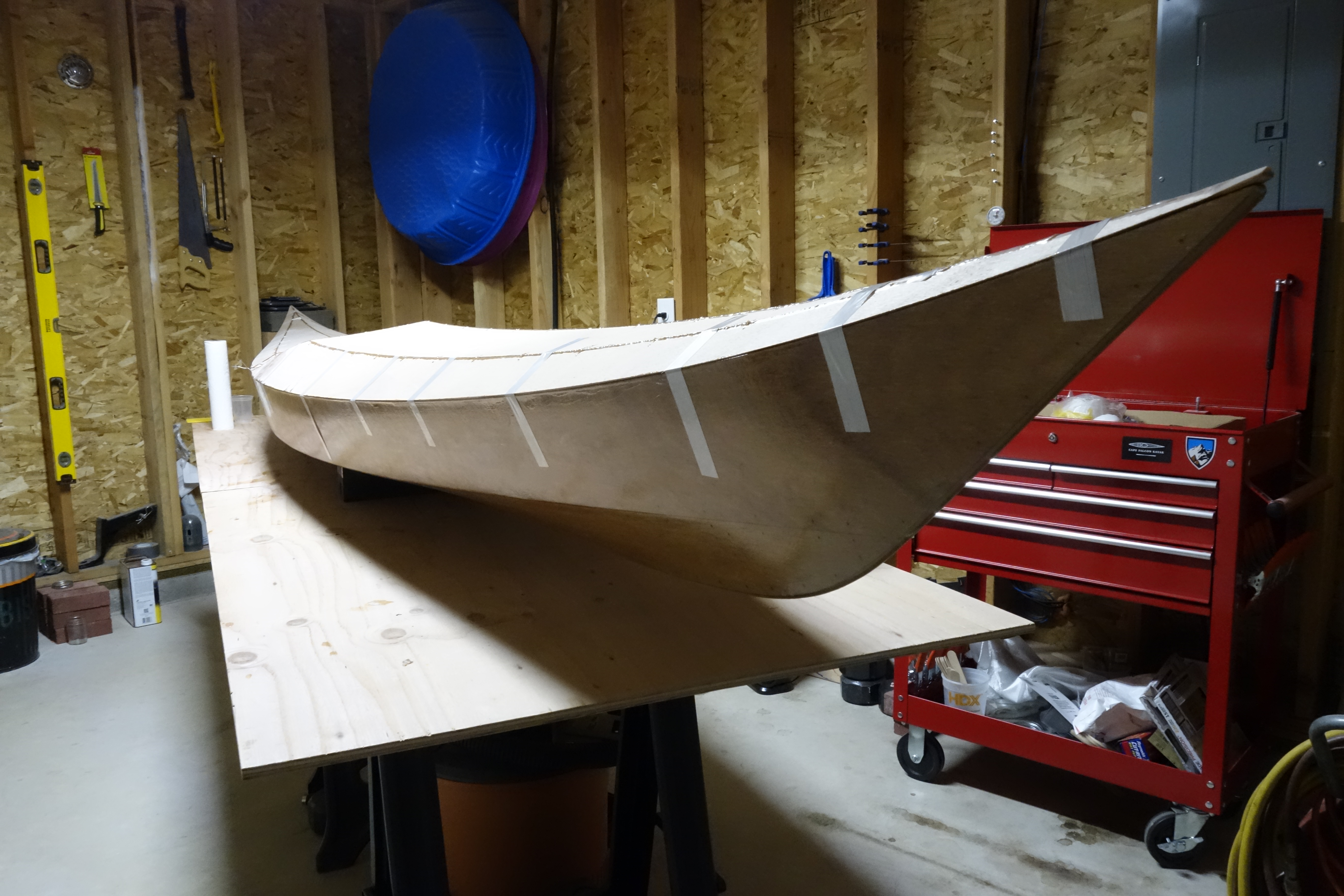
Deck taped and wired (where necessary) to the hull and ready for epoxy.
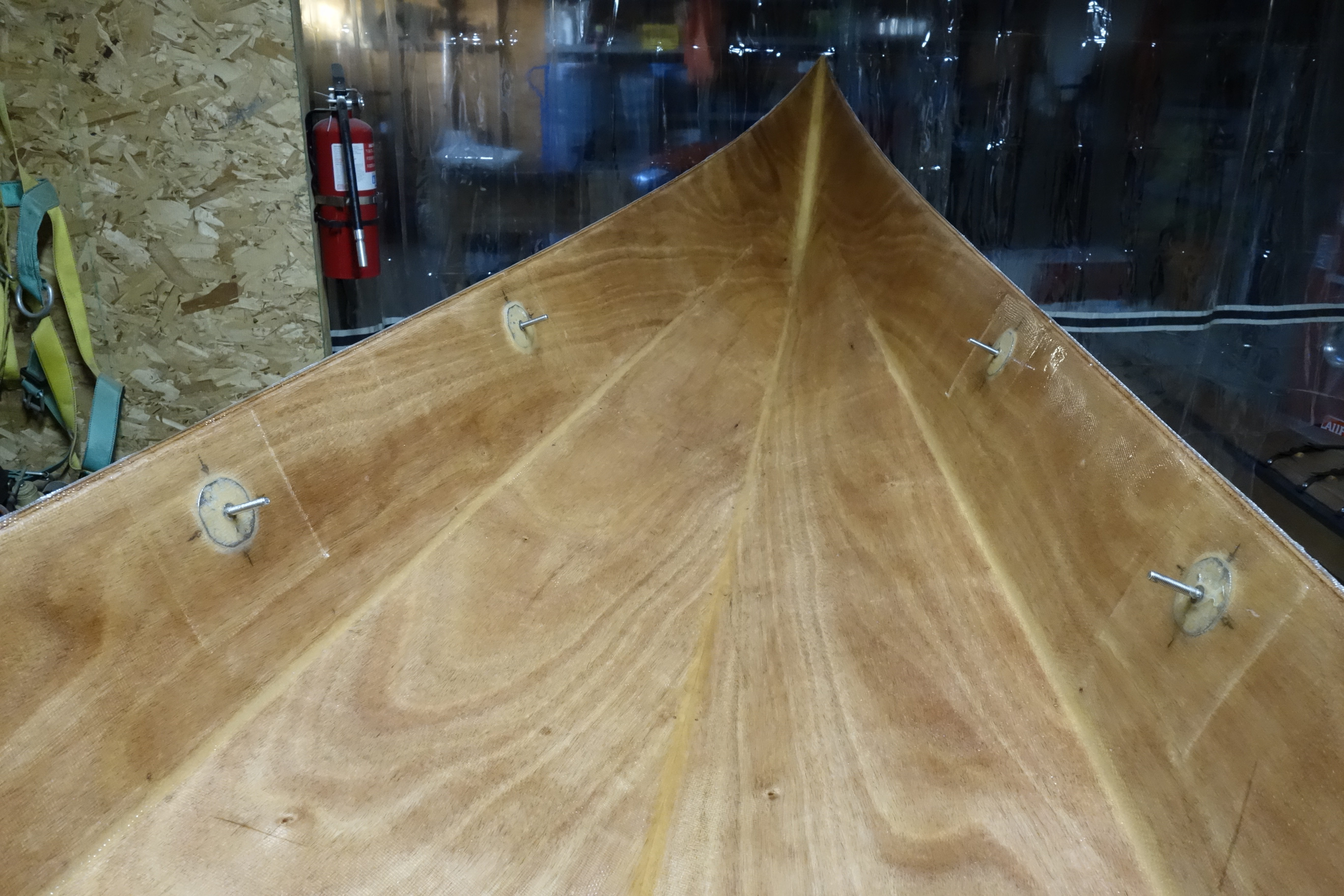
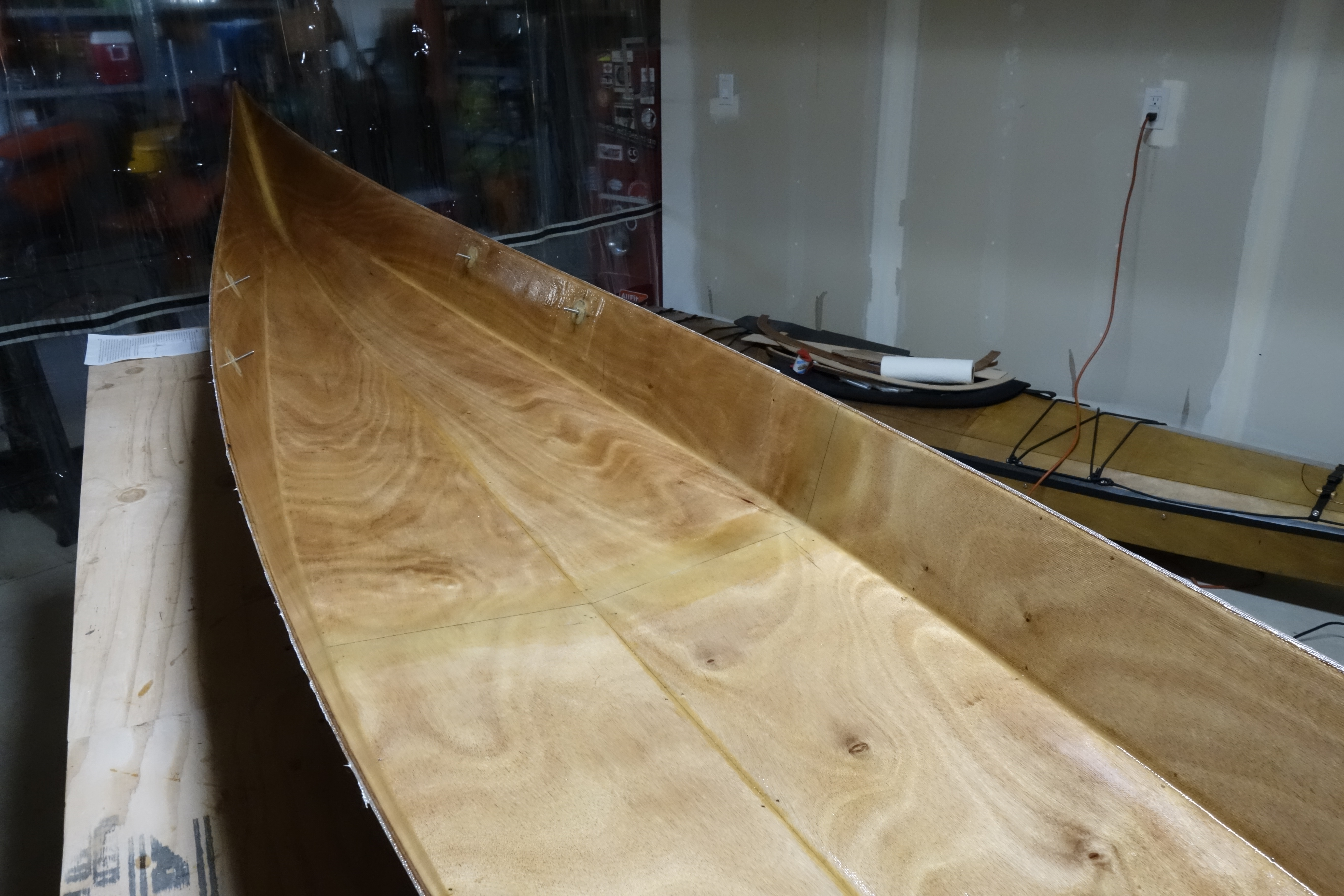
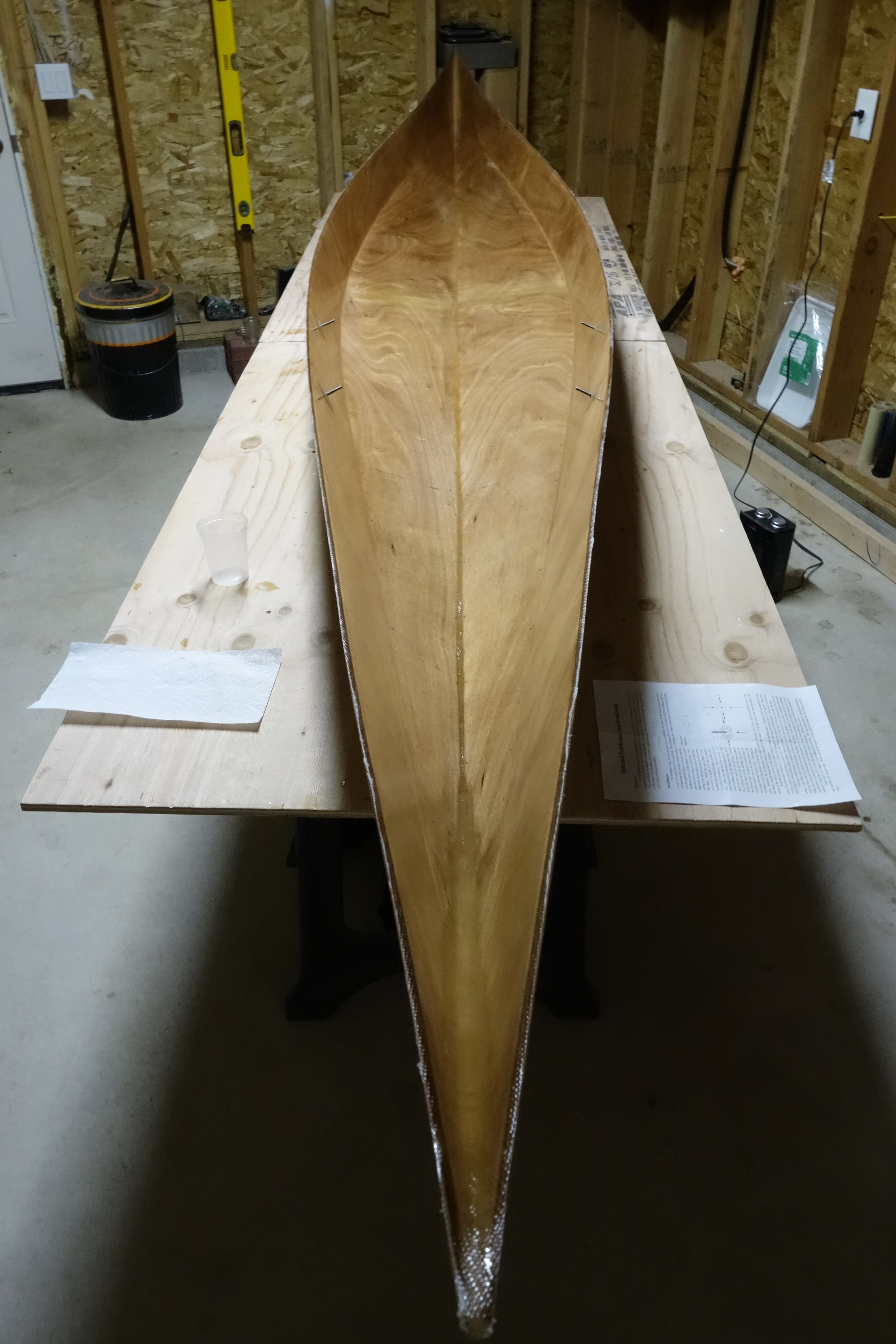
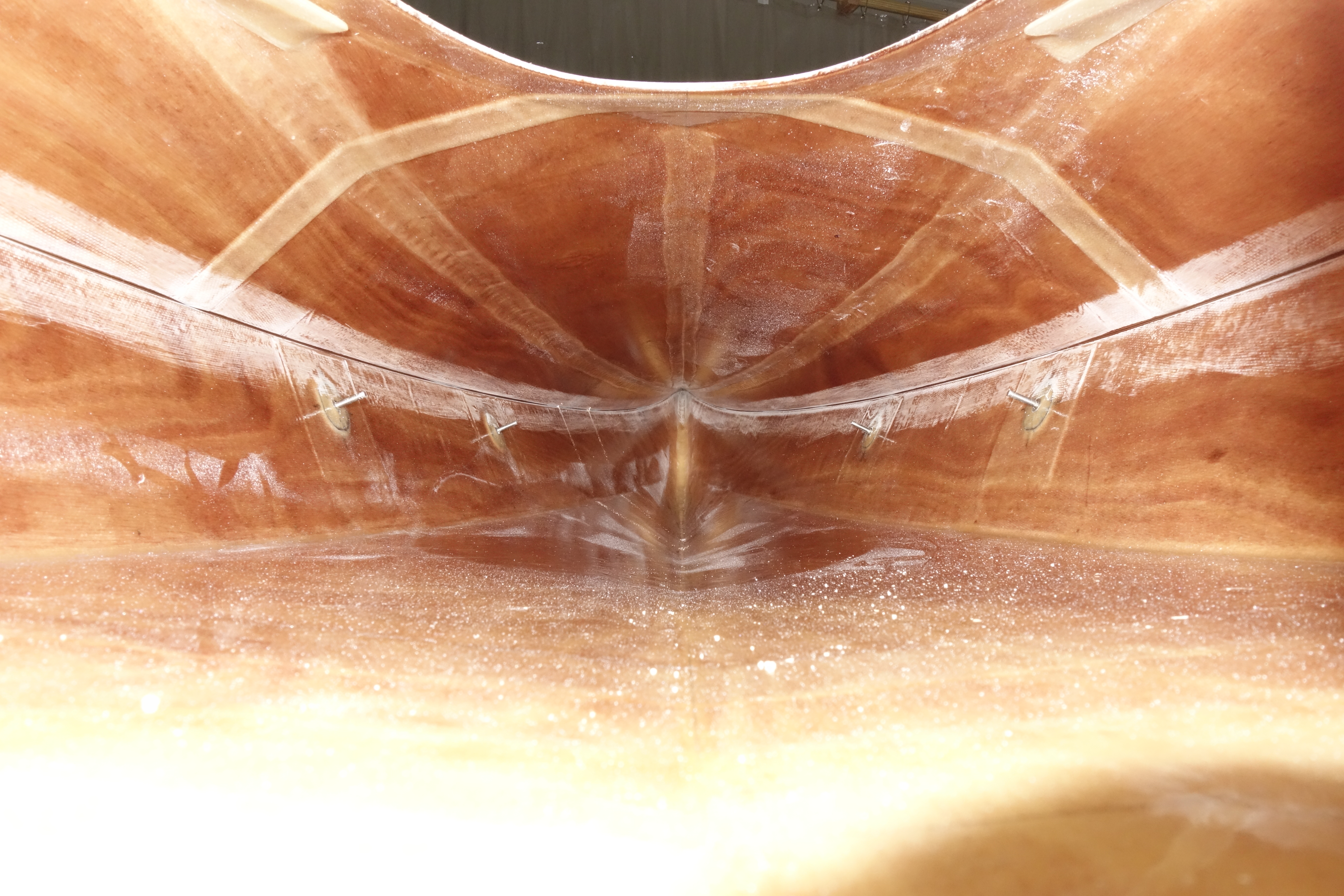
Inside of the kayak looking forward. Shear seam on the hull and deck, and the bow and stern ends are sanded so that when the seams are epoxied and taped with fiberglass, and the end pours are done the epoxy will bond well.
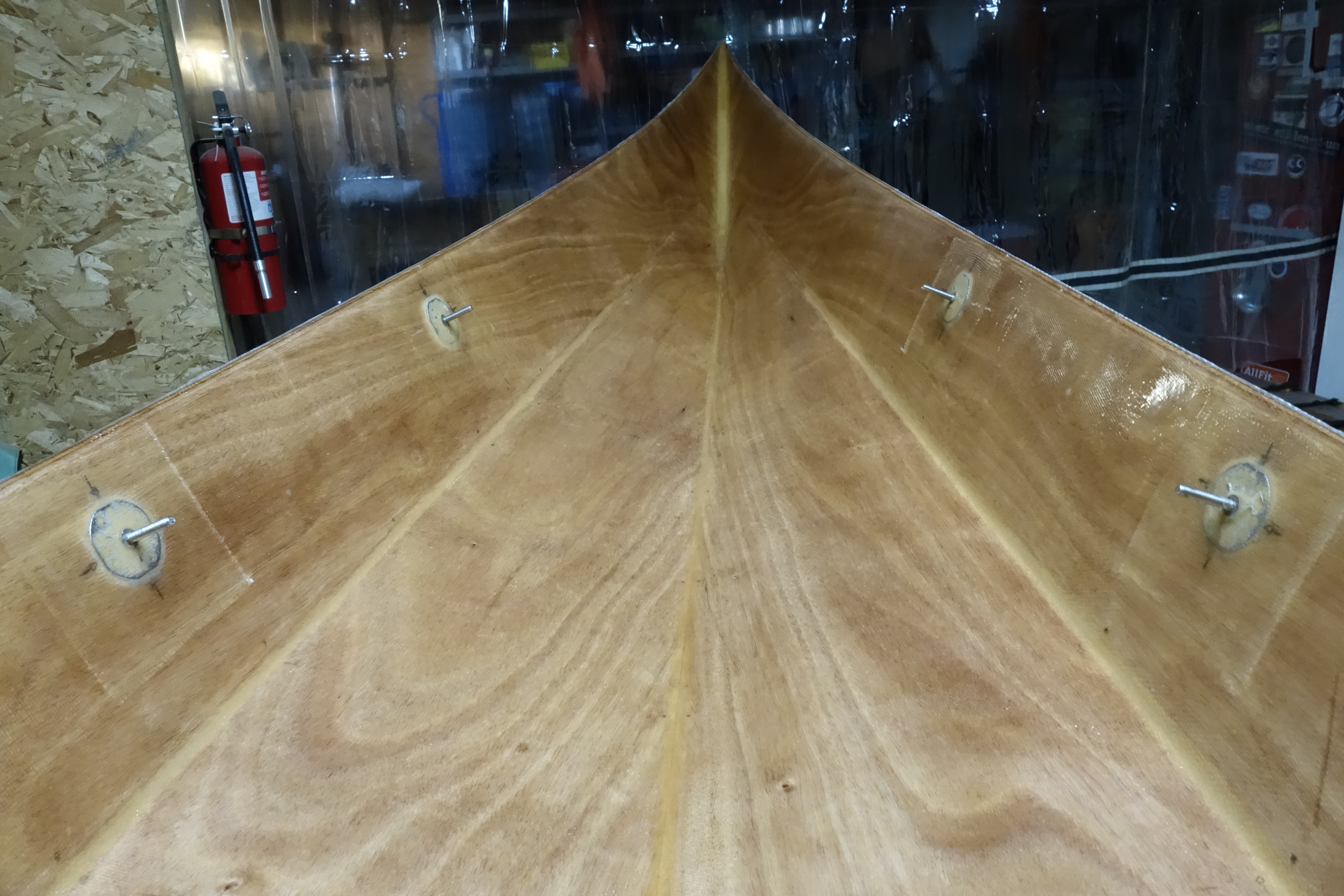
Inside of kayak looking aft.
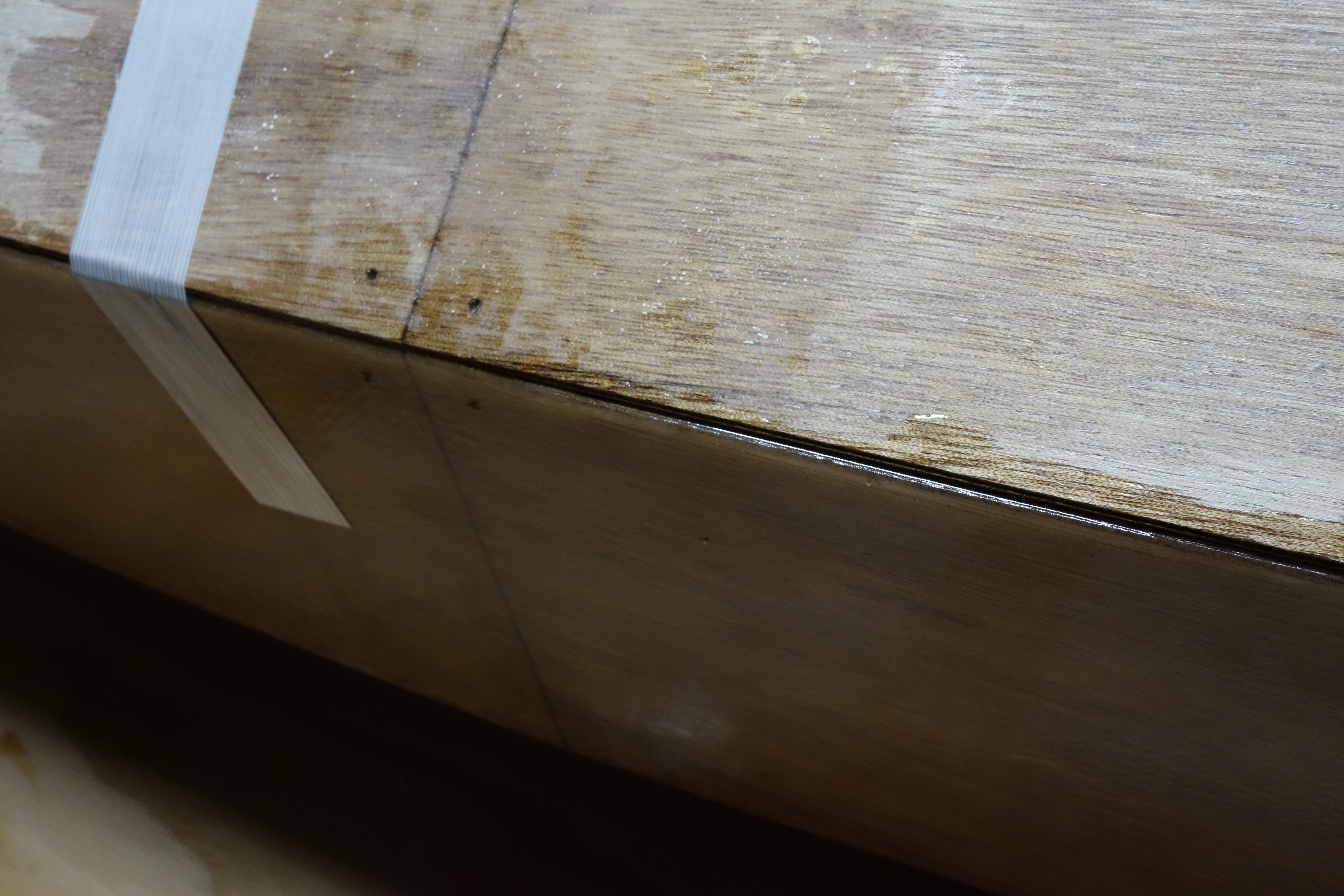
Shear seam glued. I will come back with epoxy thickened with wood flour and fill the low spots and places where tape is in the way.

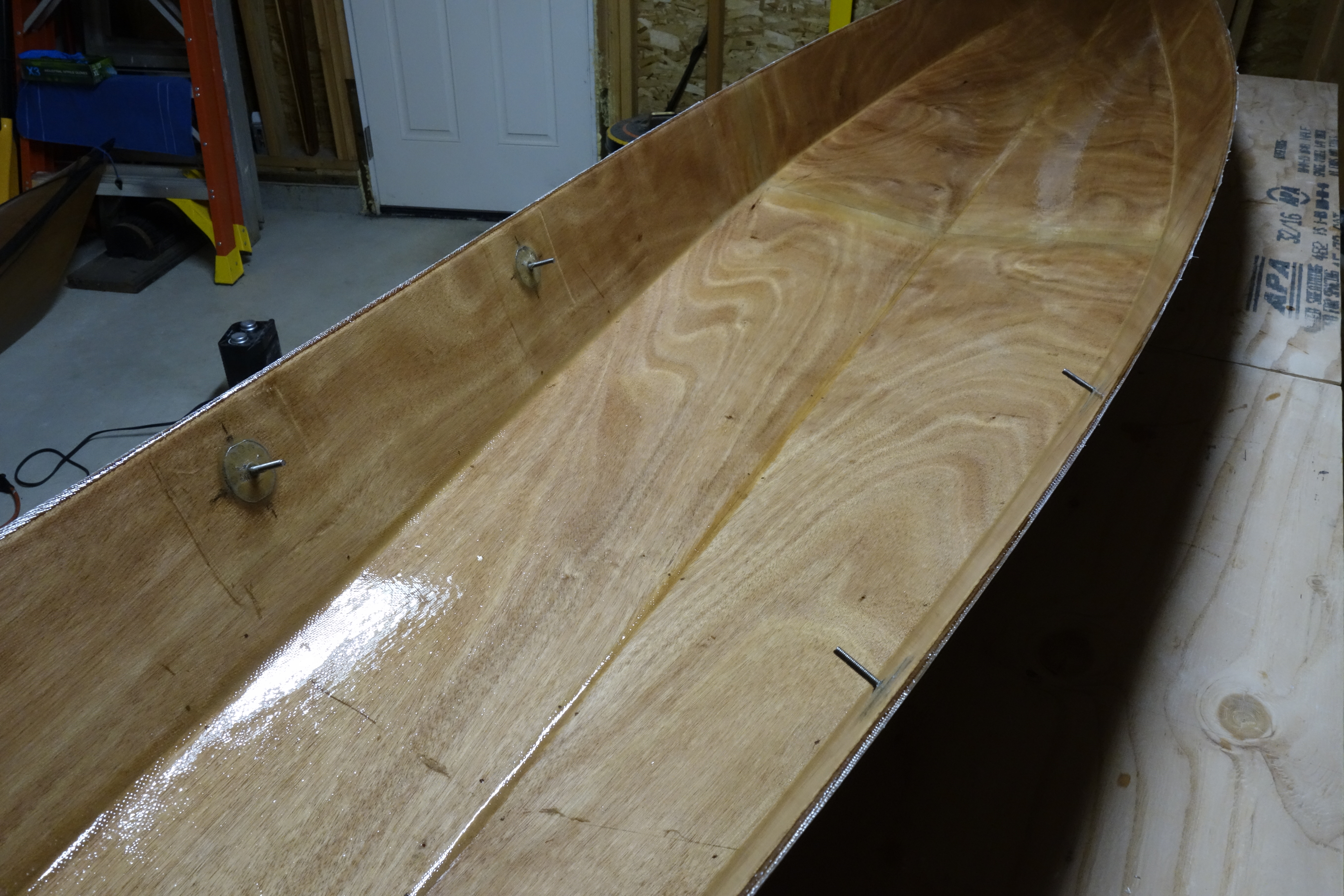
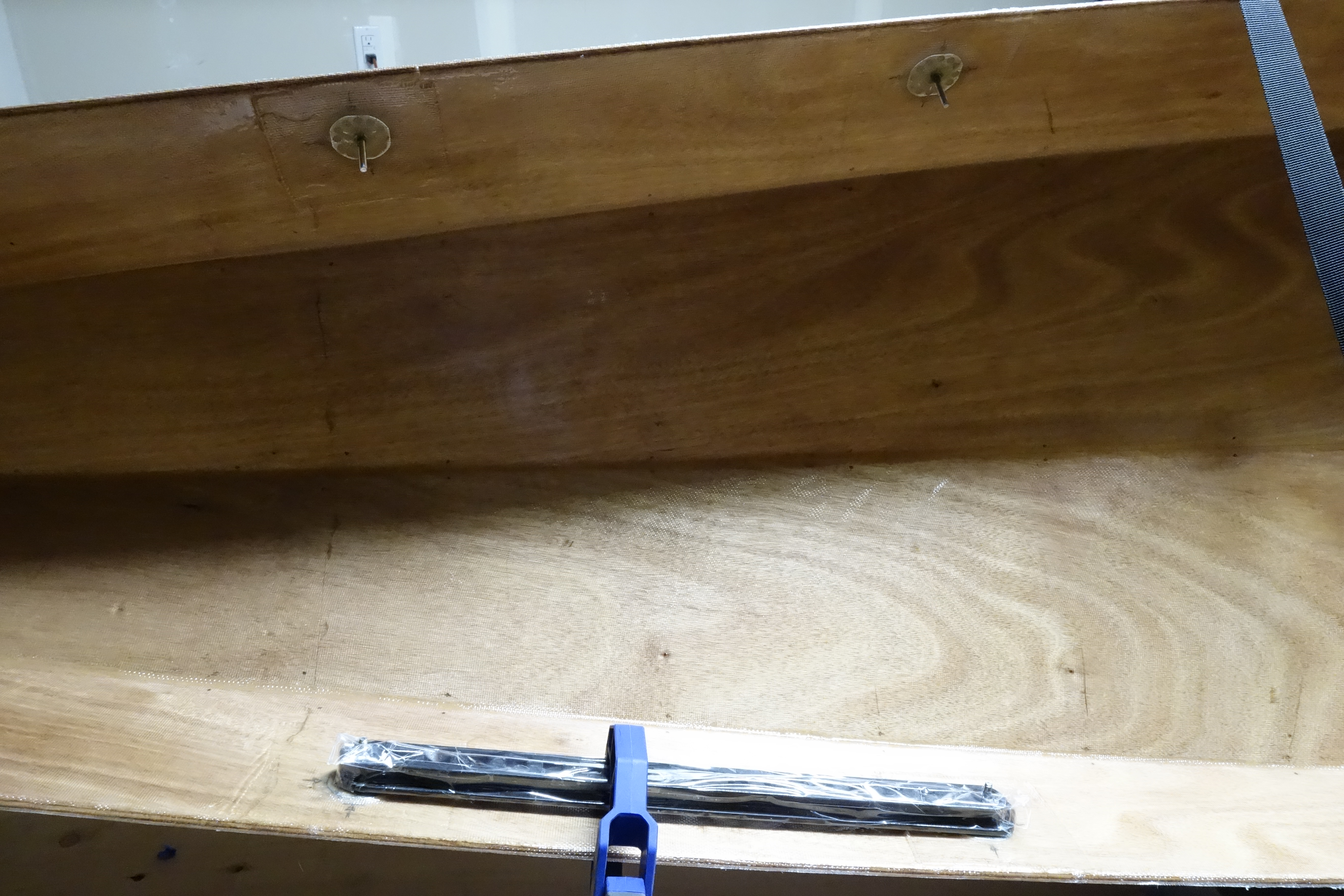
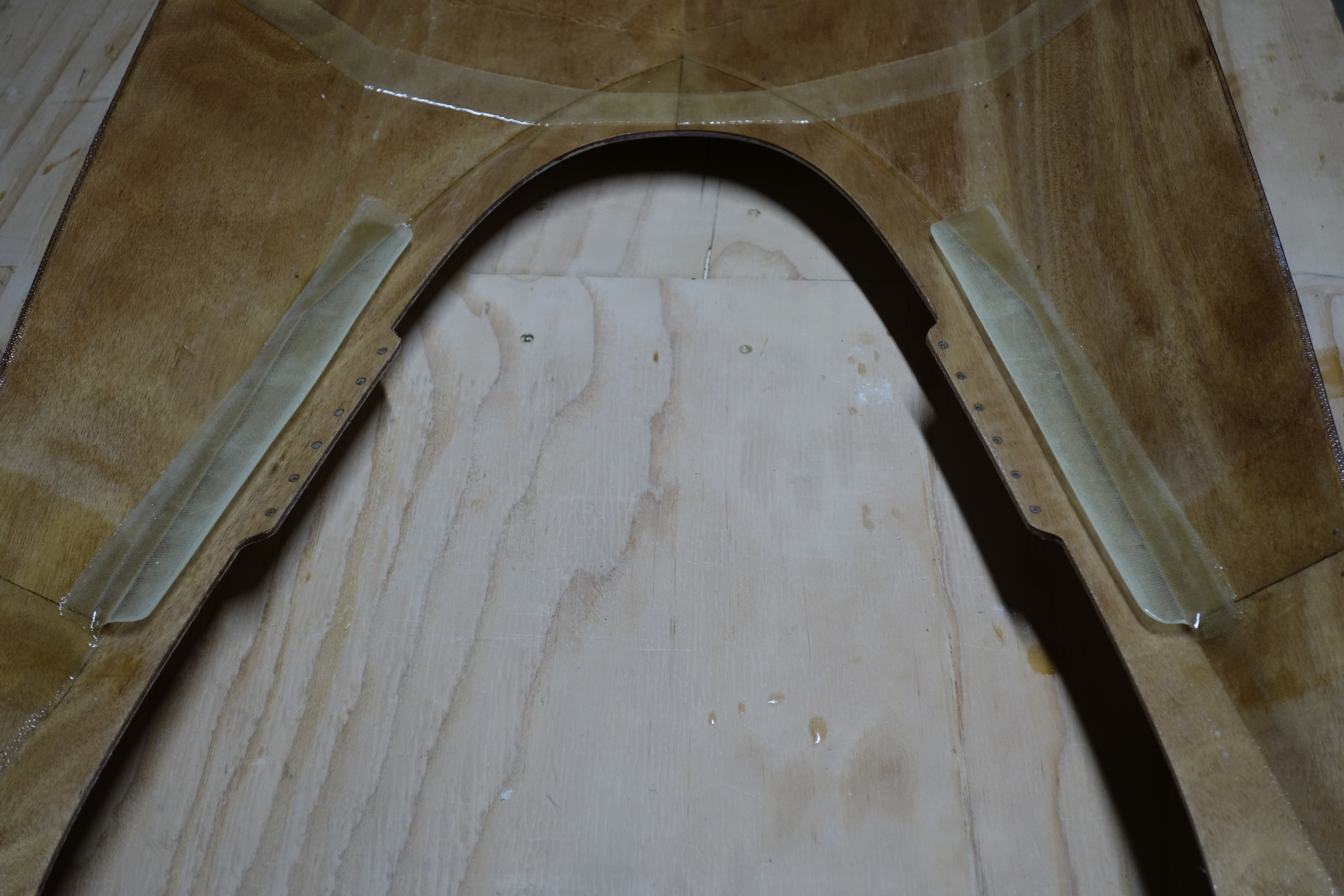
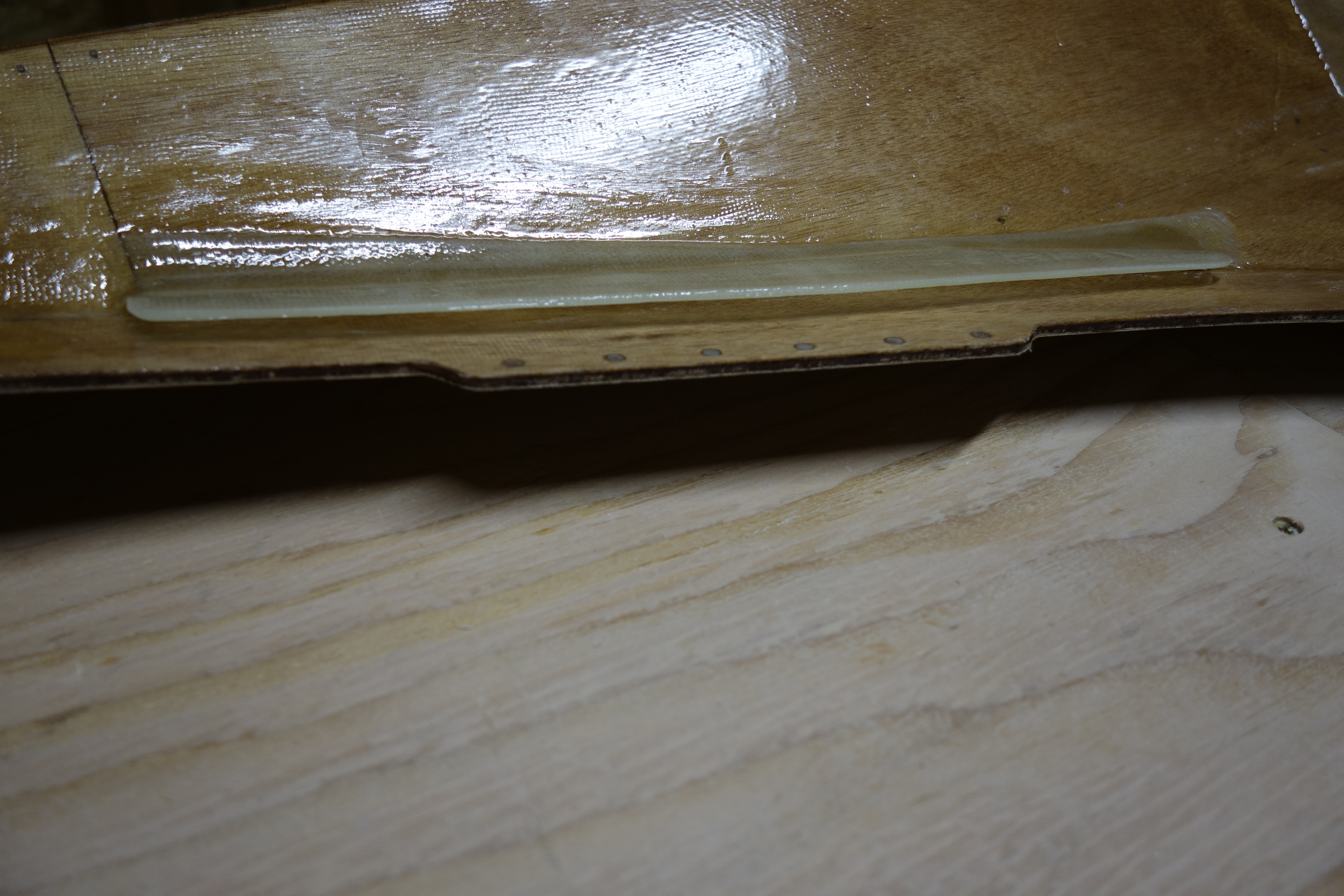
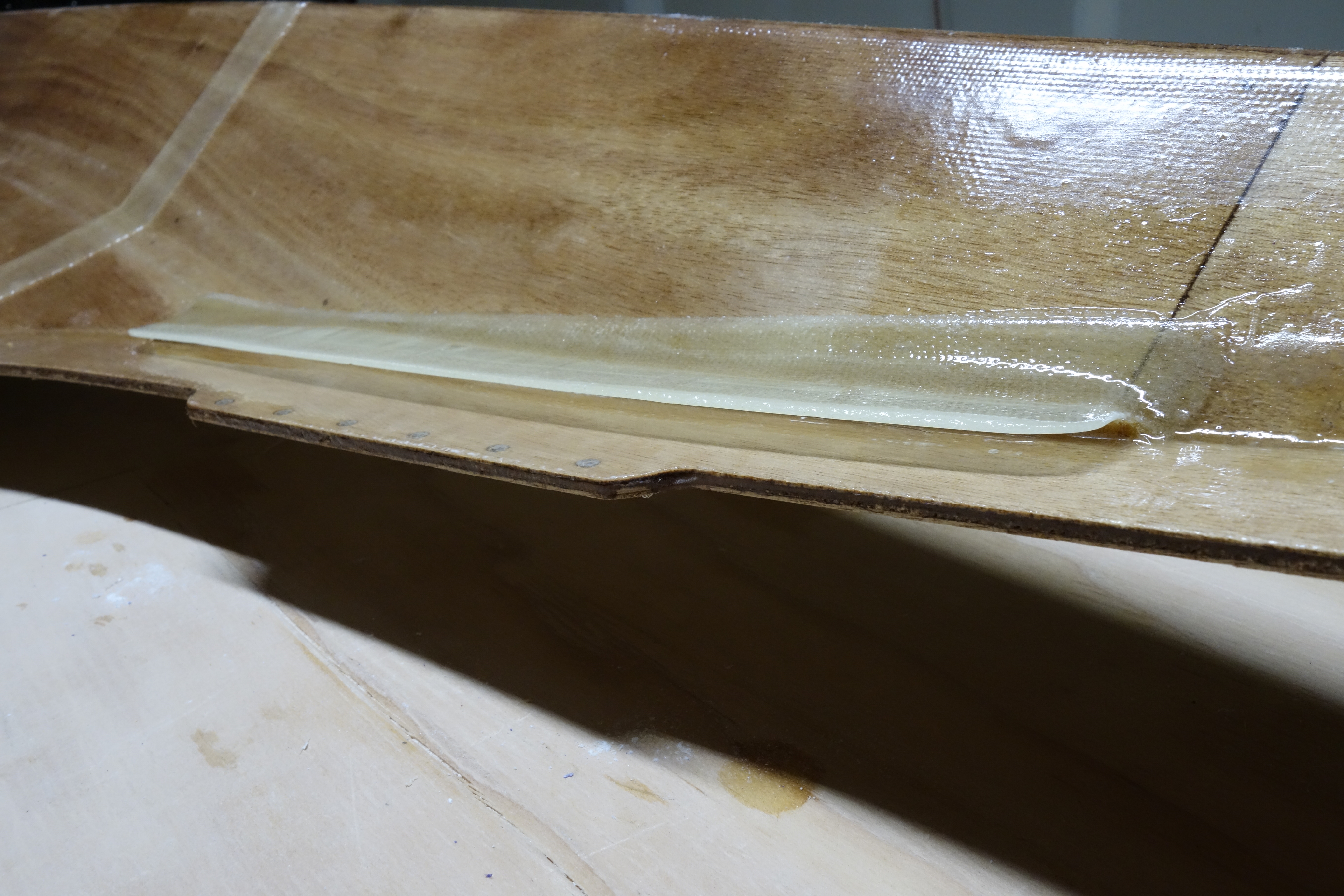
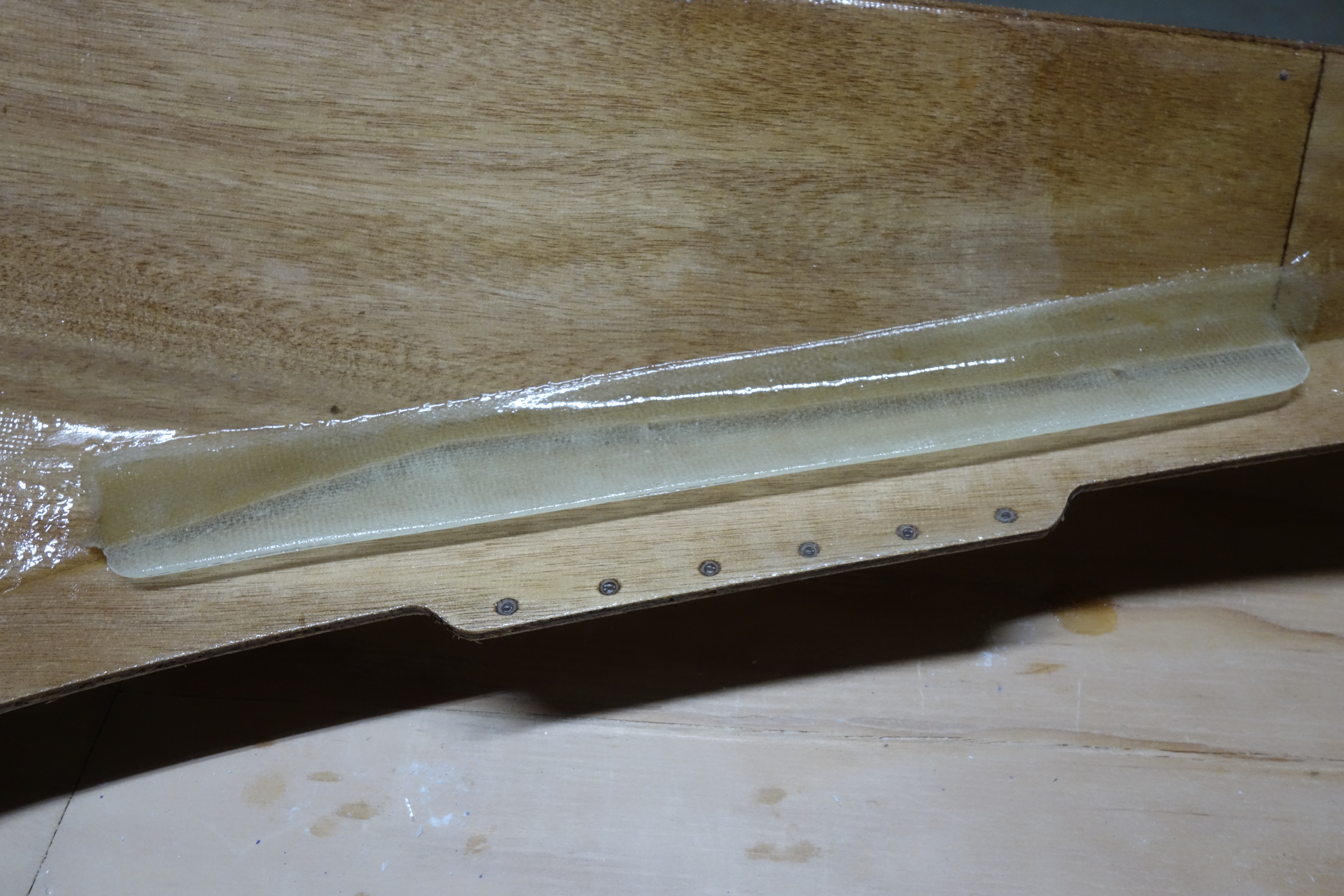
Installation of internal foot brace studs, day one.

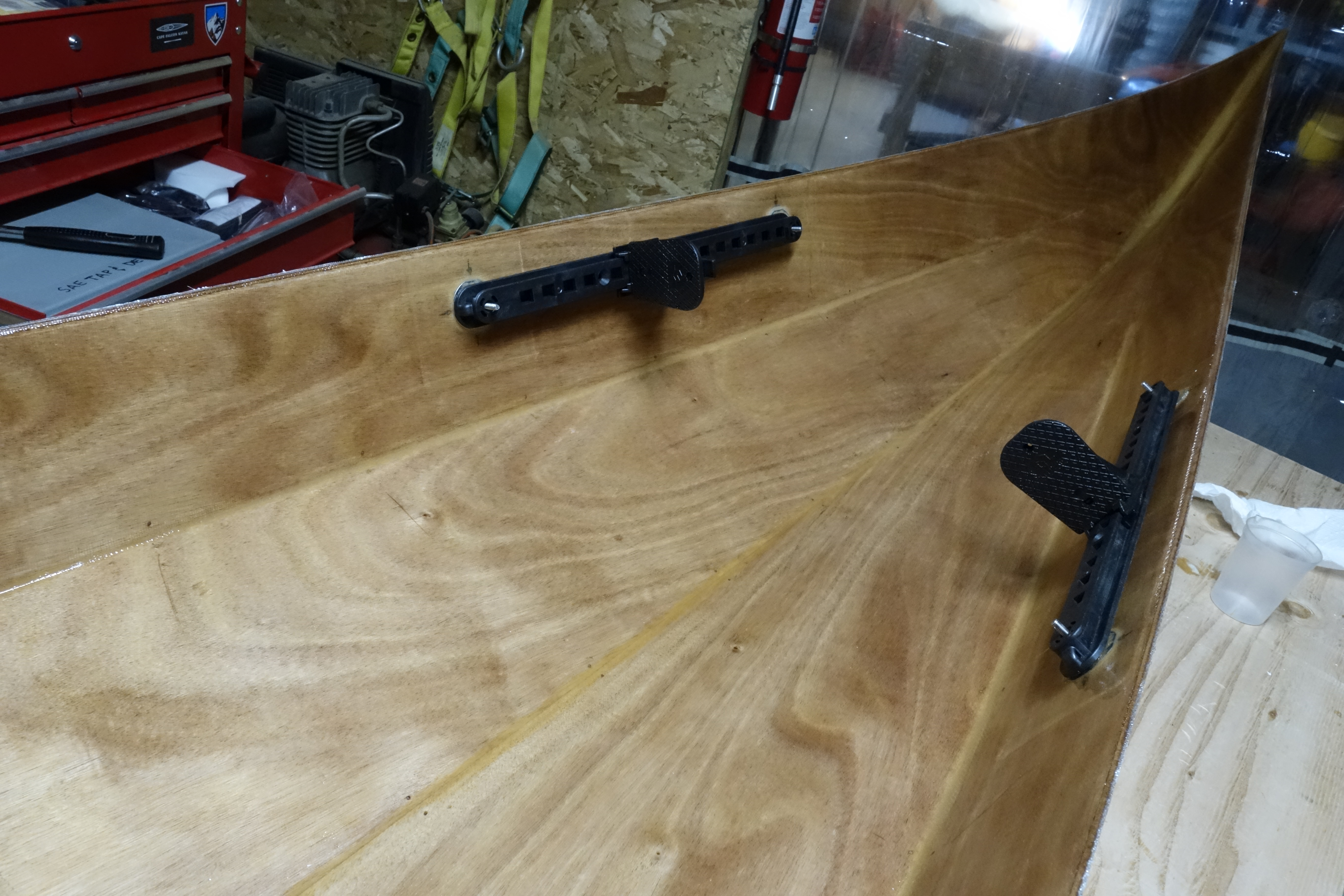
Rather than eventually drilling holes through the hull to mount the foot brace rails, Pygmy offers optional foot brace studs that are epoxied and fiberglassed to the inside of the hull during hull construction (as seen here). Not only is this aesthetically pleasing, it saves work in the future when the hull needs to be re-varnished because if the foot brace rails were held on by screws that went through the hull, the screws would have to be removed prior to sanding/re-varnishing, etc.
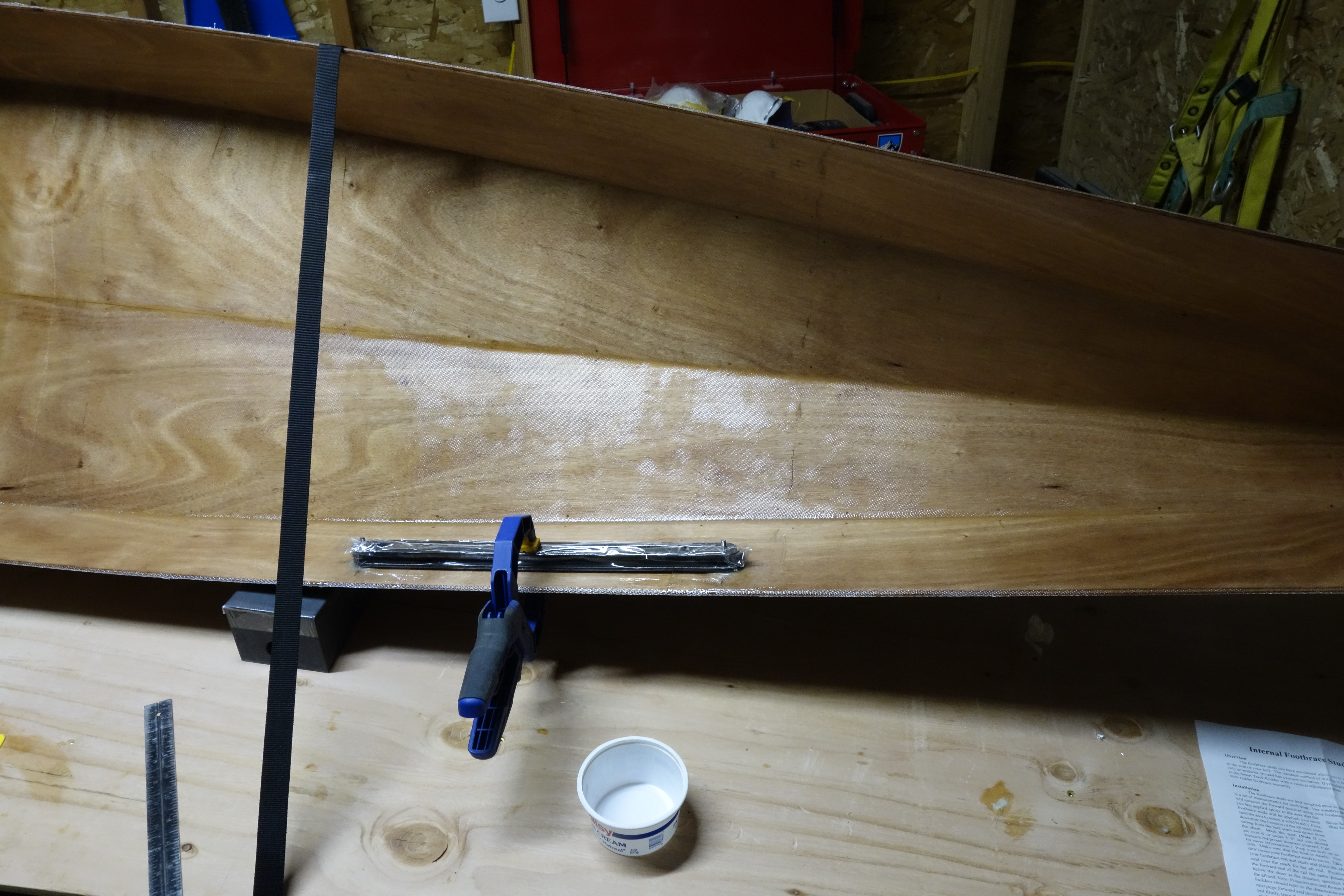
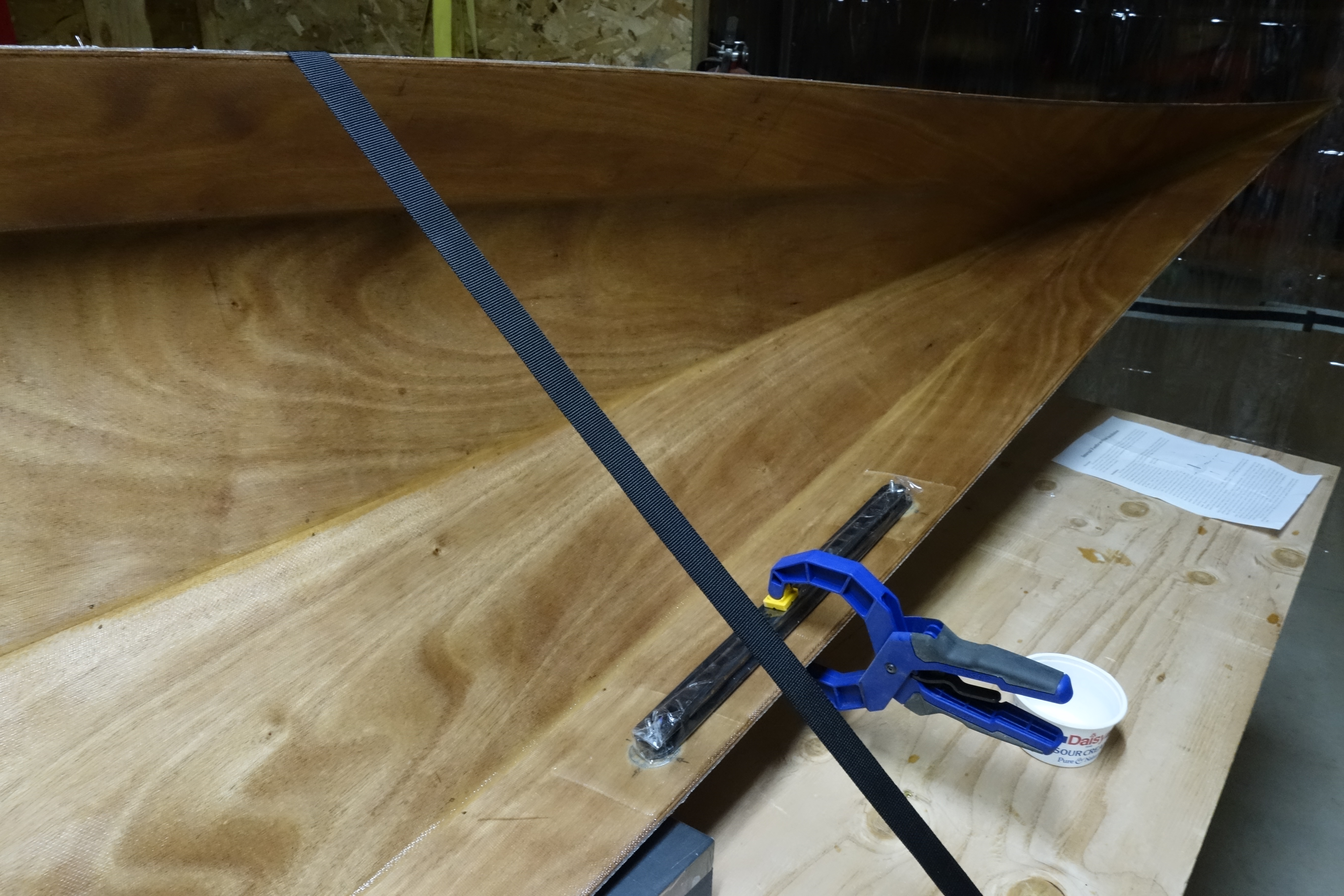
The foot brace rail is covered in packing tape so that epoxy won’t stick to it, and then after carefully measuring the placement location of the studs, the rail is used to ensure that they fit the rail exactly.

Finishing the inside of the hull.

Time to finish gluing the seams inside the hull and create the fillets in the bow and stern stems so that the fiberglass cloth will lay smoothly in the hull and not trap air. I will also reinforce the butt seams in the middle of the hull, and then do the saturation coat before fiberglassing the inside of the hull.
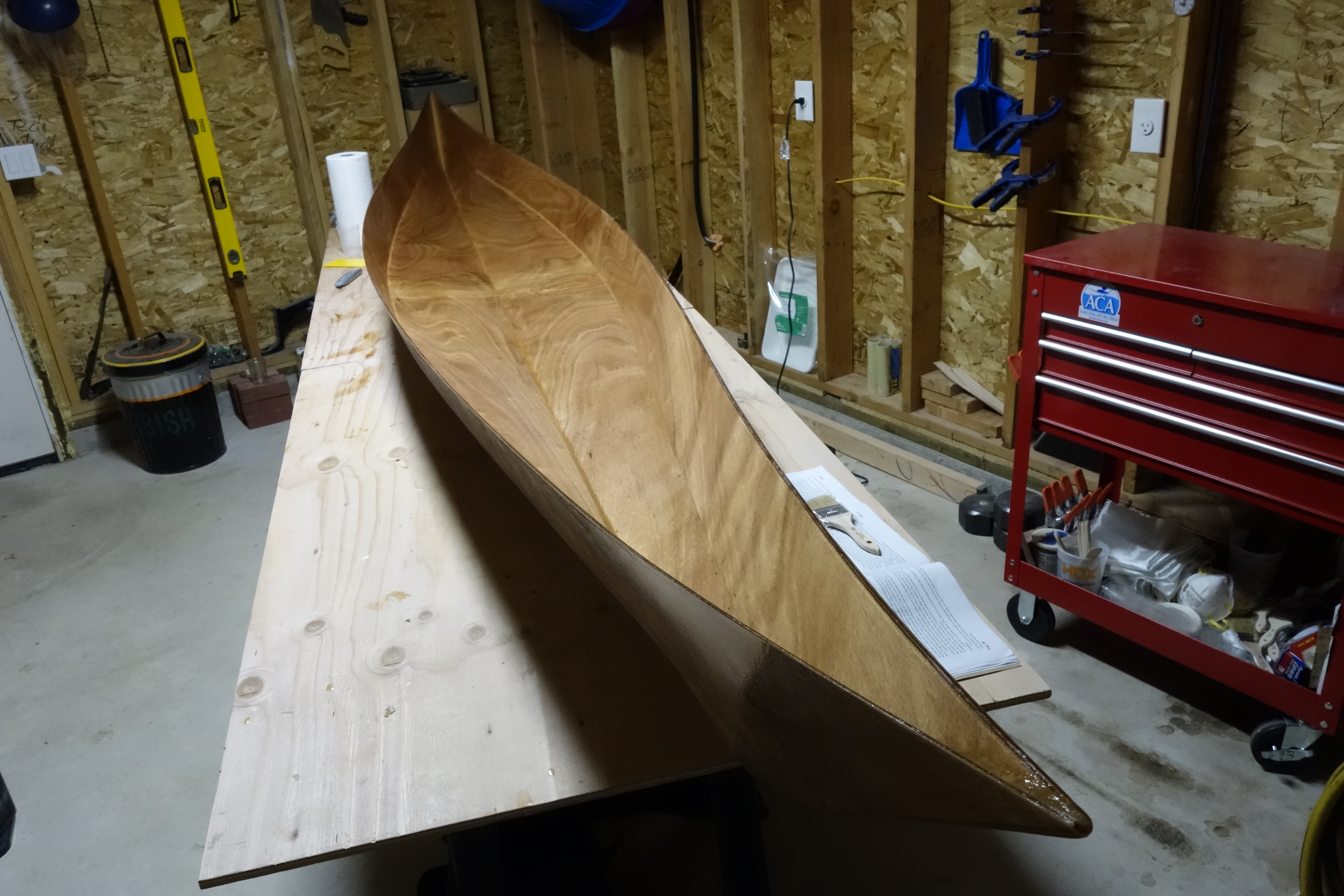
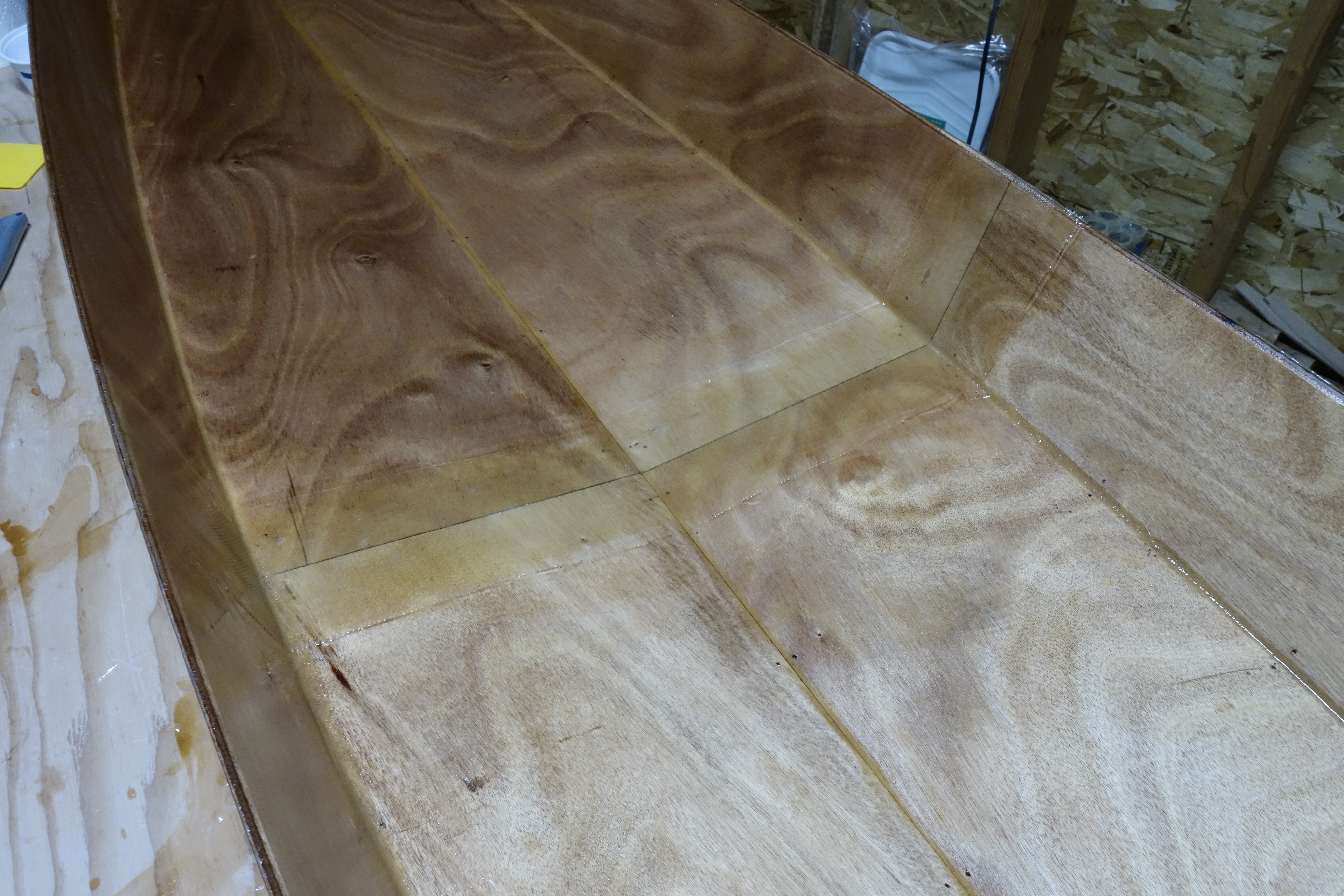
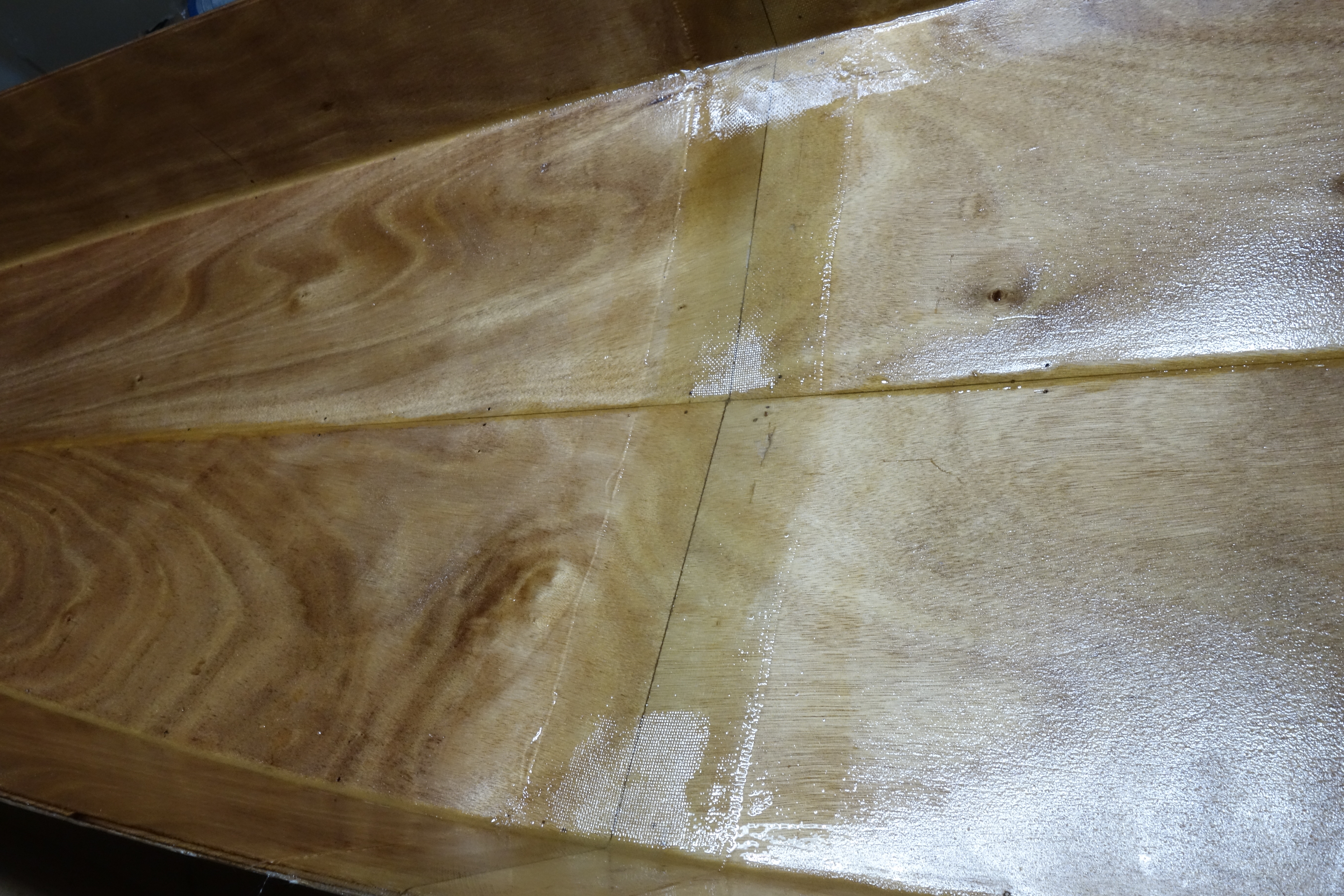
Three strips of fiberglass cloth, one 2″ wide, one 3″ wide, and one 4″ wide, laminated atop each other to reinforce the butt seam where the panels were glued to their full lengths. This will add great strength as it will be trapped between the fiberglass on the outside of the hull, then the wooden hull itself, and then the fiberglass on the inside of the hull. The wooden hull will be completely encapsulated in fiberglass.
Epoxy and wood flour fillet in the bow.
Epoxy and wood flour fillet in the stern.
Reinforcement fiberglass completely wetted out. Edges will be feathered in before inside of hull is fiberglassed.