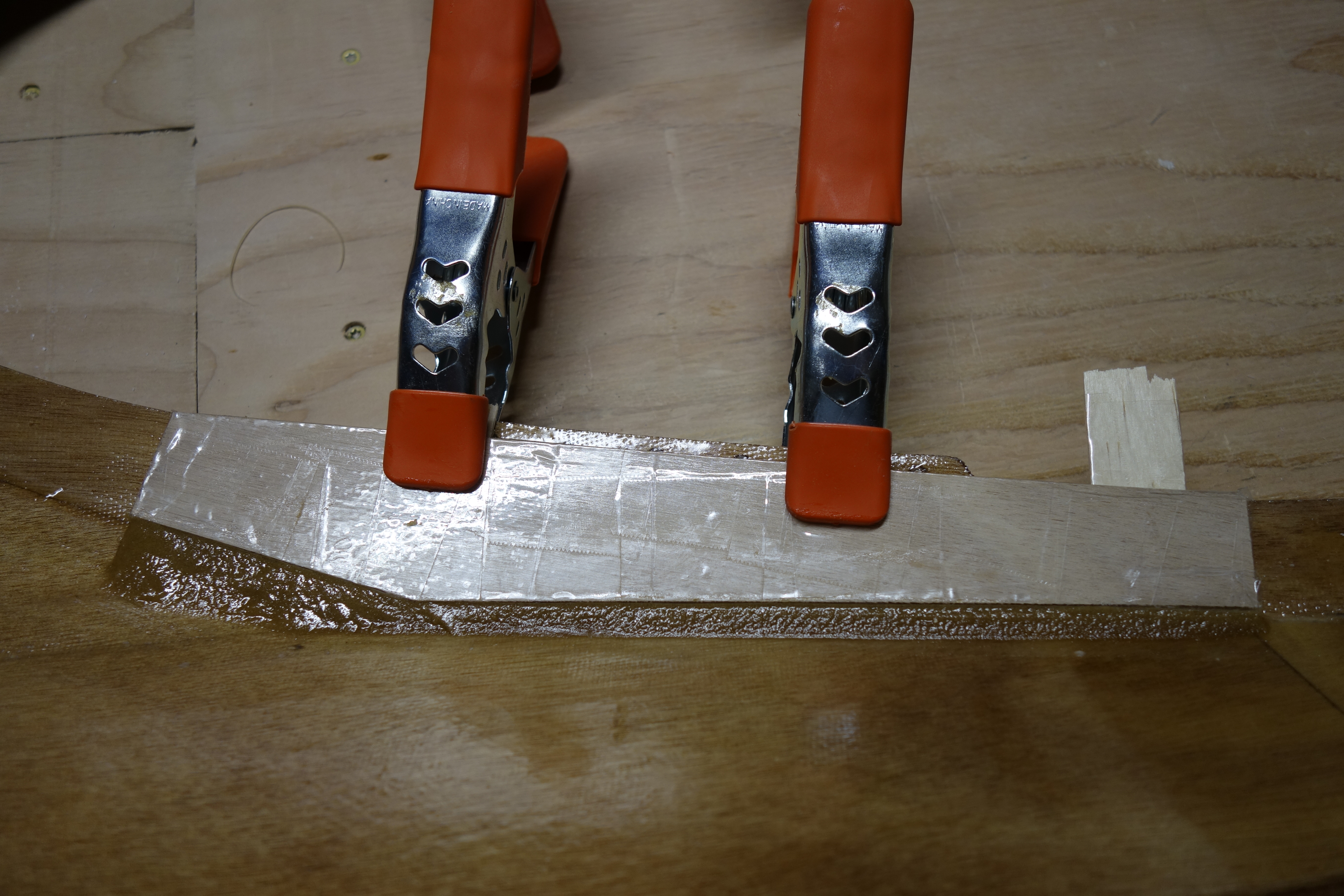
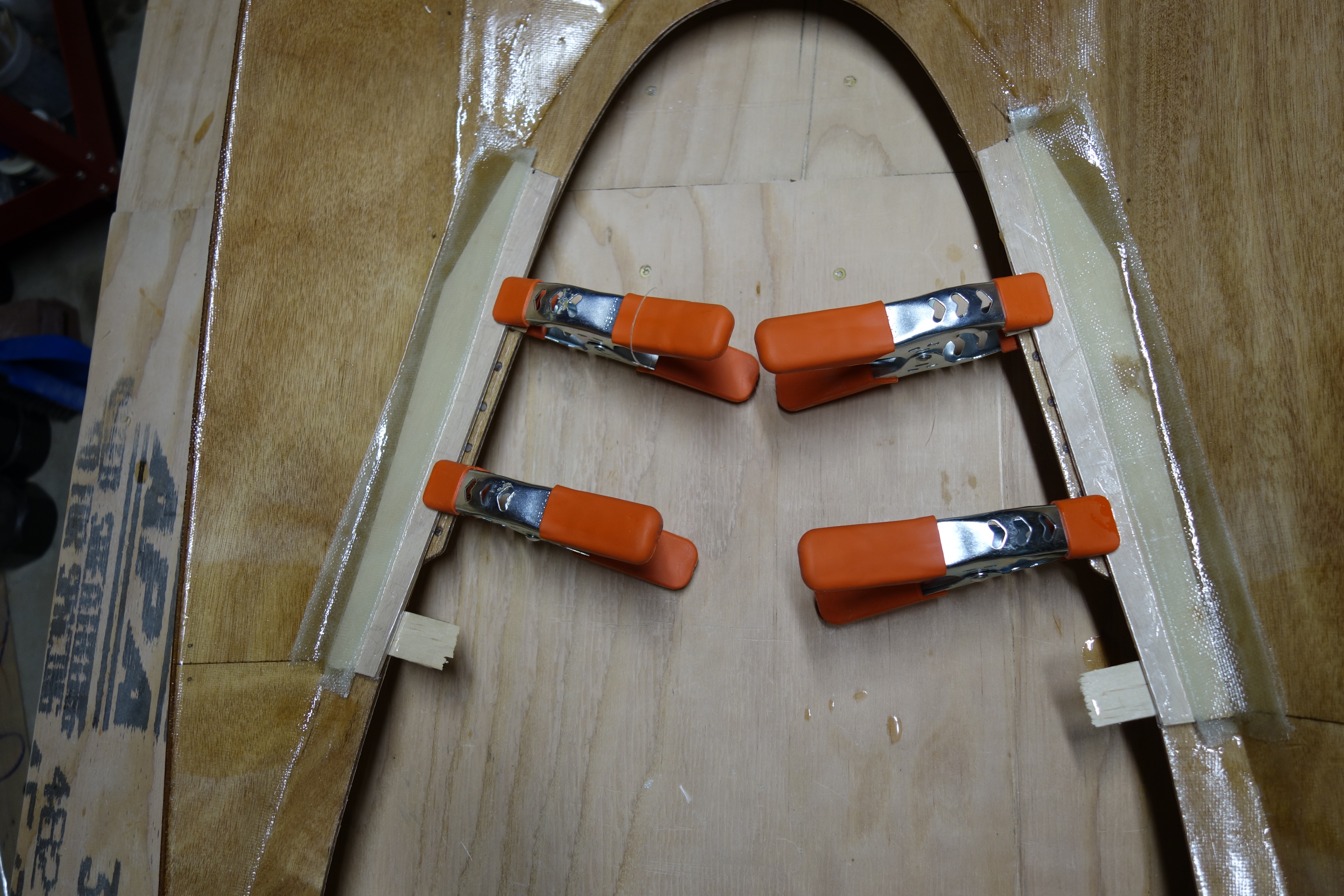
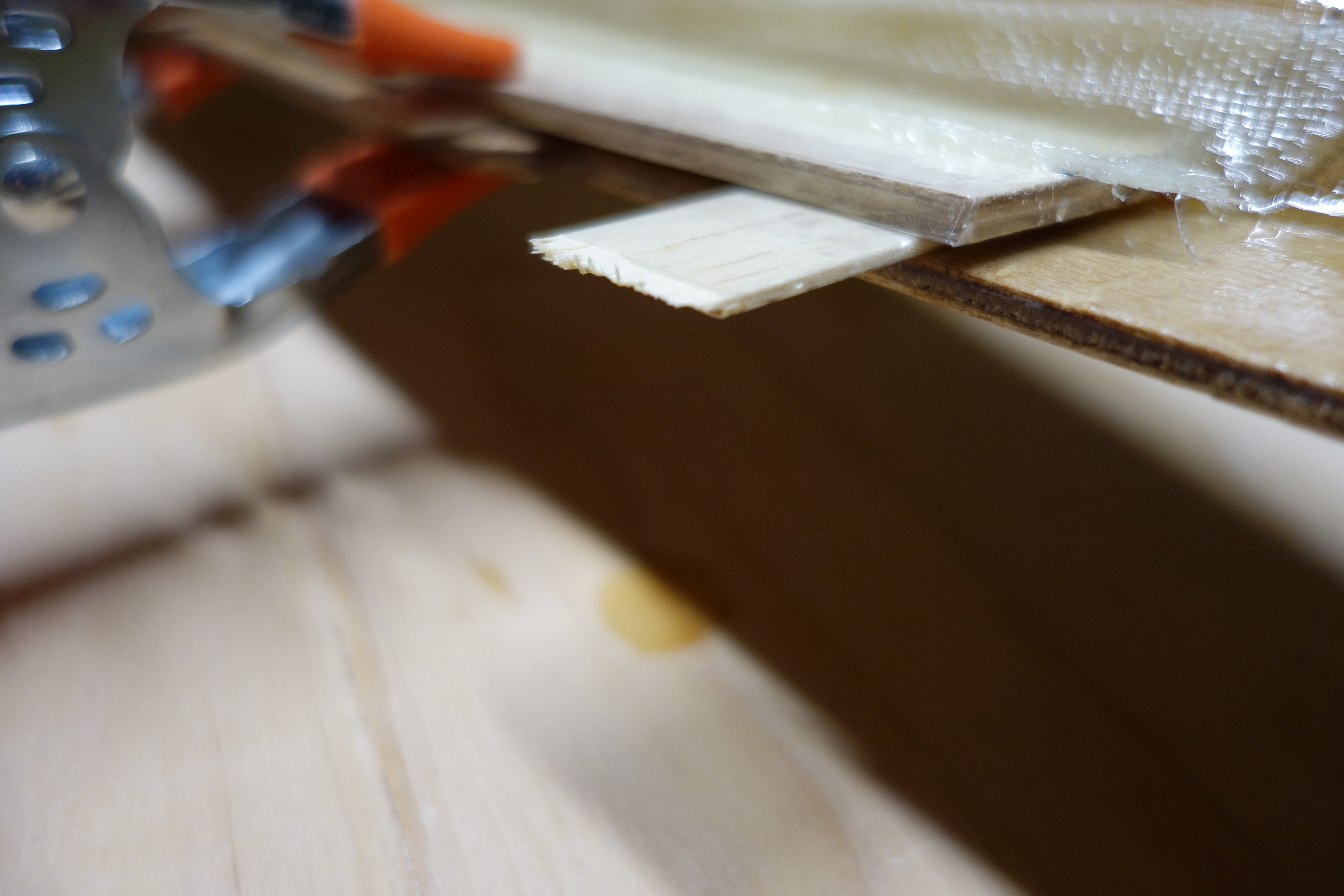
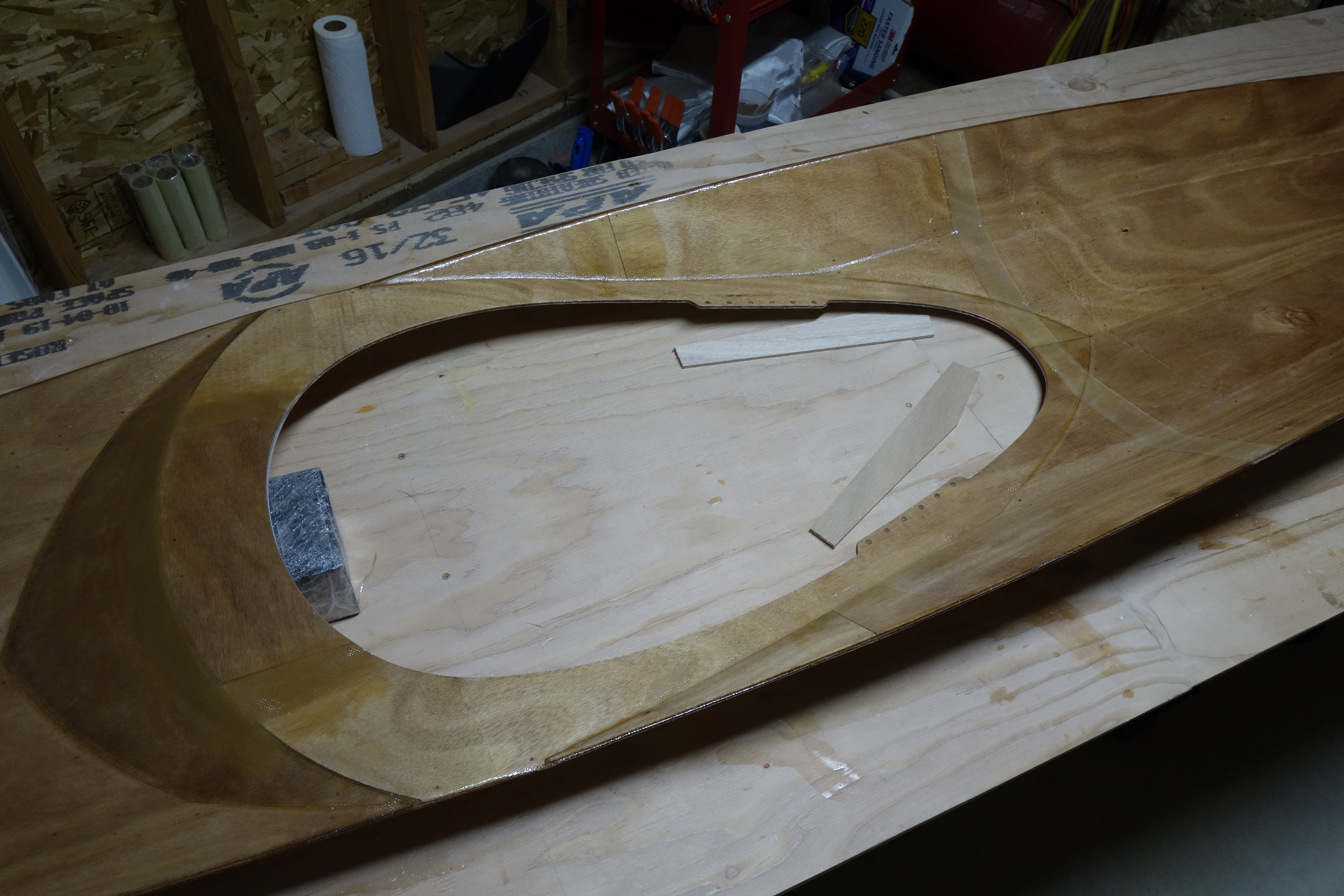
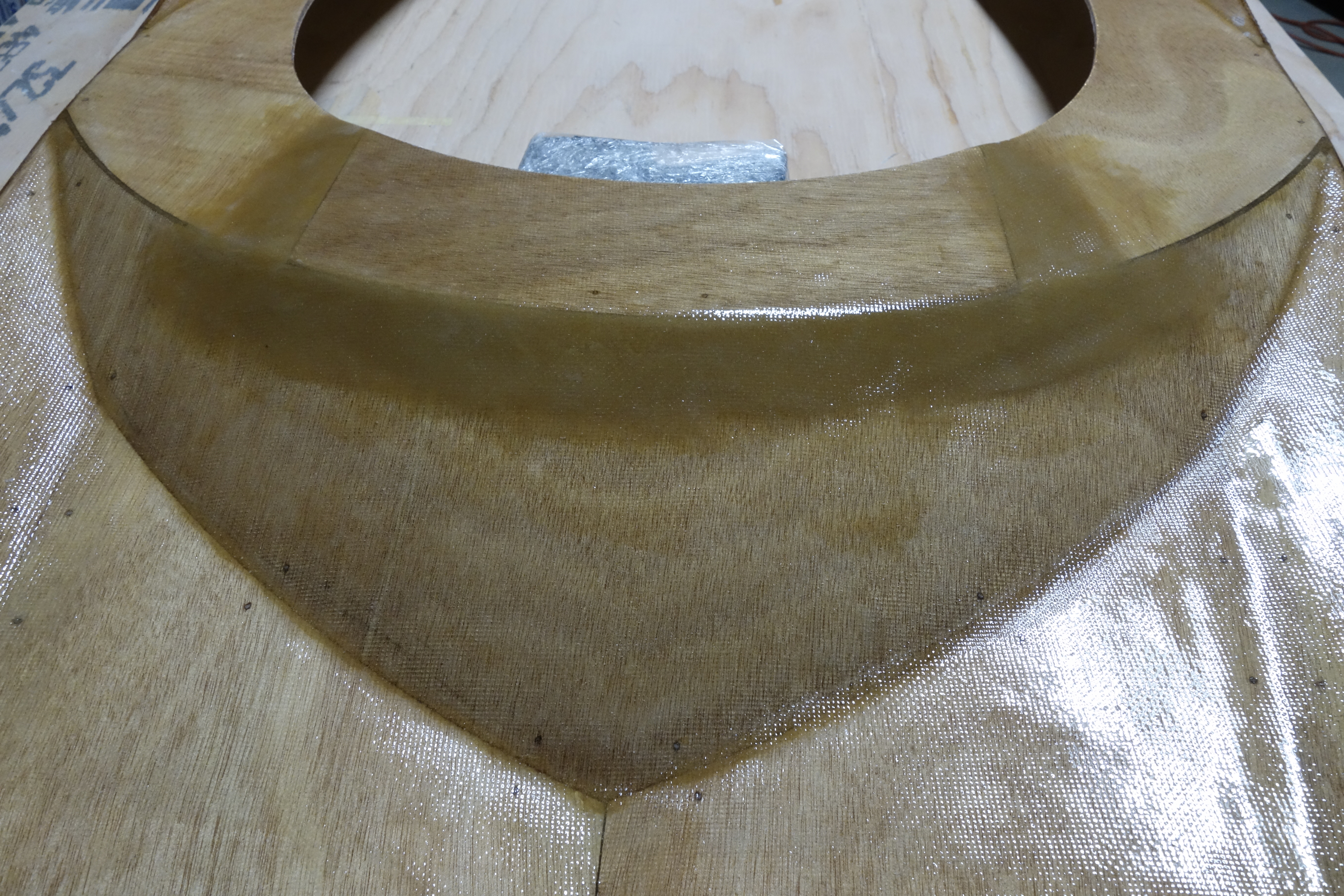
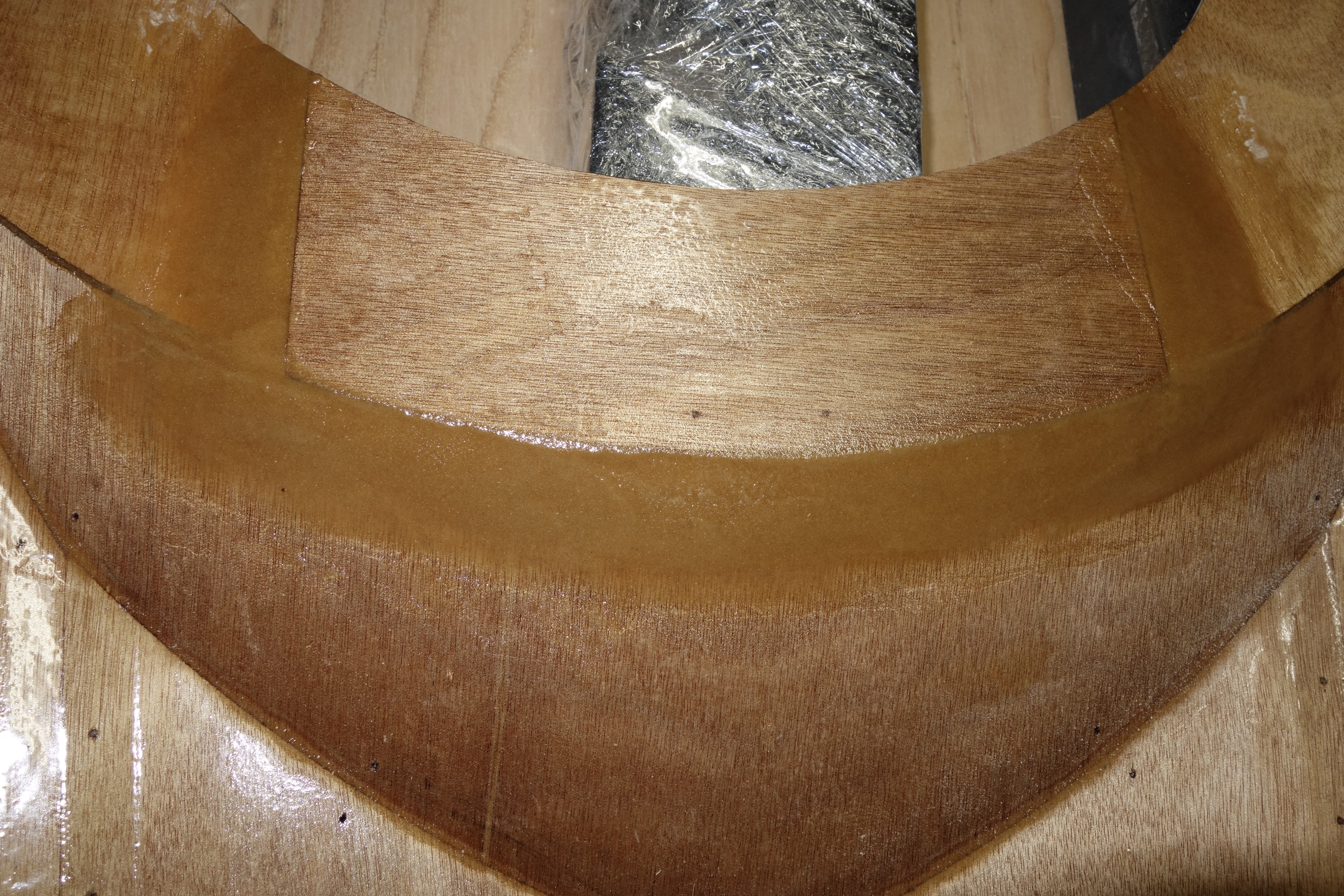
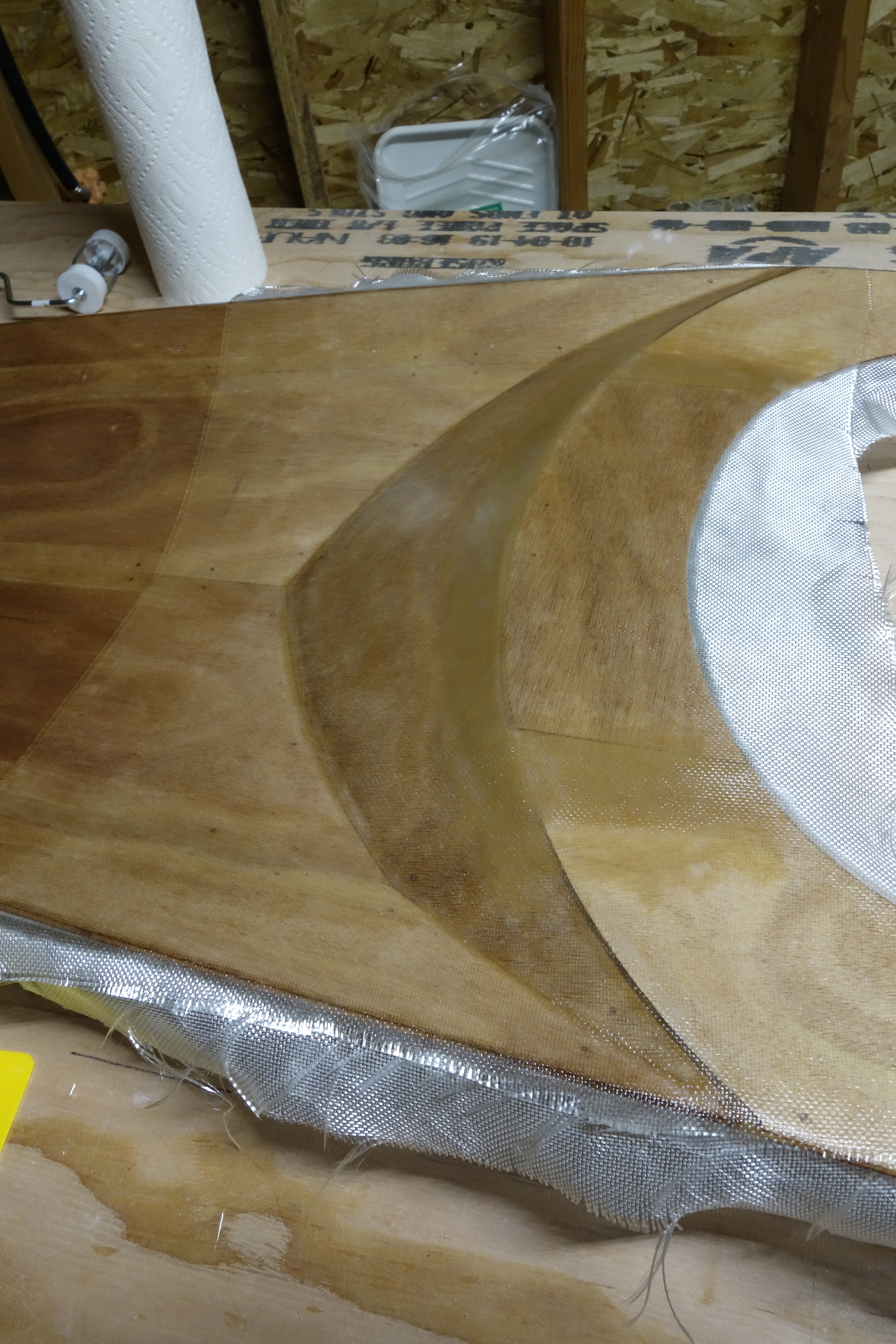
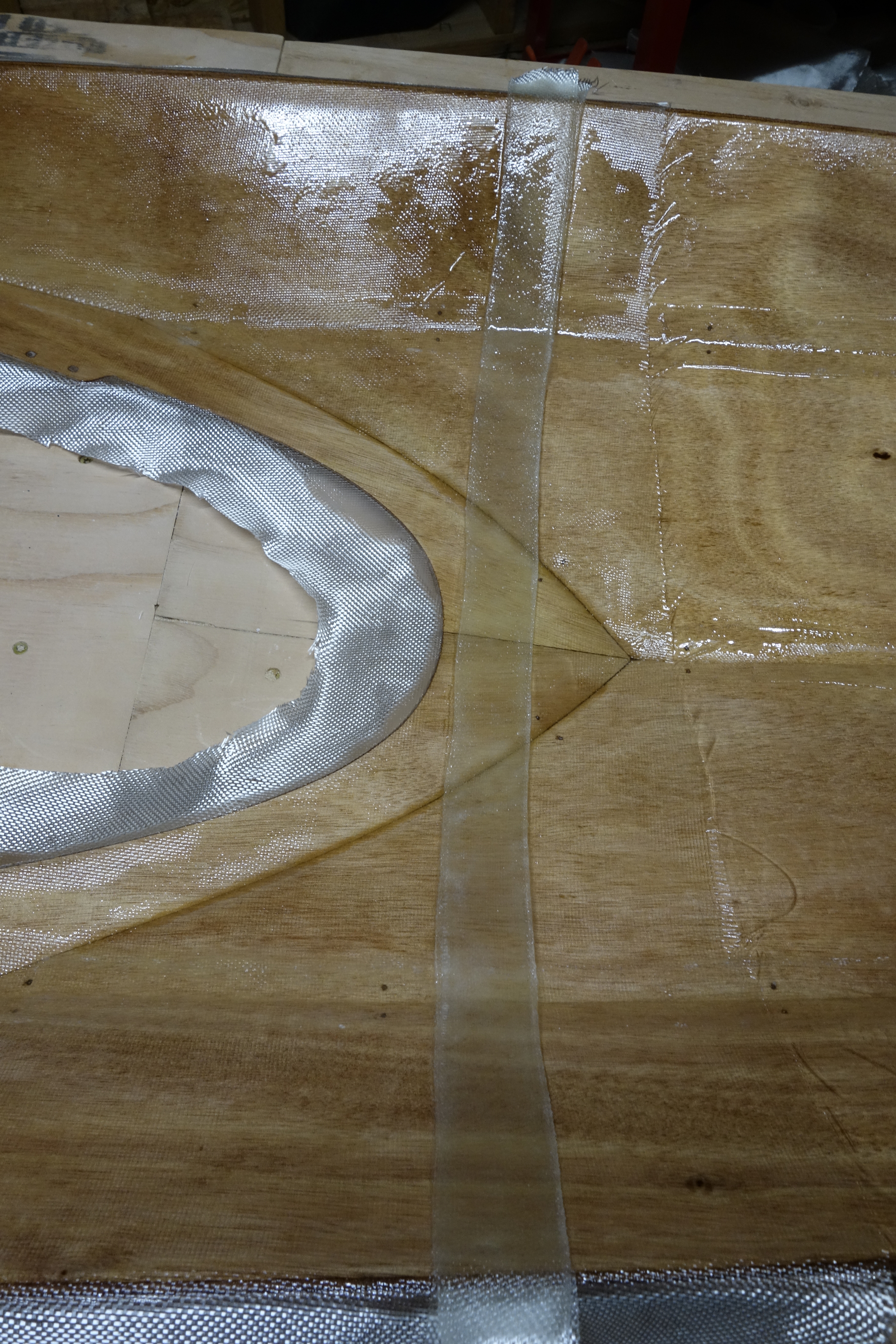
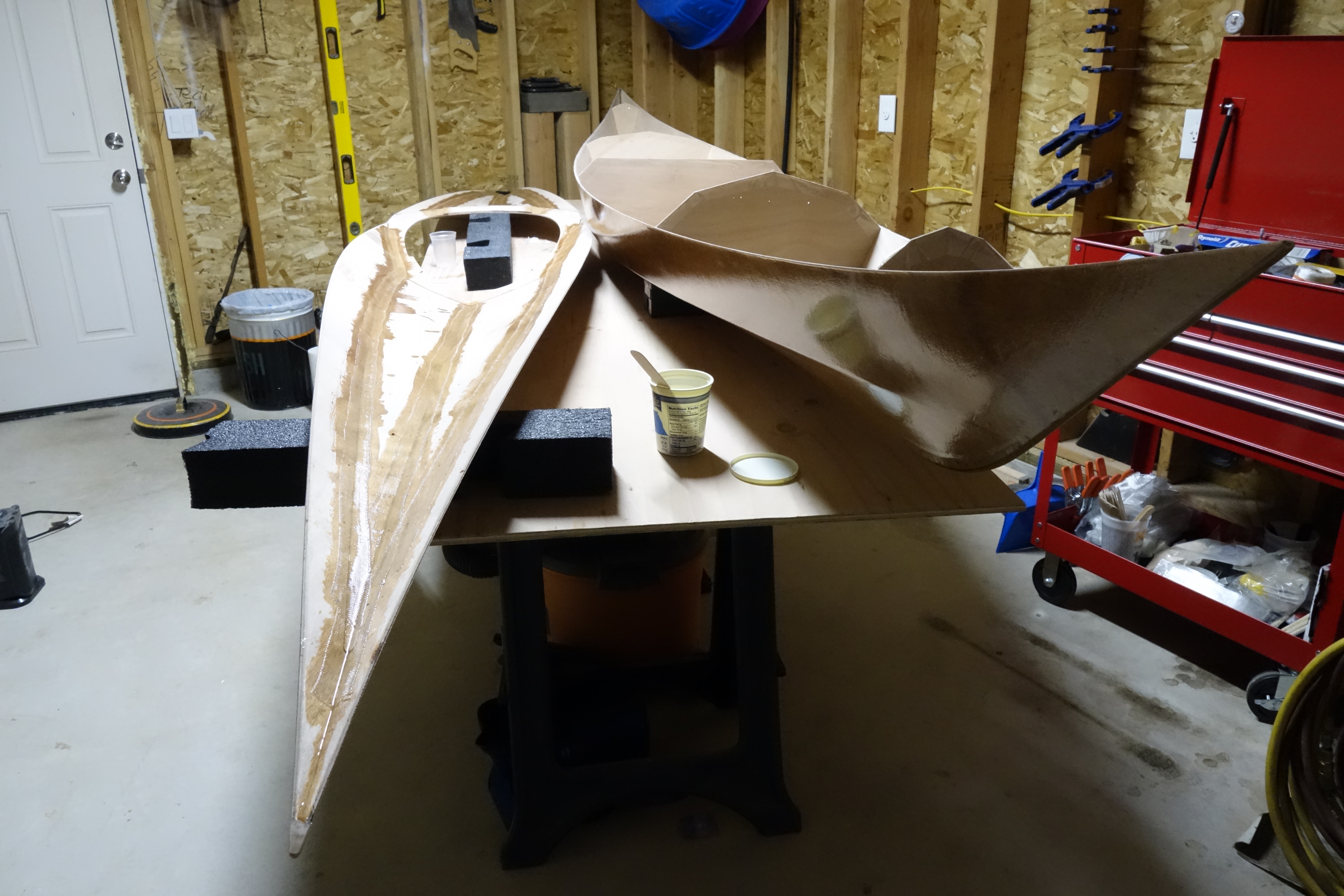
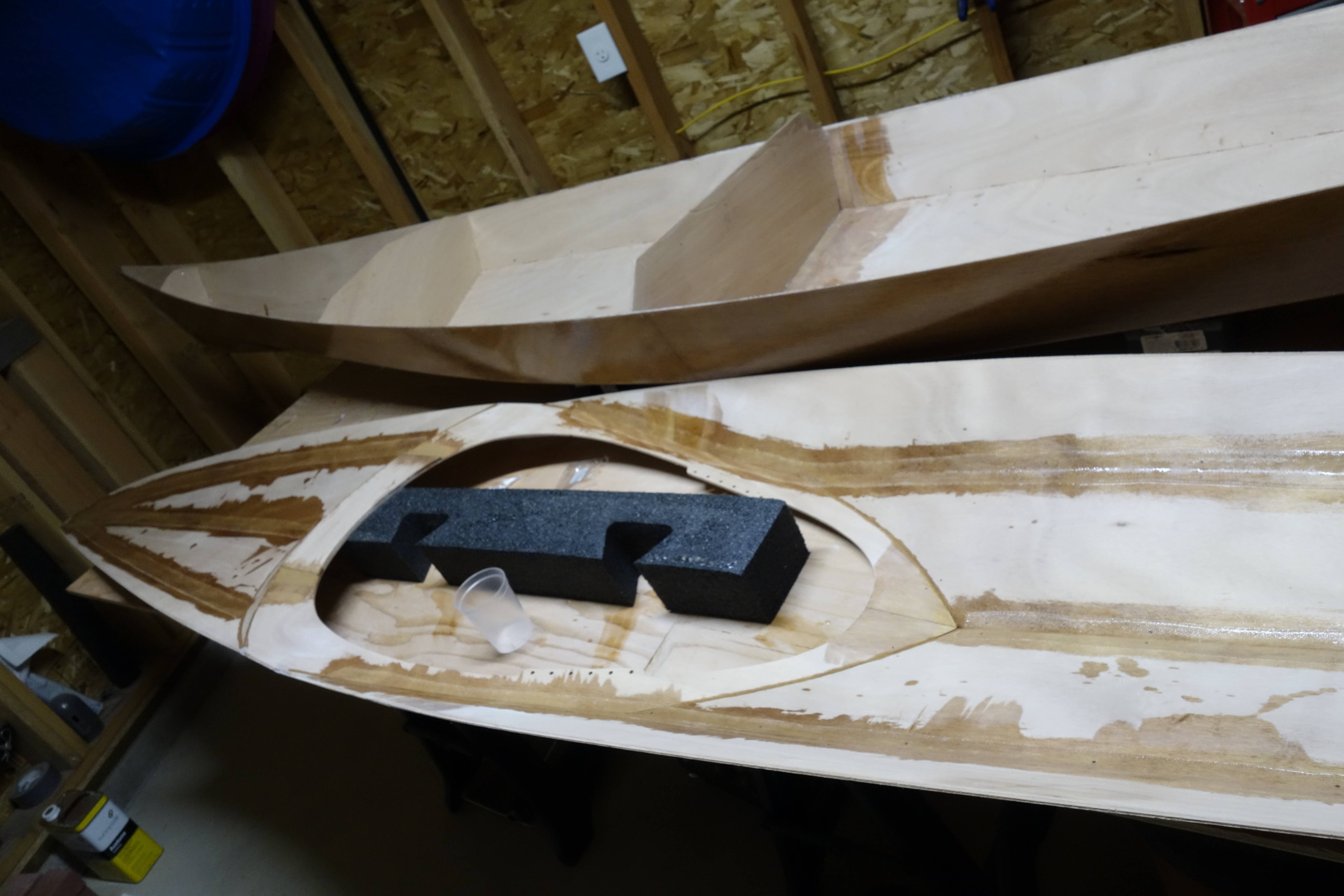
The last process on the inside of the deck is to build permanent fiberglass slots for the adjustable thigh braces. This is accomplished by using wooden forms covered in packing tape (so that the epoxy won’t stick to them) to create fillets and shape fiberglass tape into the necessary shape.
Epoxy thickened with wood flour is used to create the “platform” that the fiberglass tape will sit on to create the slots.Fiberglass tape applied. It’s funny what a slight camera angle can do. Of course, the slots on both sides of the kayak are exactly the same size, but this photo makes the left one look much smaller than the right one. Funny!There are four layers of fiberglass tape laminated one atop the other, to create the slots.
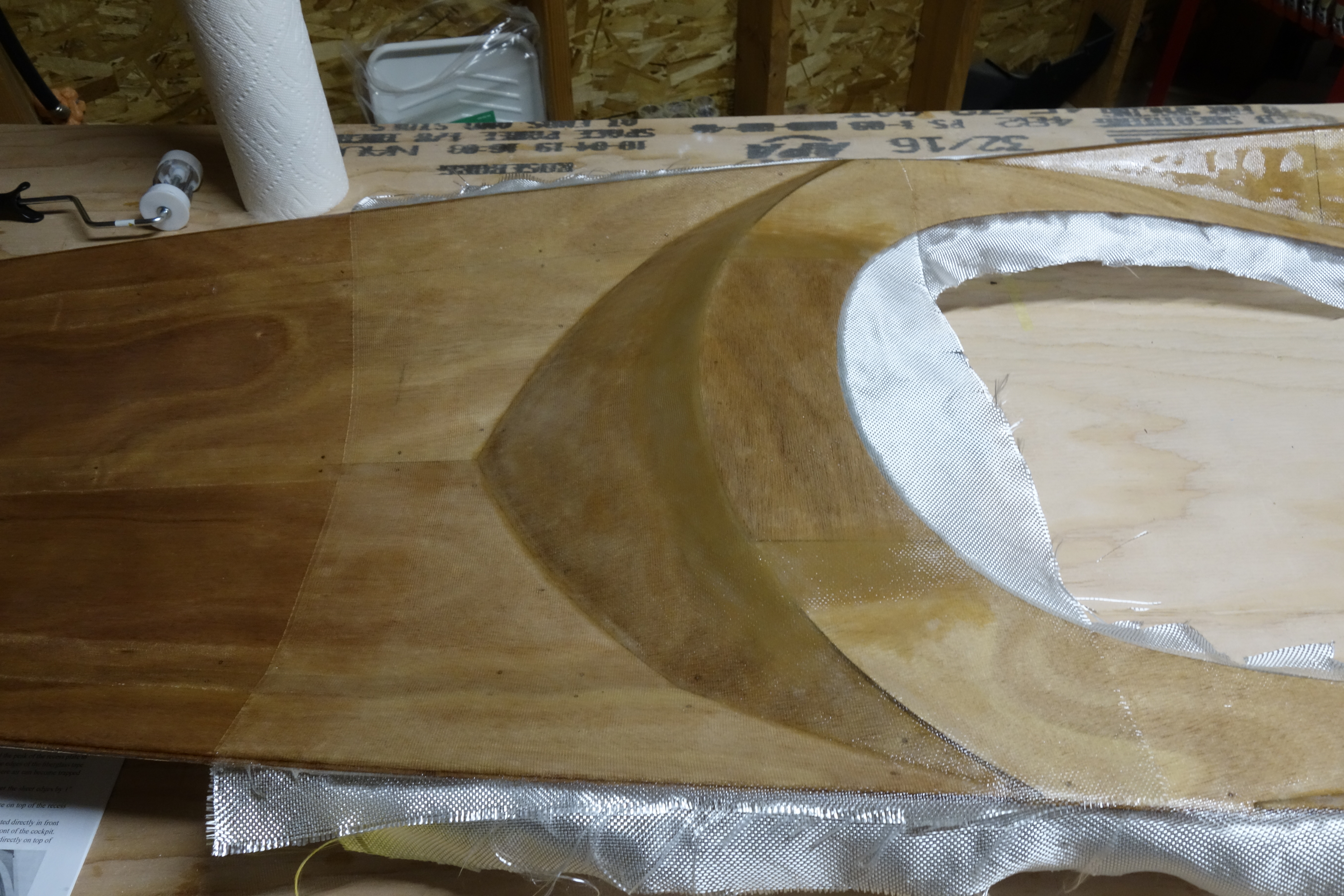
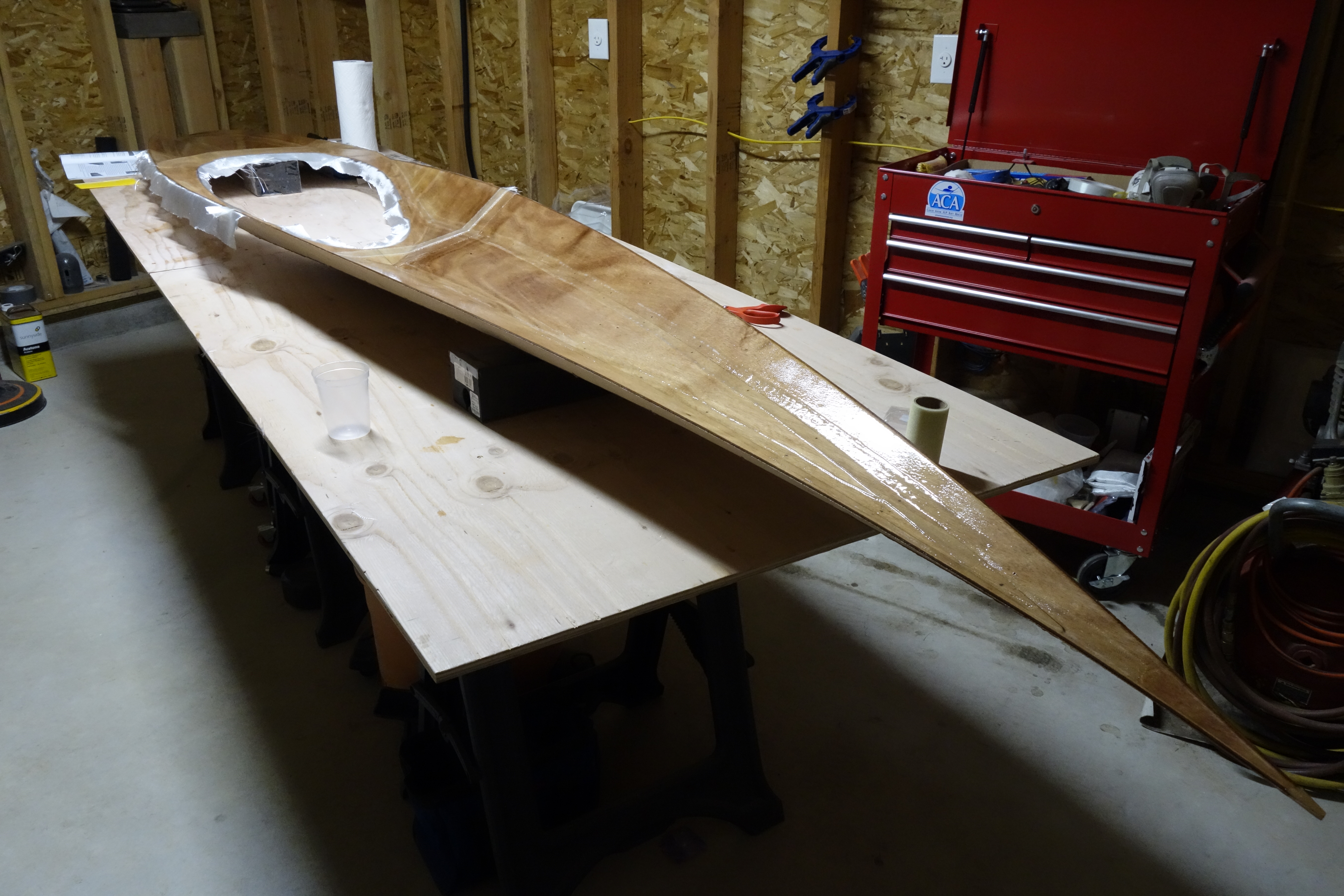
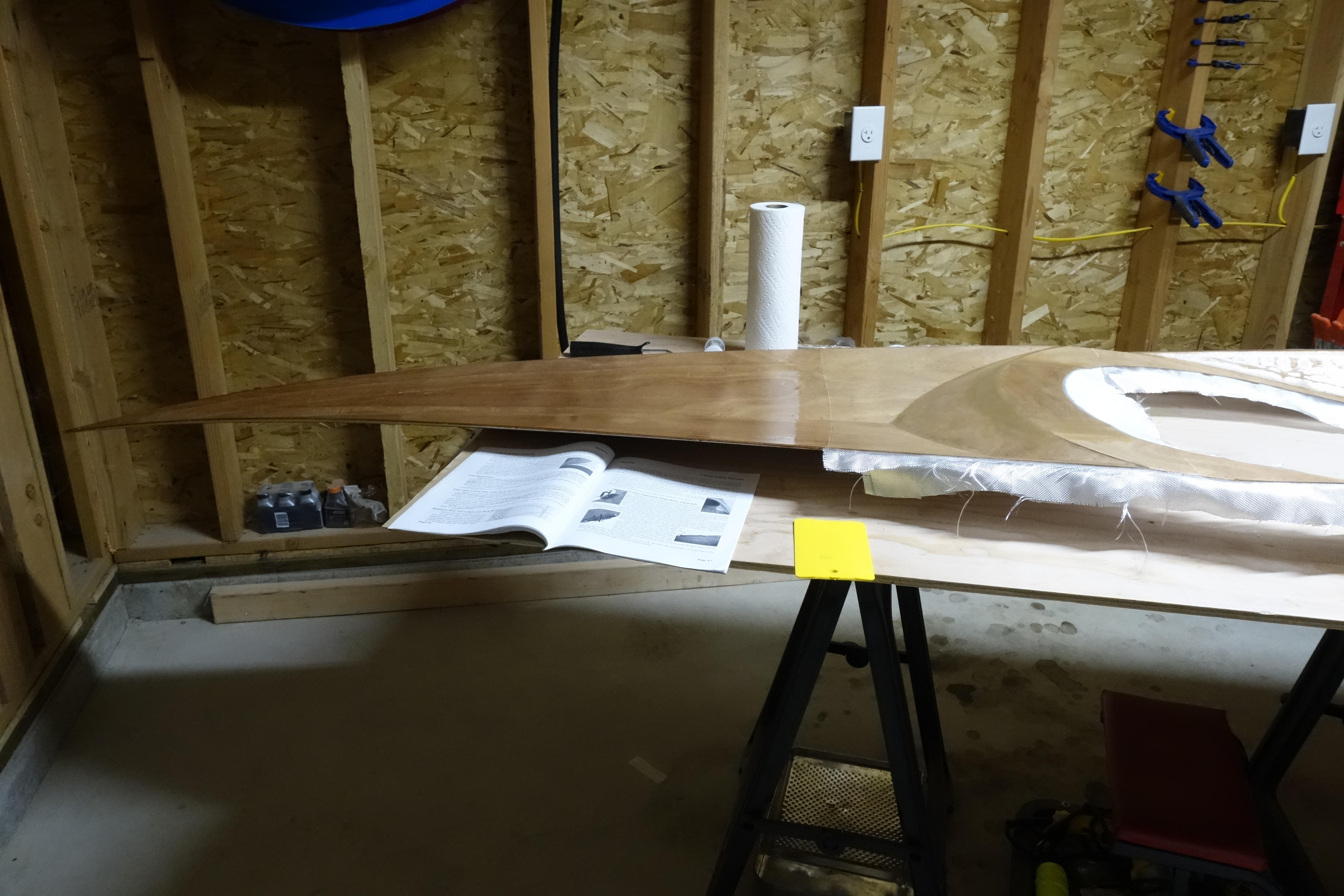
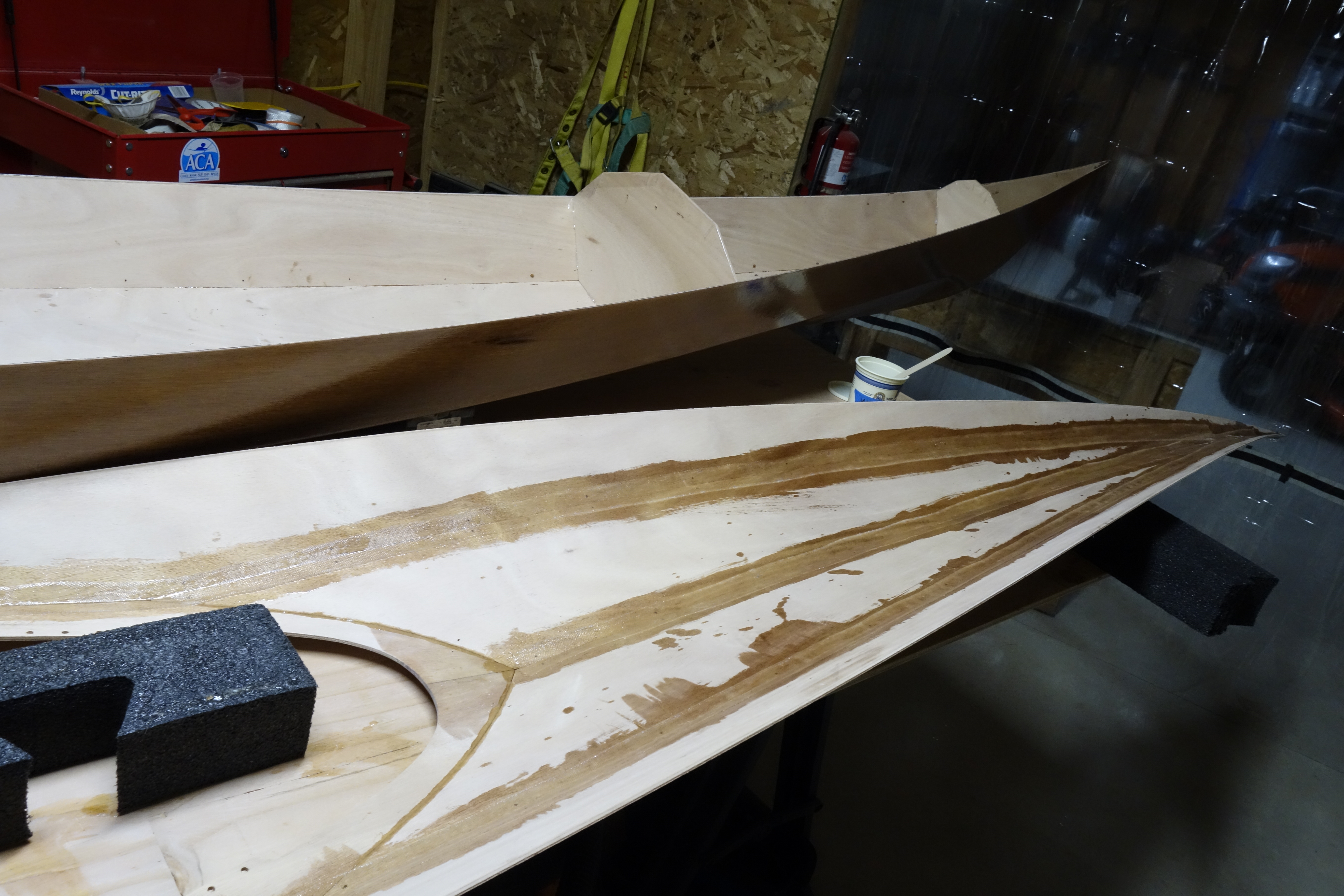
The cockpit area gets reinforced with four feet of fiberglass cloth covering the entire cockpit area, then an additional 22″ X 13″ piece of fiberglass cloth goes over the deck recess area. Also, three layers of fiberglass are laminated across the underside of the deck, right in front of the cockpit opening to reinforce the deck.
This is the epoxy fillet around the butt plate that reinforces the underside of the cockpit apron. The fillet is necessary so that the fiberglass cloth will not trap air beneath it, which would weaken the lamination and cause problems. Same as above except this photo has fill-in flash so that it is a bit easier to see the fillet. This fillet gave me a lot of trouble. The instructions said to thicken the epoxy with wood flour until it was thicker than peanut butter. When I did that, it was impossible for me to get it smooth enough to take the fiberglass cloth smoothly. It took me three attempts and a phone call to Pygmy Boats to get it right. Having never done most of this before, some of these processes are not intuitive. That is especially true when it comes to thickening the epoxy for specific applications. In the case of this process (the butt plate fillet) Pygmy did provide thickening advice, but it didn’t work out very well for me. On a general note: If there is one thing I would change in the instruction manual, it would be to add specific advice about how thick to make the epoxy for each step that calls for epoxy (e.g. thicken epoxy with wood flour until it is as thick as molasses, or, thicken epoxy with wood flour until it is consistency of toothpaste). Since I assume that the vast majority of people reading the instructions have never used epoxy in this way before, just a couple of additional sentences in the manual could potentially save the builder hours of frustration.Here is all of the fiberglass cloth and tape that I discussed above, finished. As with all of the fiberglass, after the epoxy cures to the green stage (I usually wait 4-5 hours, or even overnight) the excess cloth trims off easily with a utility knife.Here are the three strips of fiberglass tape laminated across the front of the cockpit to reinforce it. The edges of these will be feathered in a bit so that they are not sharp and after everything gets sanded a bit, then another fill coat of epoxy will eventually go over the inside of the deck.
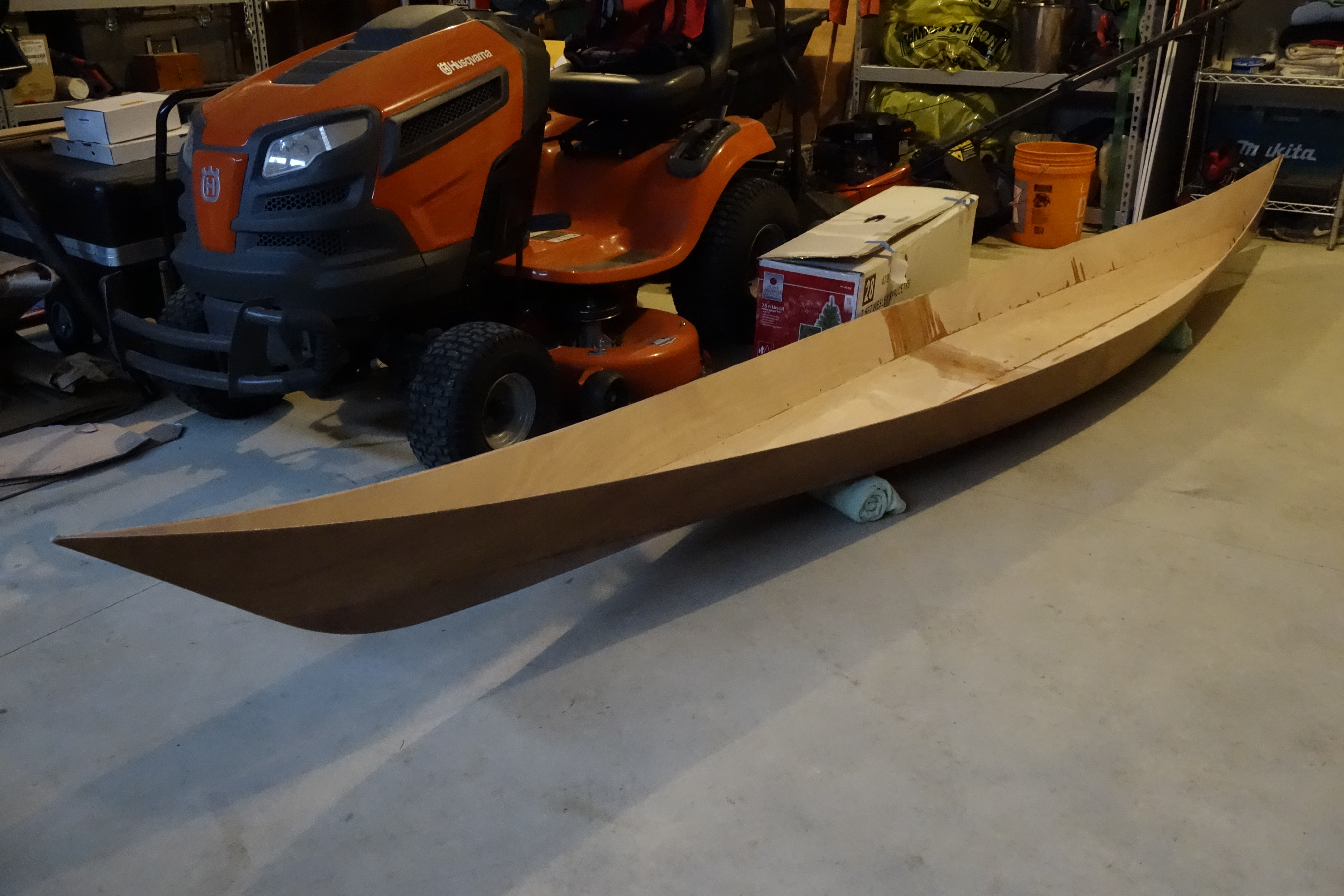
The manual said the the easiest way to remove the temporary frames, which had been glued into the hull with a hot glue gun before the wires were removed, was to reheat the glue with the gun or a soldering iron. I tried that on a couple of the beads of glue and found it to be kind-of time consuming and messy. So instead, I used a sharp utility knife and carefully ran the tip of the blade between the hull and the bead of glue. I then gave the frames a little wiggle, and hey presto!, the frames came out. The residual glue on the hull easily came off with a putty knife. MUCH easier than reheating the glue if you ask me. The next steps for the hull will be filling the seams, and encasing the inside of the hull in fiberglass in the same way that the outside was done.
The seams on the inside of the deck all get fiberglass tape. There will be additional reinforcement in the cockpit area of the inside of the deck. We’ll see that in the next post.
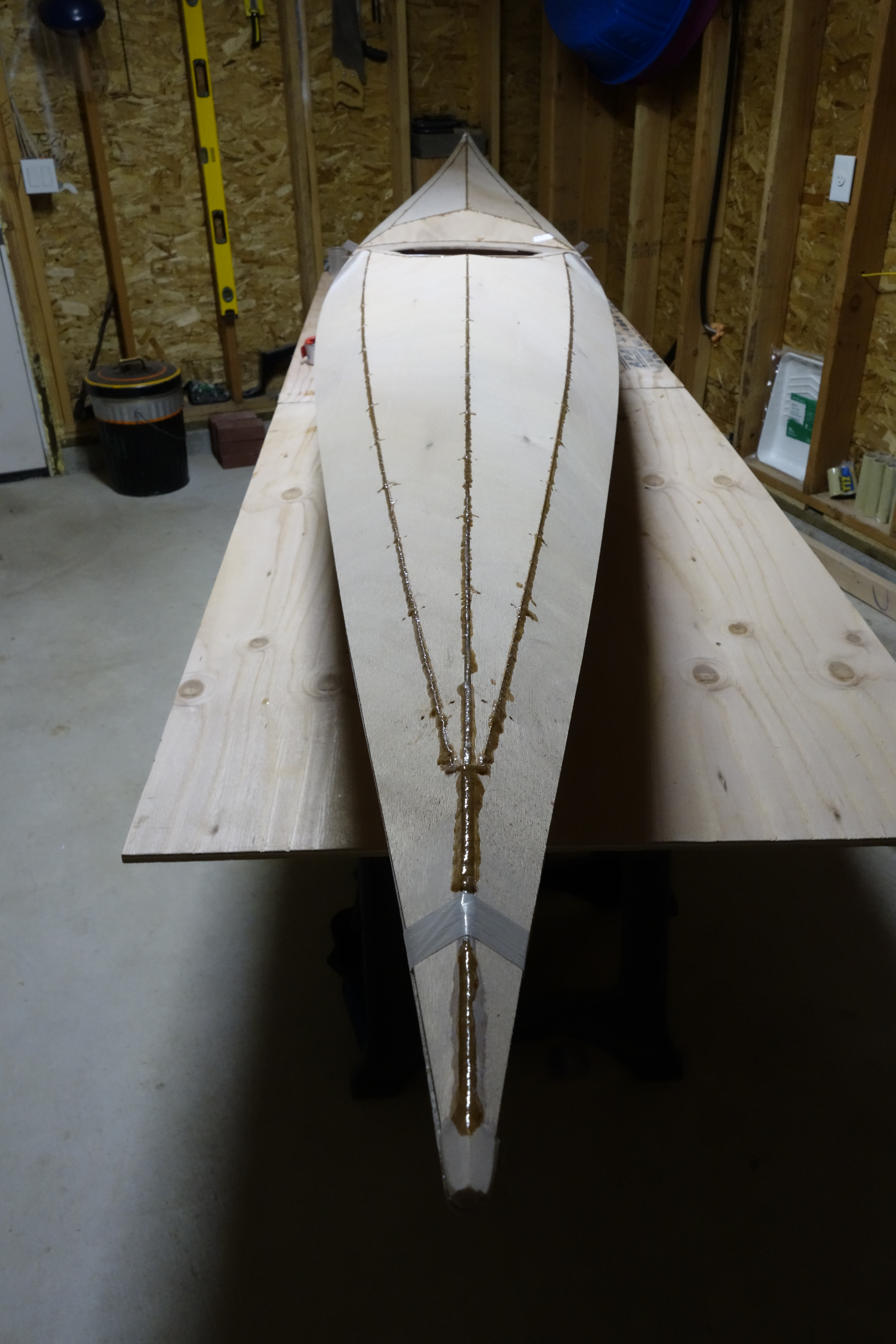
Glue on deck seams finished. You can see mylar sticking out in the areas where I am worried about accidentally gluing the deck to the hull prematurely.
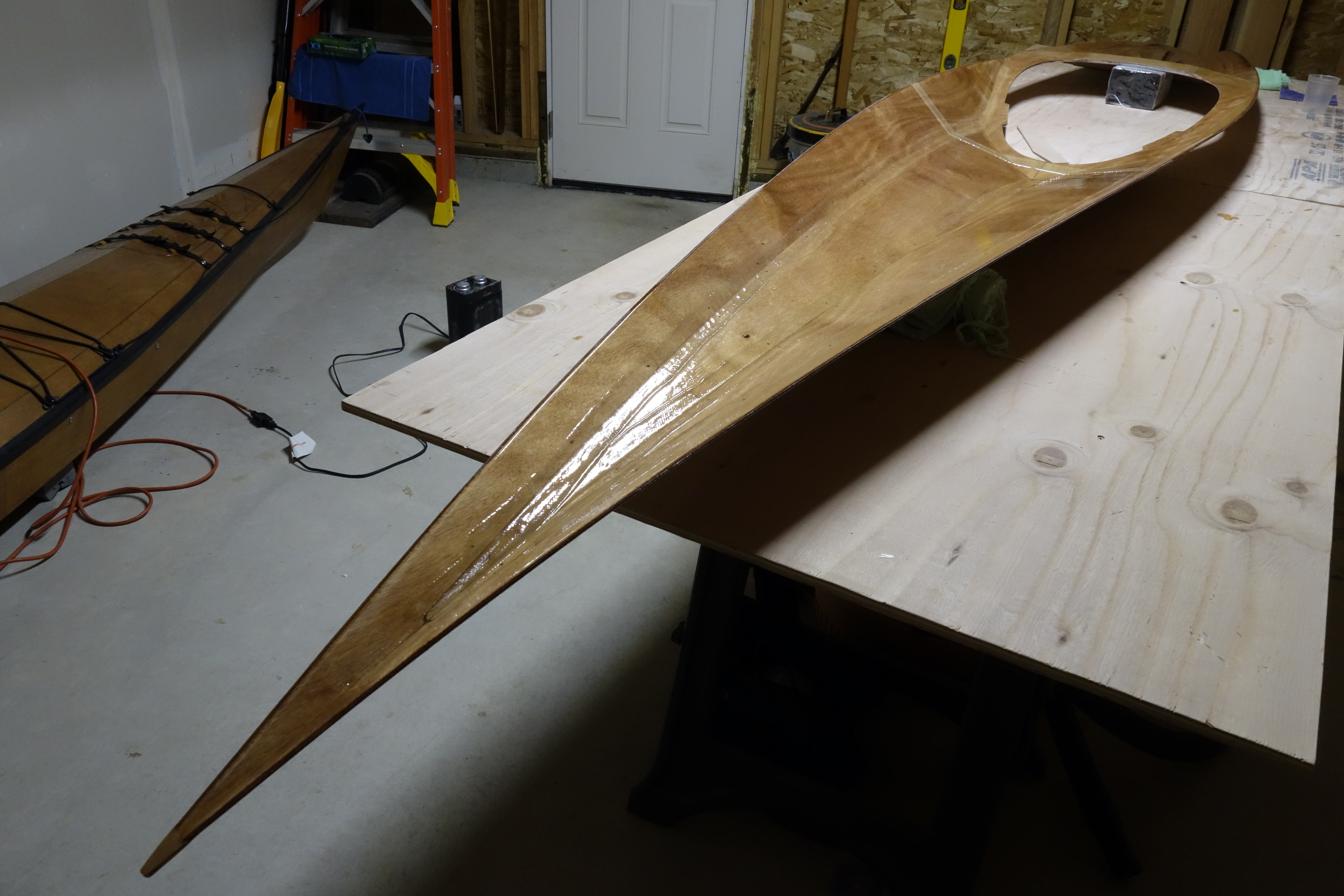
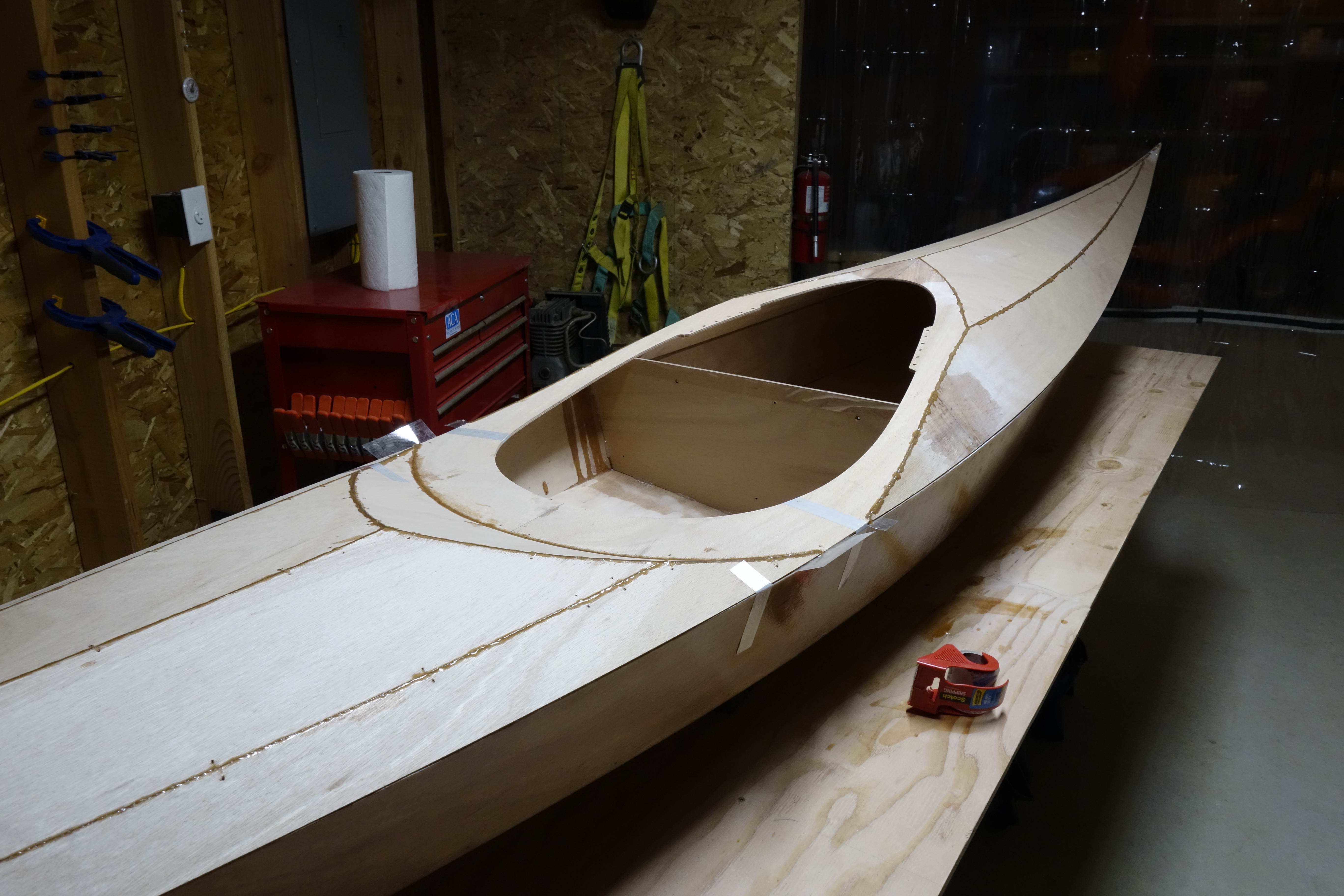
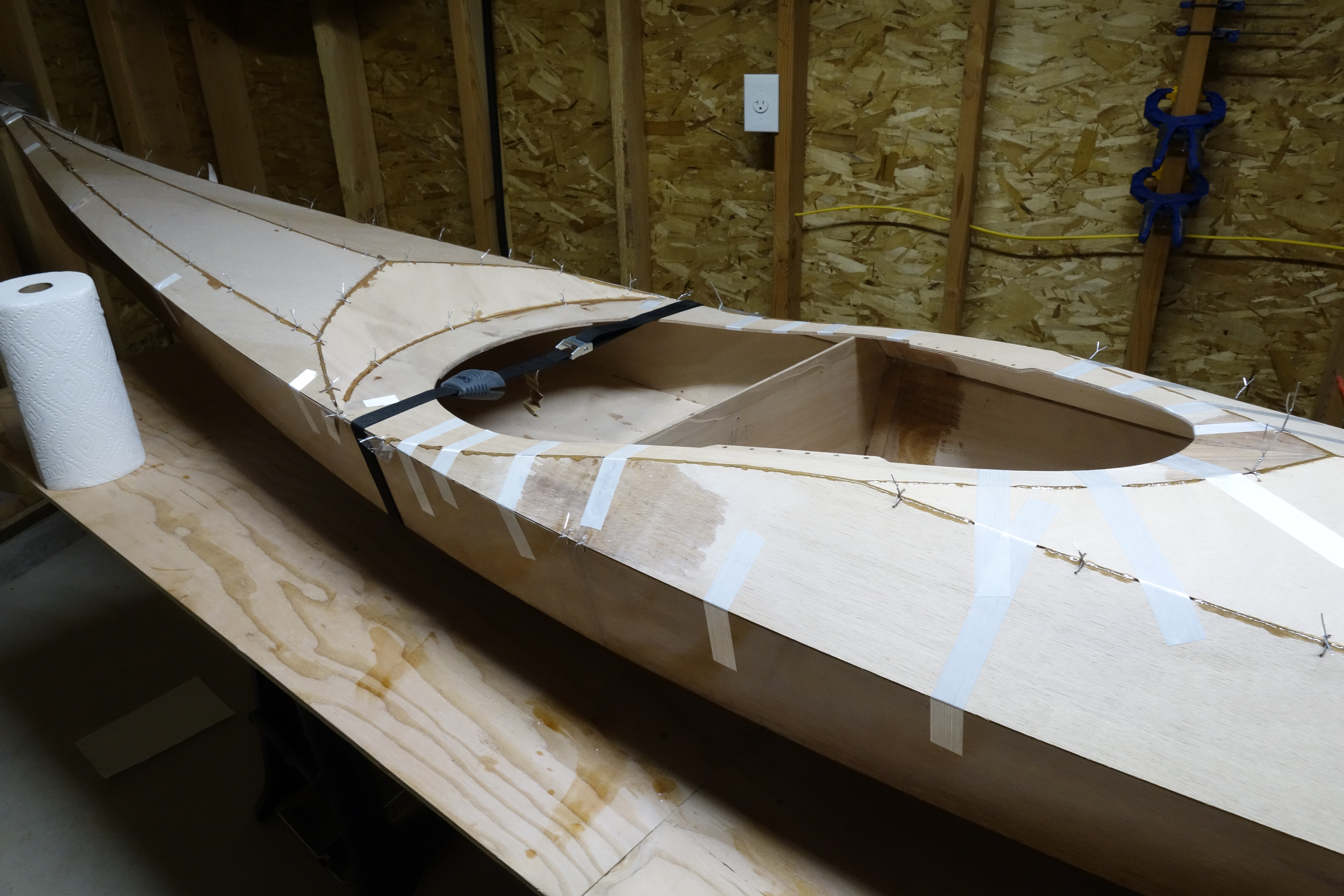
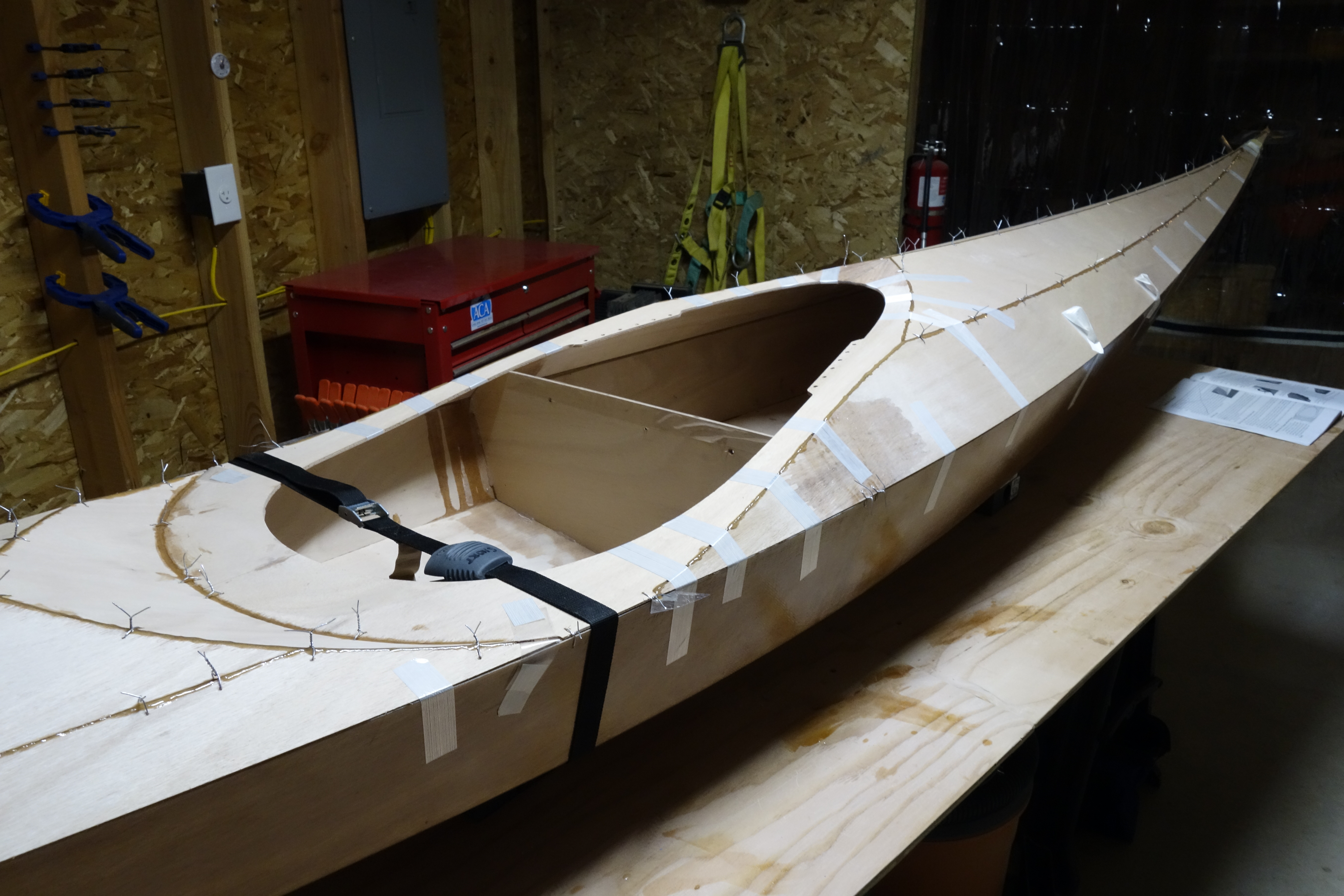
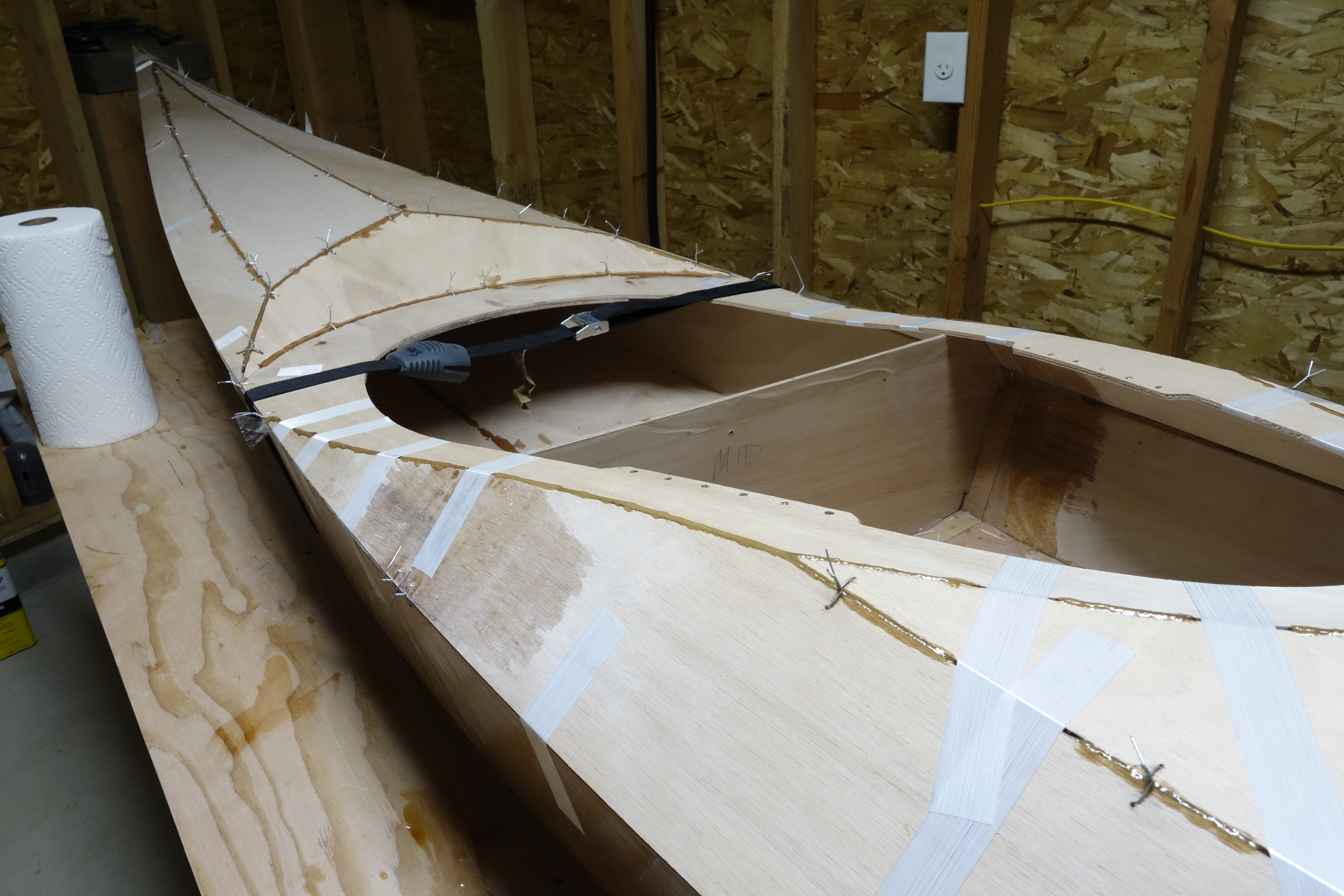
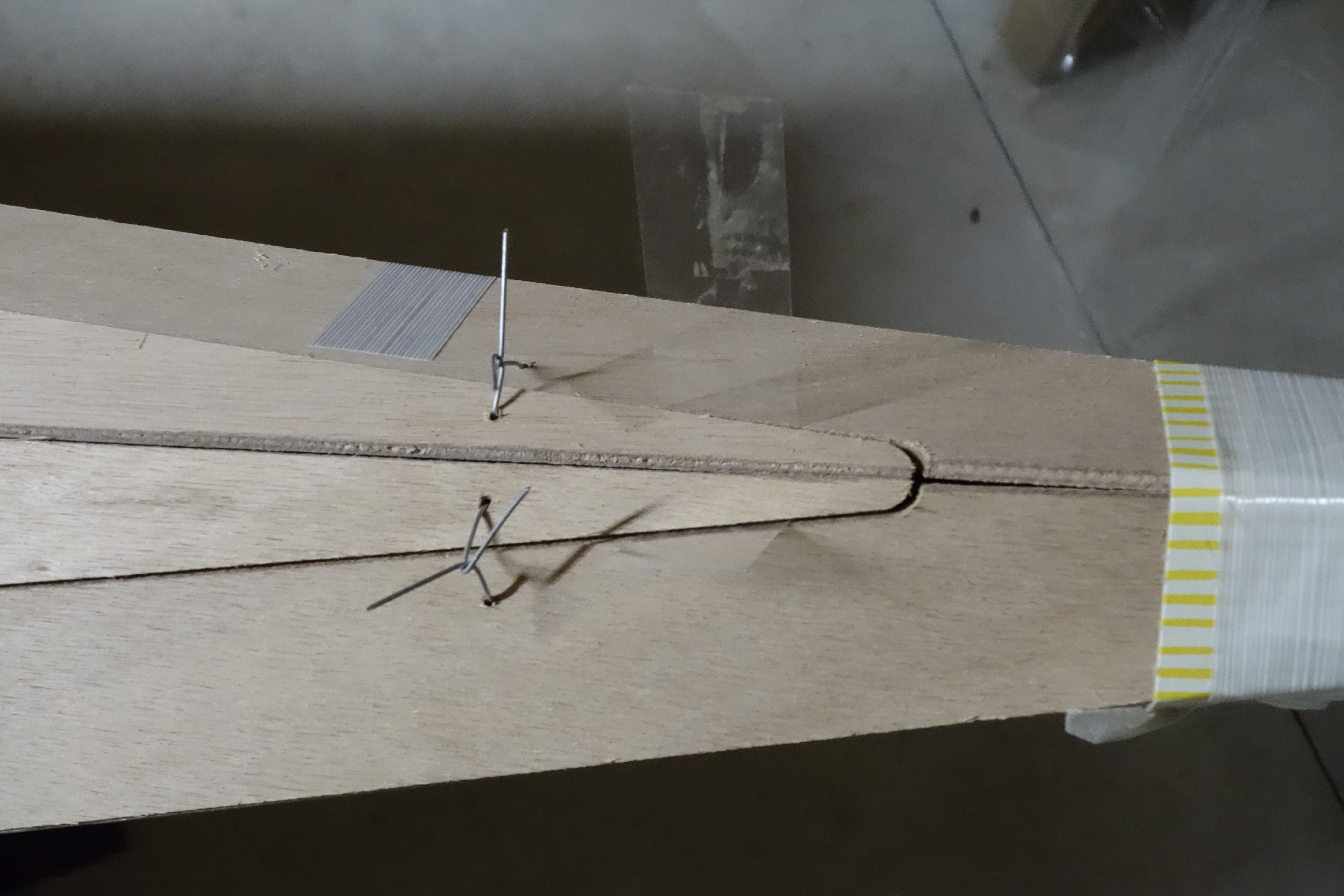
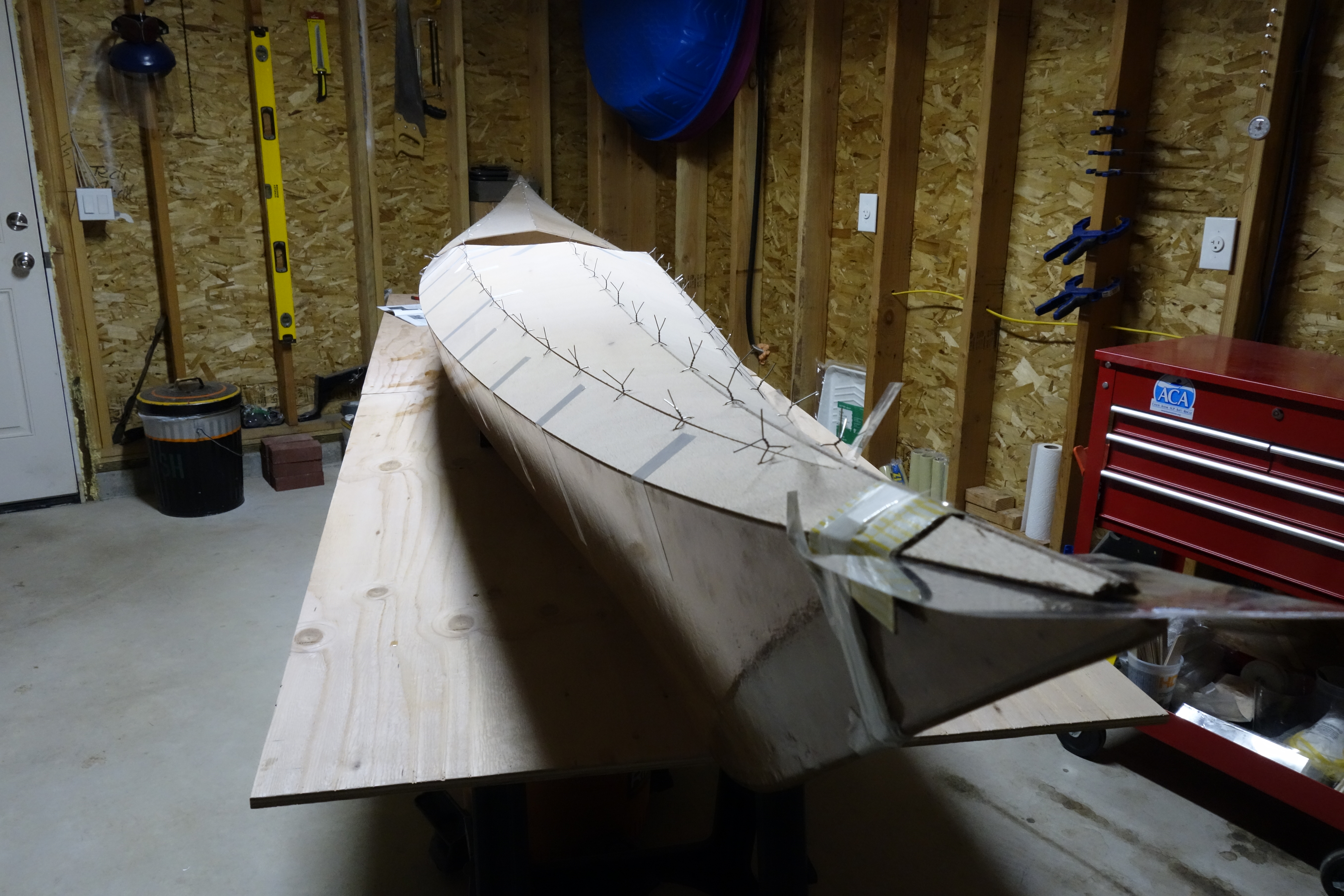
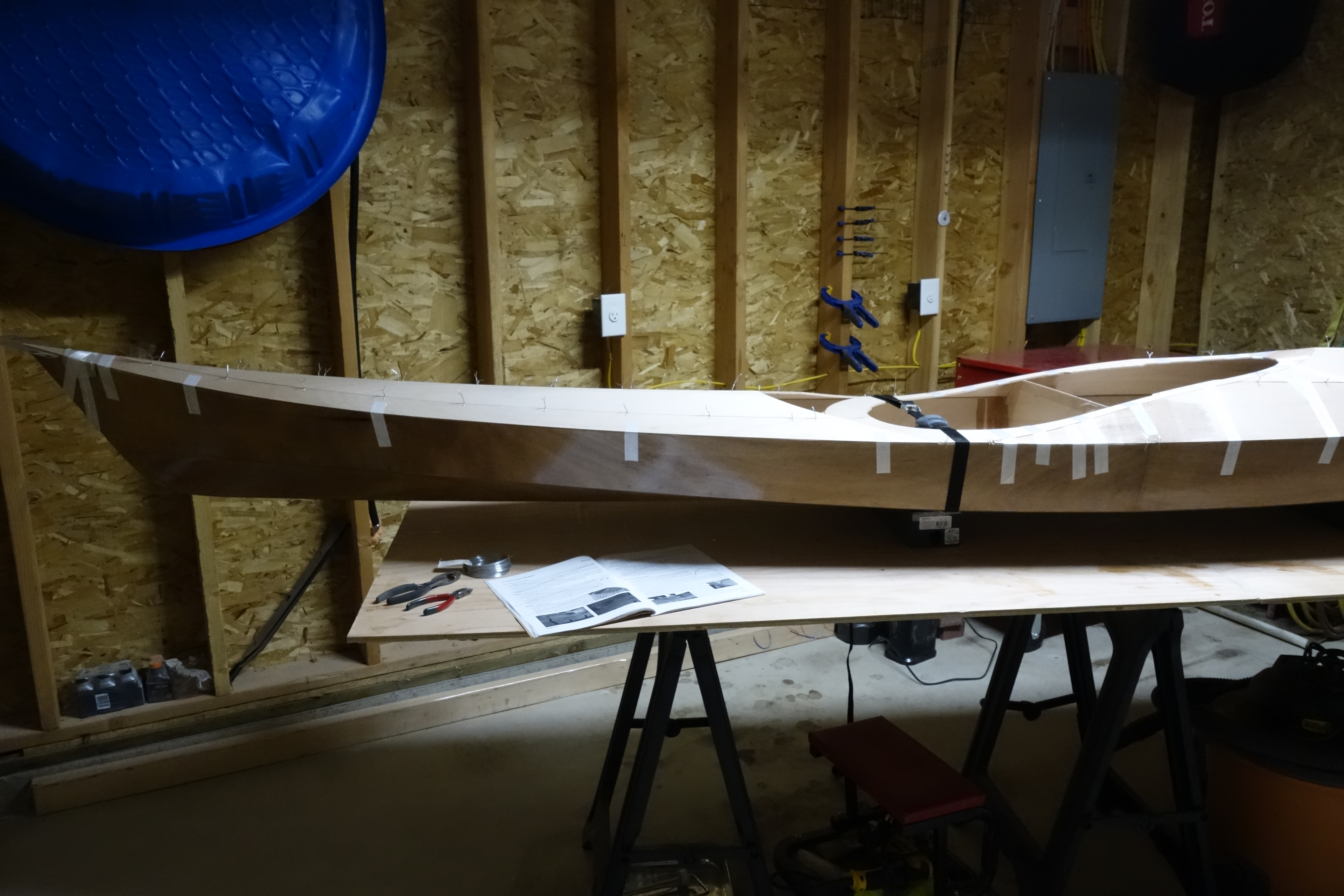
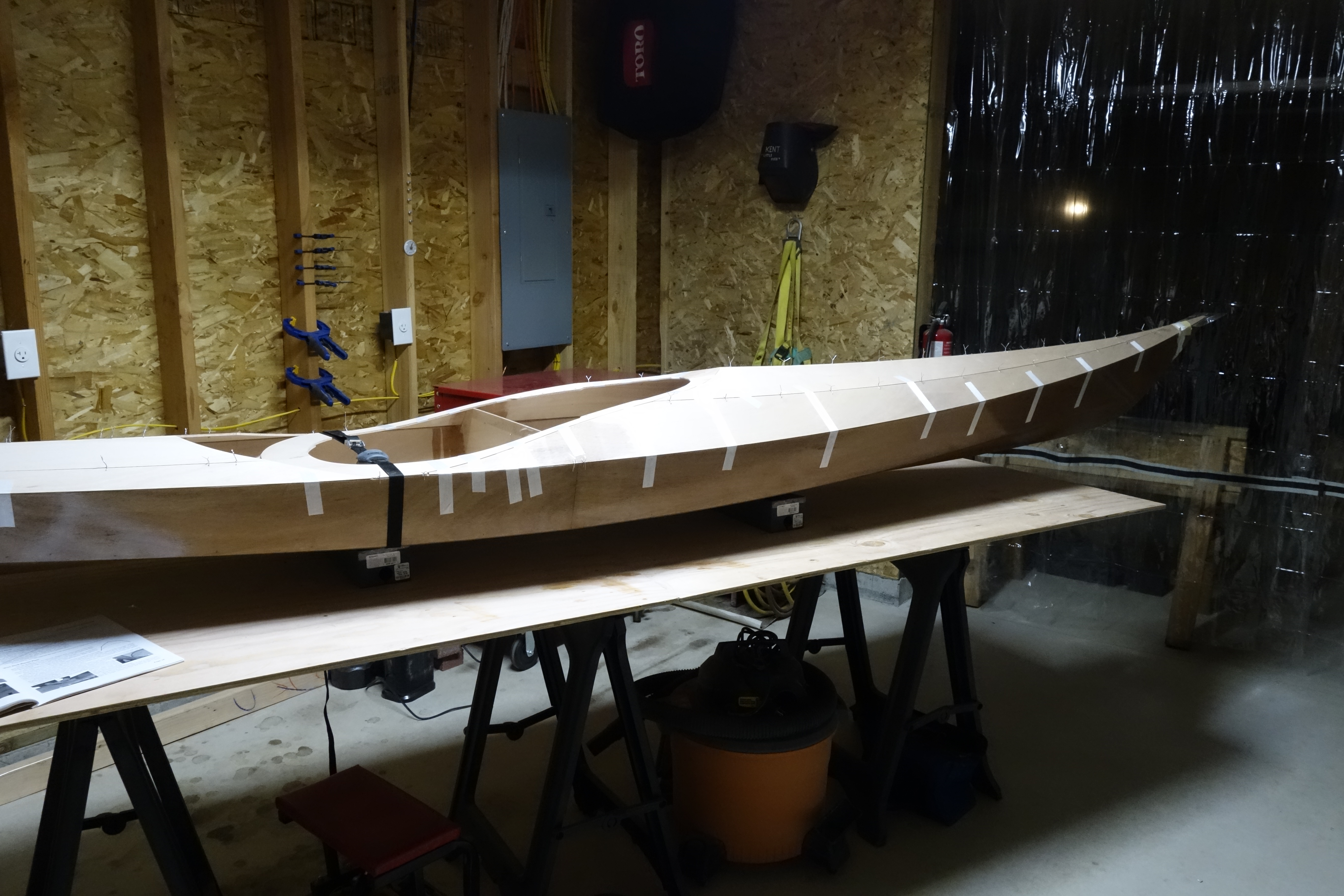
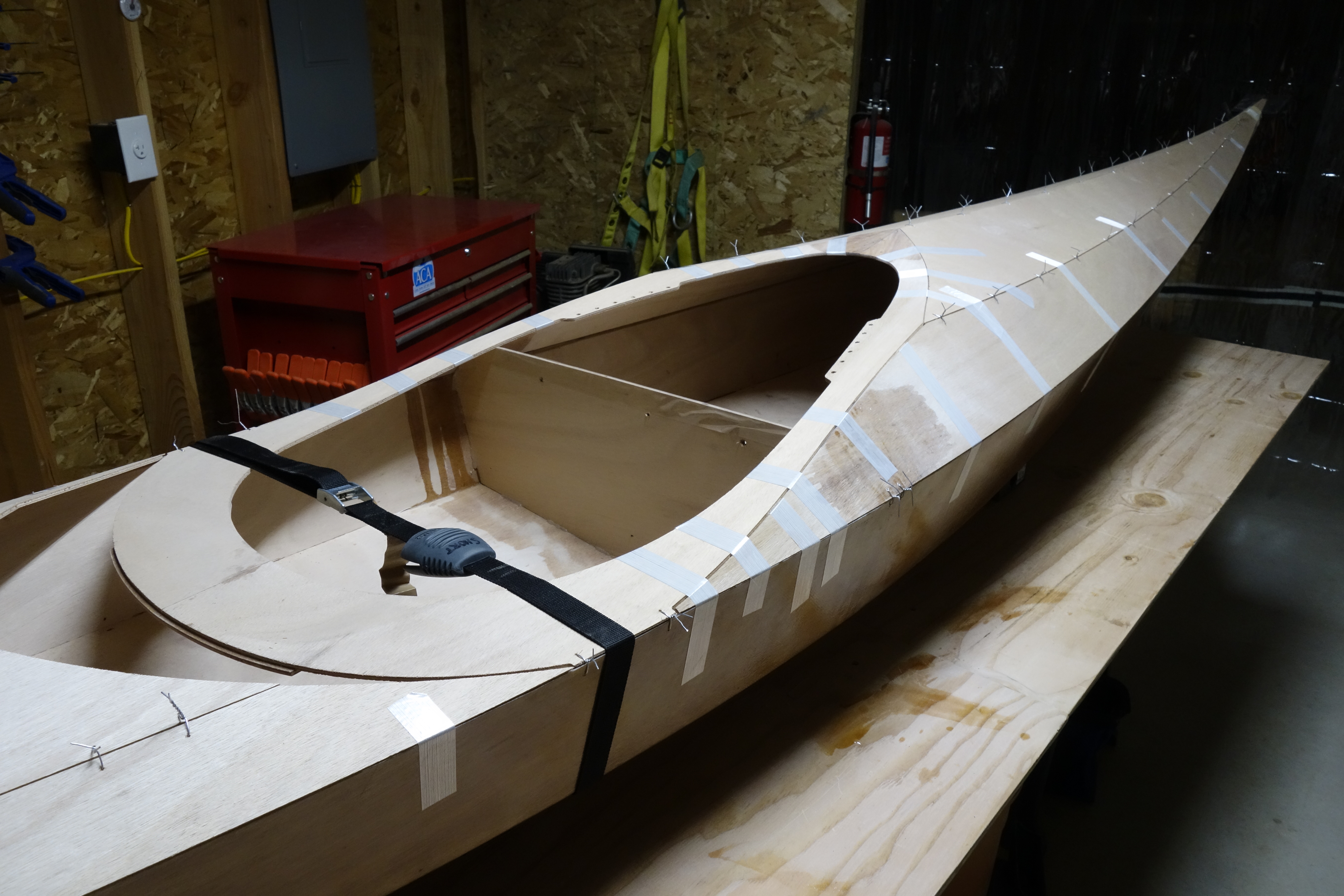
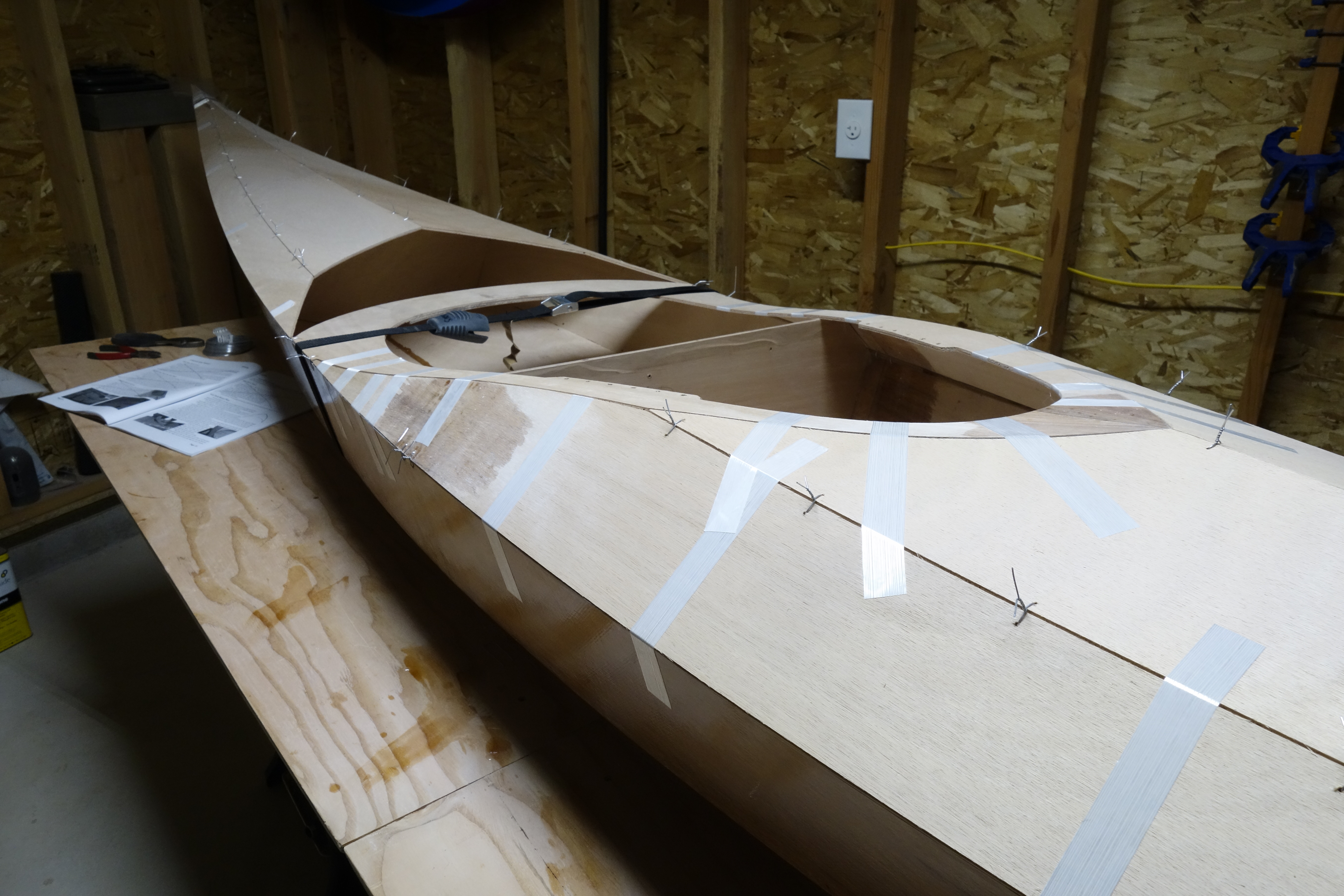
The recess plate has been installed, all seams are made smooth and fair, the wires are tightened and the deck is glued. The deck is not glued to the hull at this time as there is much work yet to do on the inside of the deck. If you’re wondering about the “custom” epoxy bow tip, one of the panels arrived in the box with a tip broken off. The only thing I could think of to do, was to cut the other tip off to the same length and make a tip for both panels out of epoxy. If you click on the photo and zoom in you can see the big blob of thickened epoxy sitting on top of the mylar, that I will eventually file and sand into a bow tip.The deck is taped to the hull, and wired where necessary so that the deck takes its proper shape. Like the hull, the deck is first glued with straight epoxy, and then the seams that are covered with tape or that were not completely glued will be filled in with epoxy thickened with wood flour.The strap is to keep the hull pulled in tight while the deck it curing. Not strictly necessary, but it made my life easier.
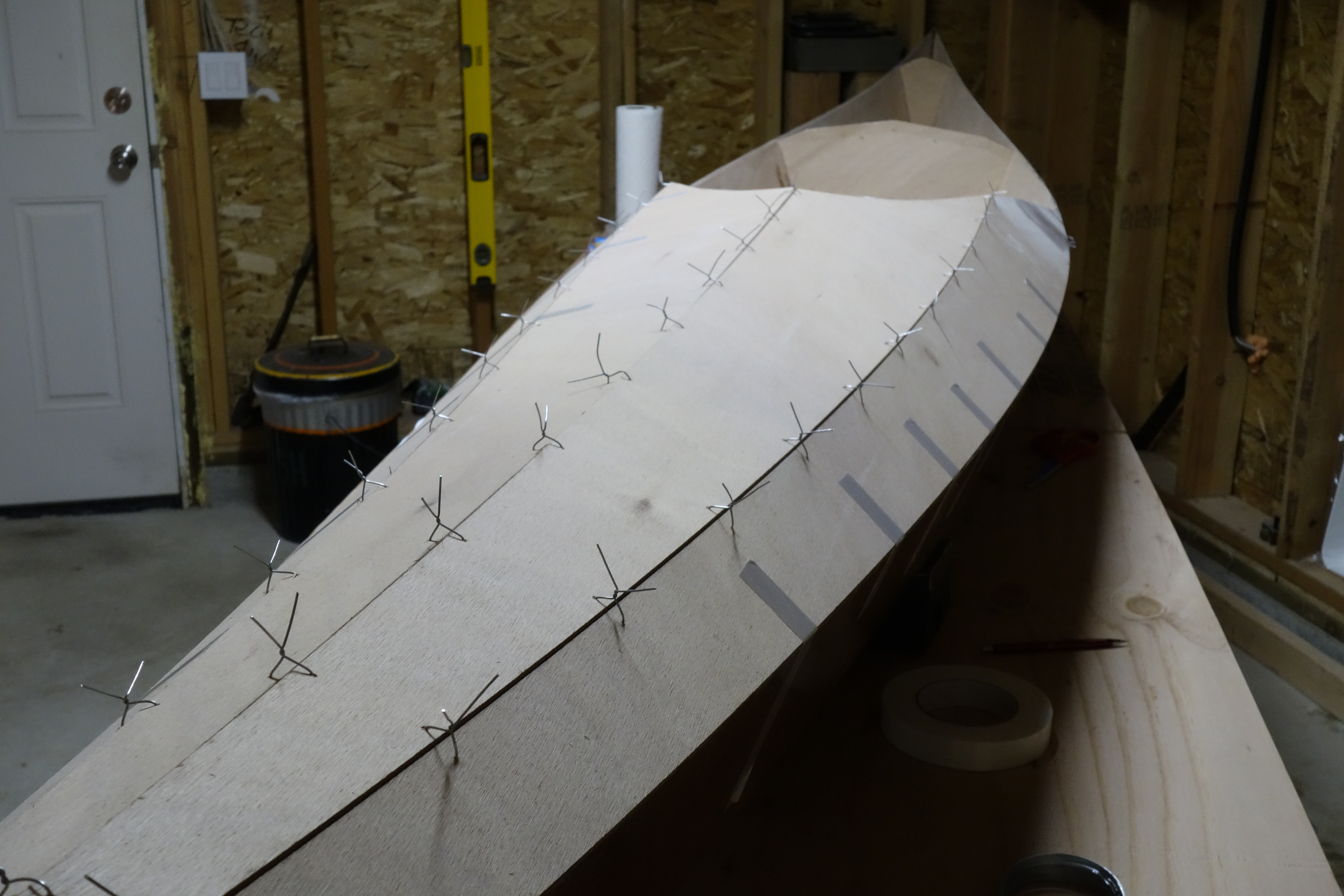
With the outside of the hull finished, construction of the deck can begin. The deck panels have been drilled in much the same way as the hull panels were, and will be stitched together atop the temporary frames in the hull. The spacers that were screwed to the frames during hull construction have been removed so now the frames will guide the shape of the deck as it is wired together.
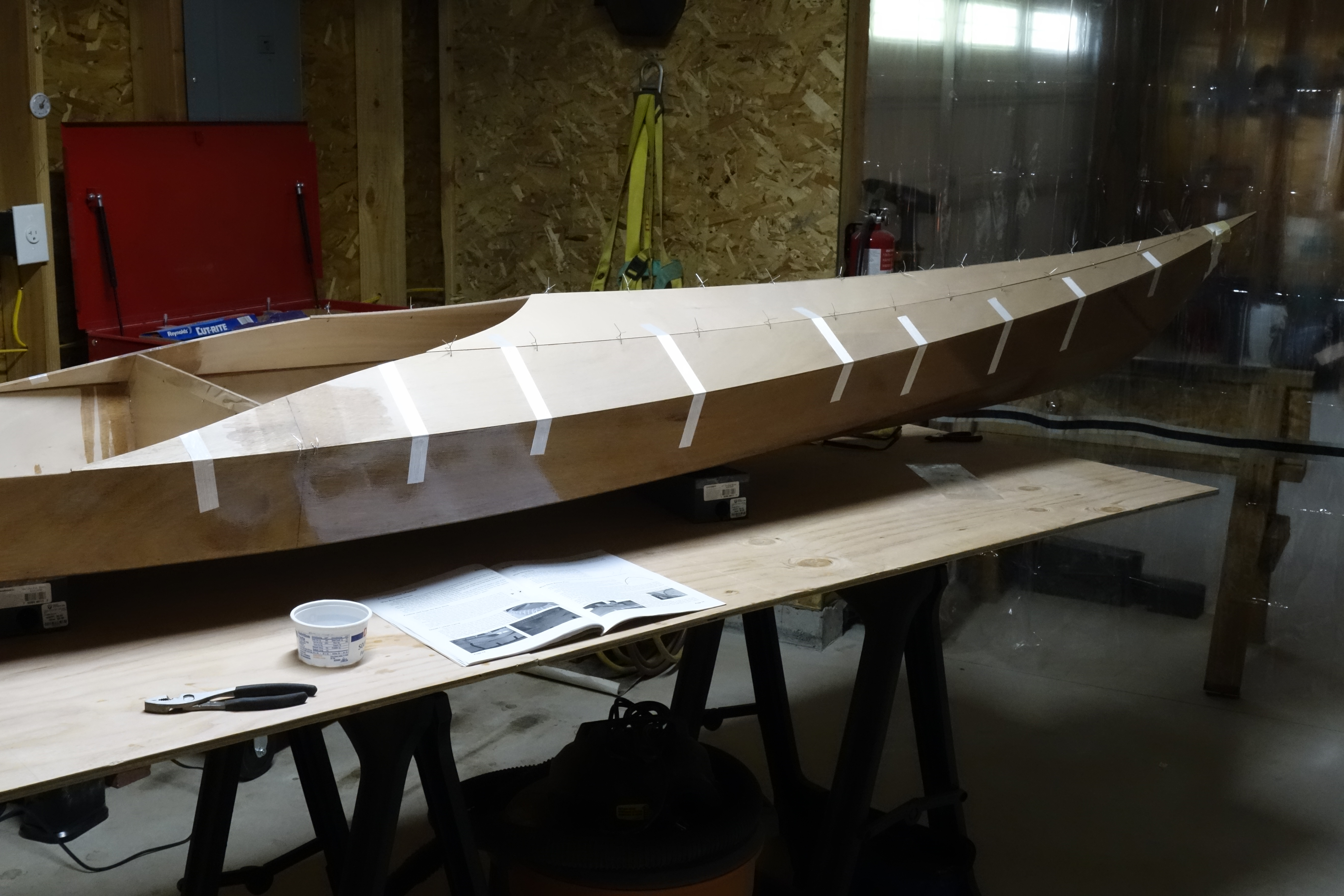
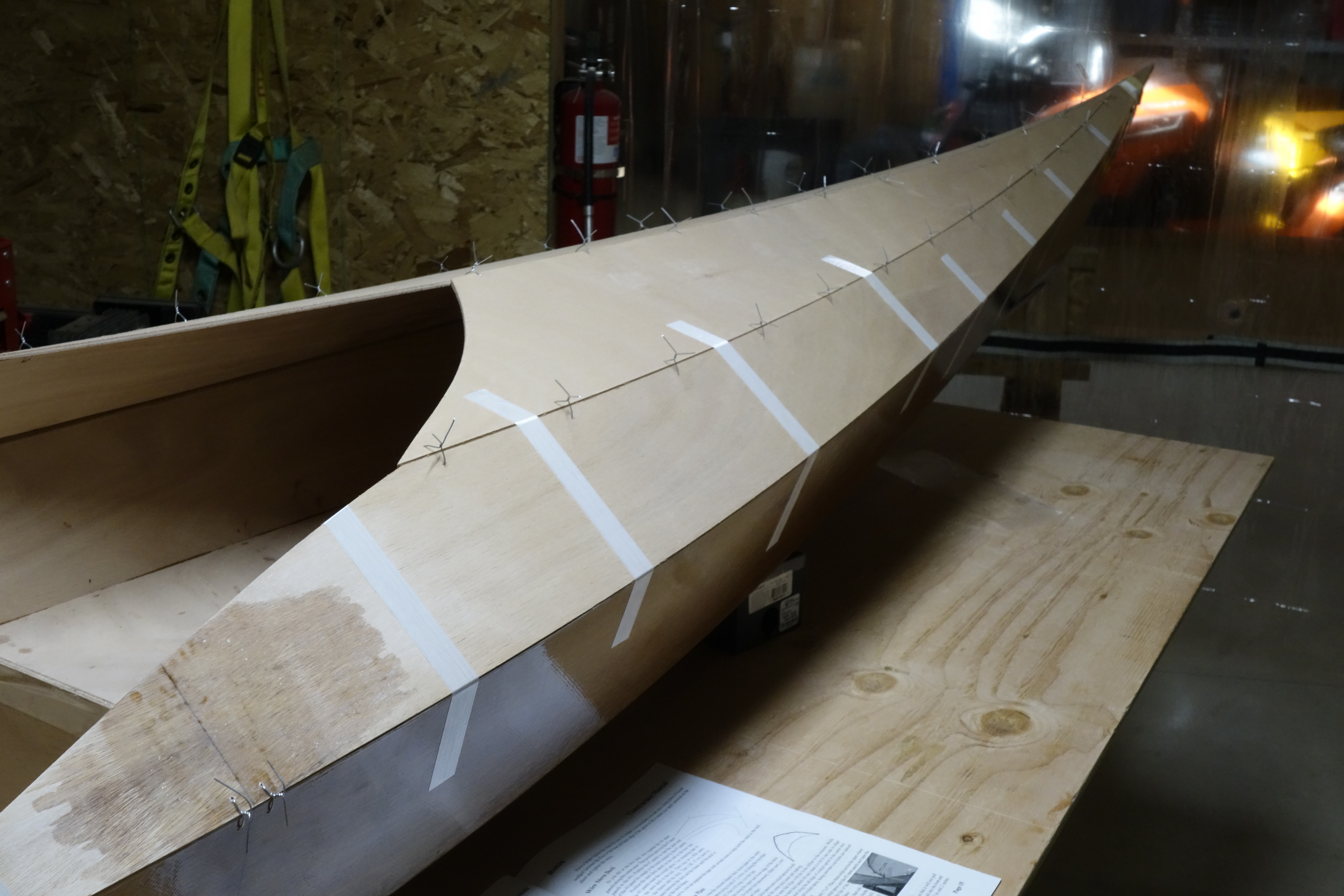
At this stage, fiberglass strapping tape is used to hold the deck in place on the hull.Bow deck loosely wired together.Bow deck panels carefully aligned, but not yet wired tight.Bow and stern deck panels wired, except for the deck recess plate. It goes in last and requires some careful flexing and fitting to get to fit correctly. The piece of mylar that you can see in the foreground of the photo, between the hull and deck bow tip is there to keep me from accidentally gluing the deck to the hull before I finish the inside of the deck! There is one at the stern tip as well.
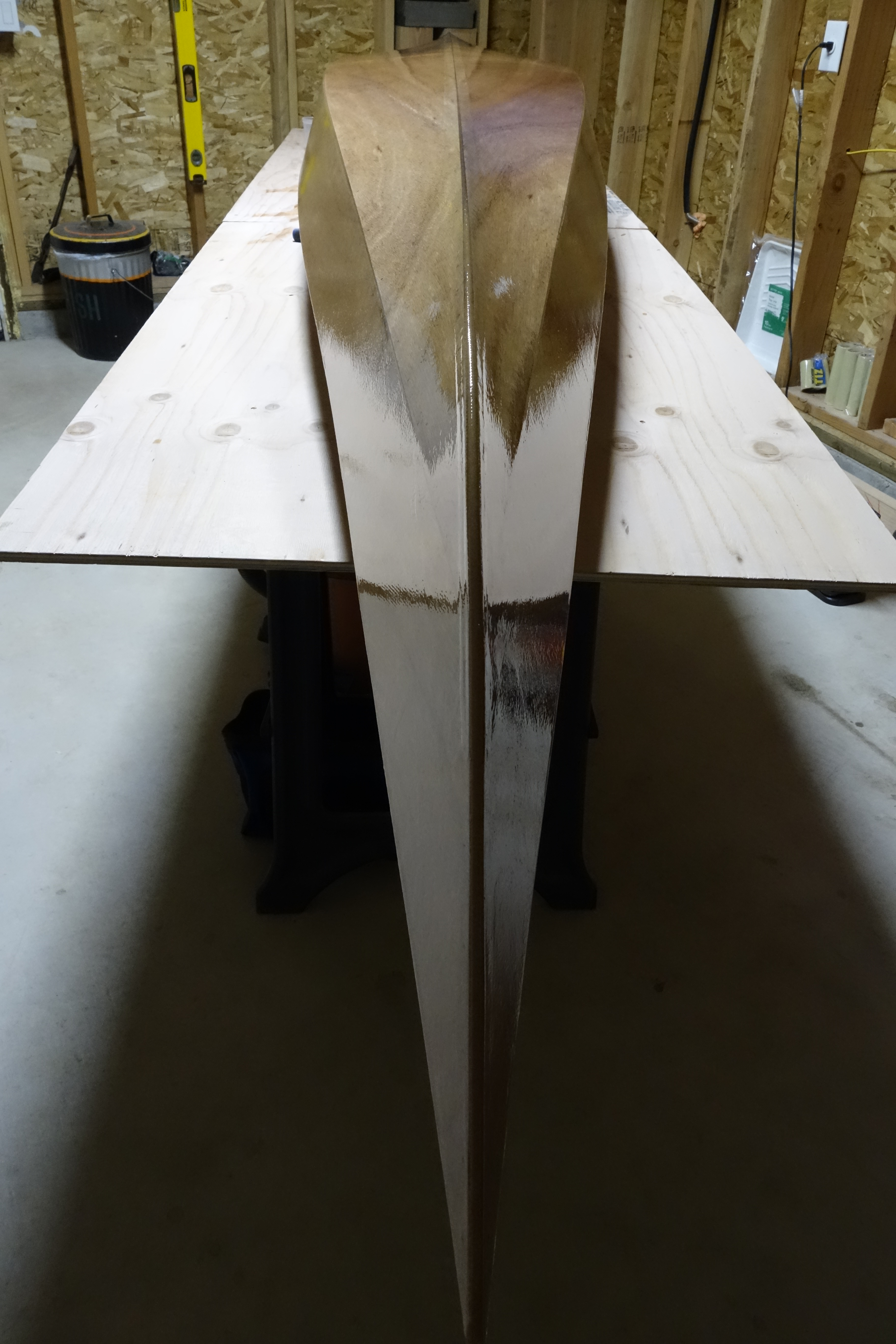
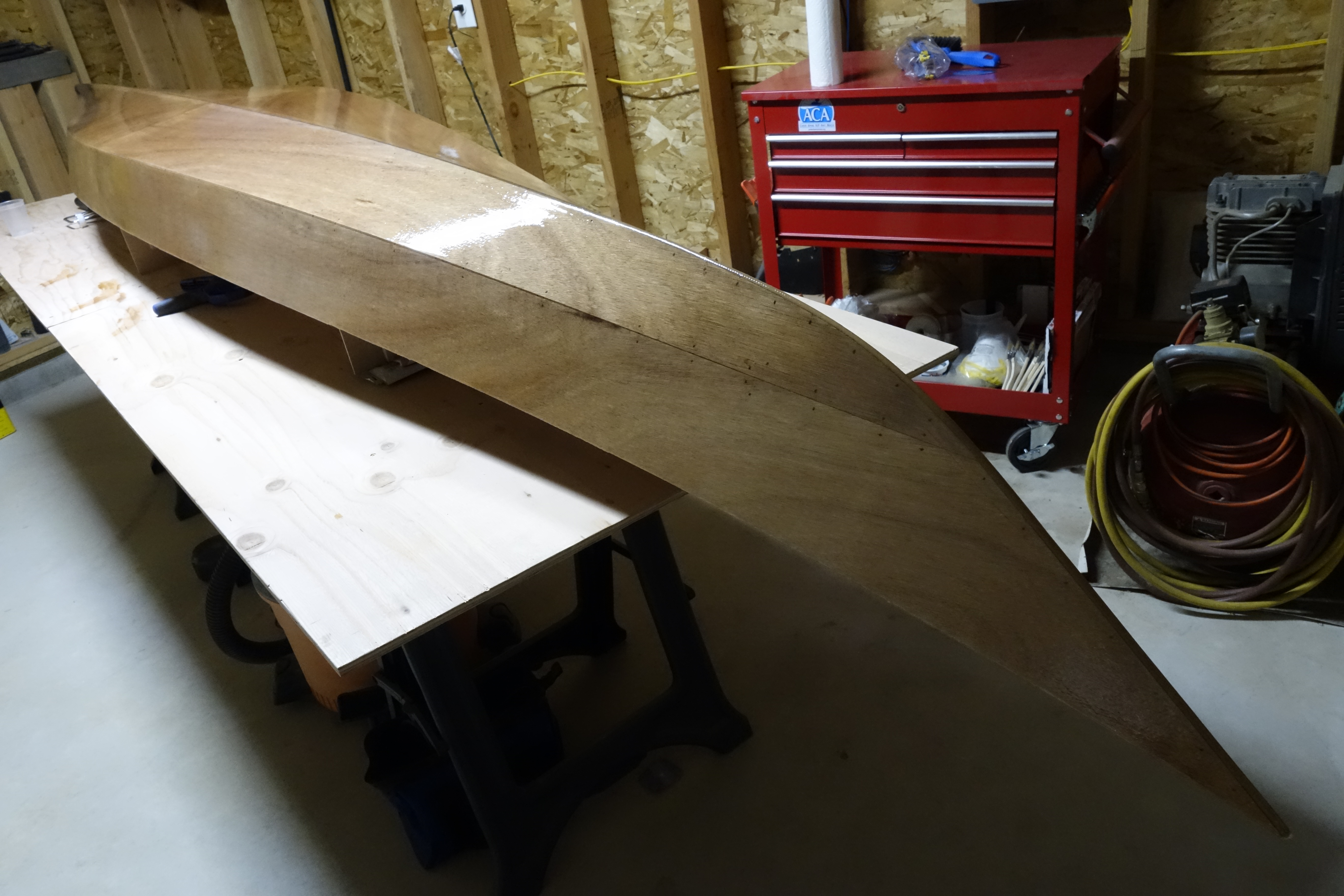
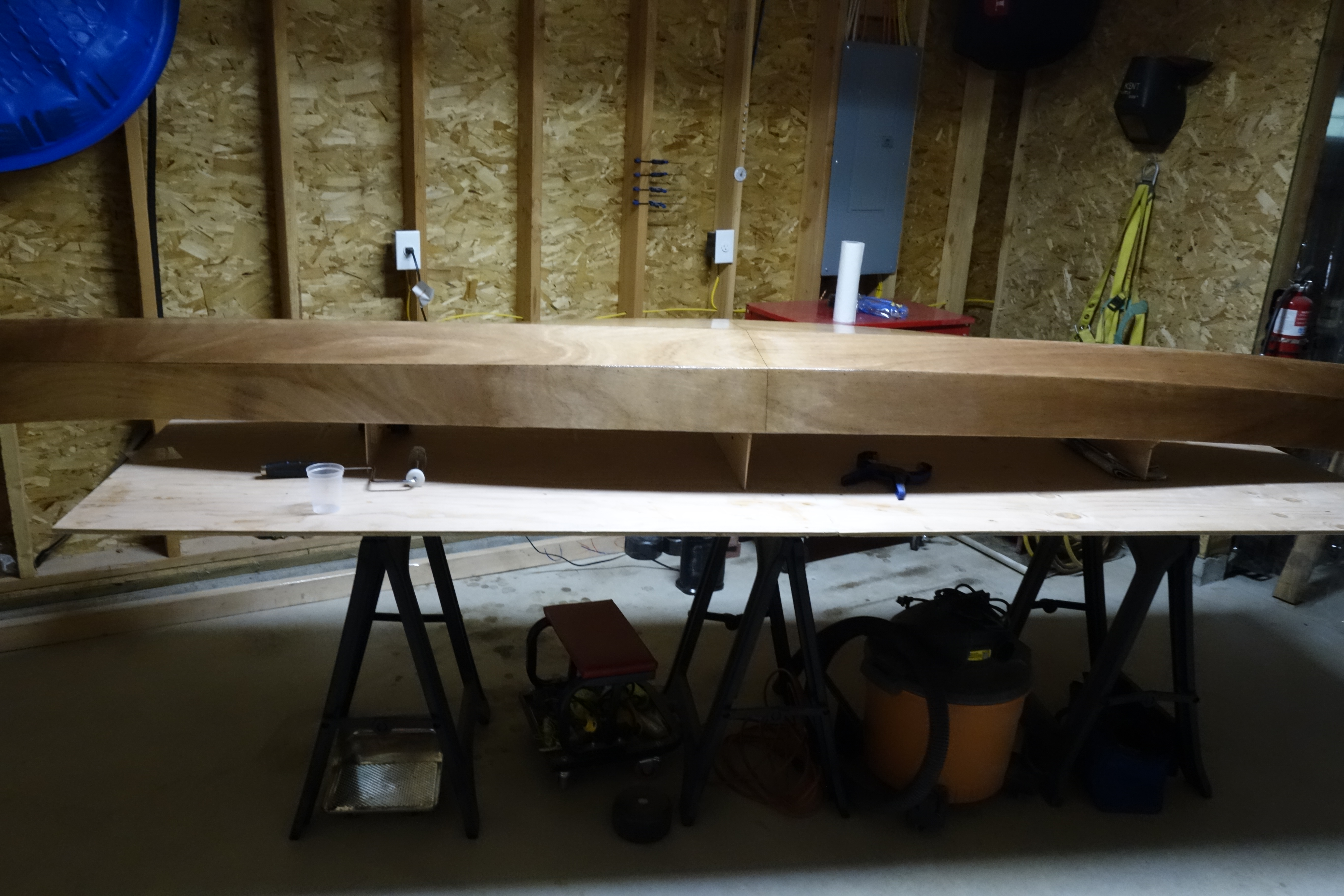
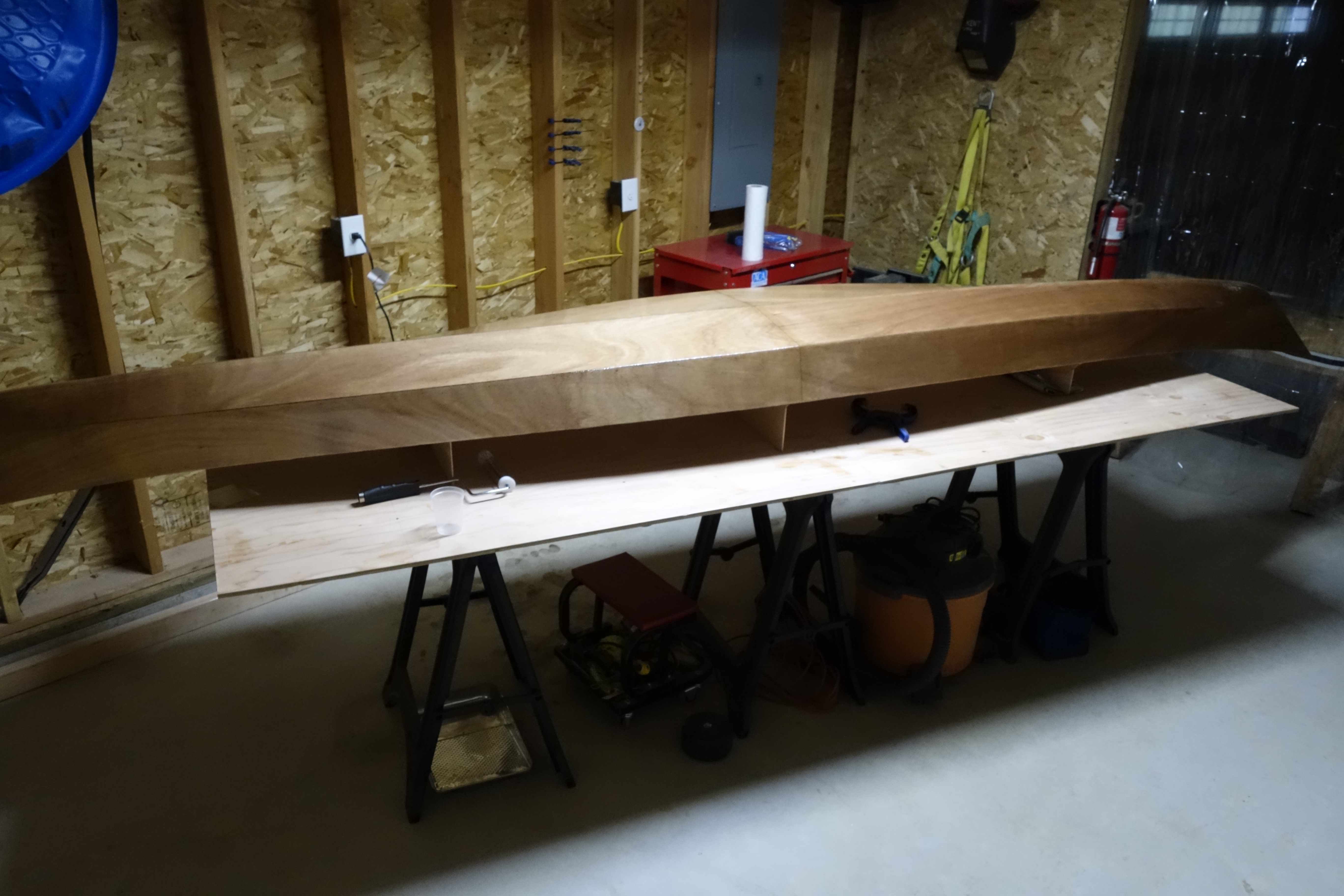
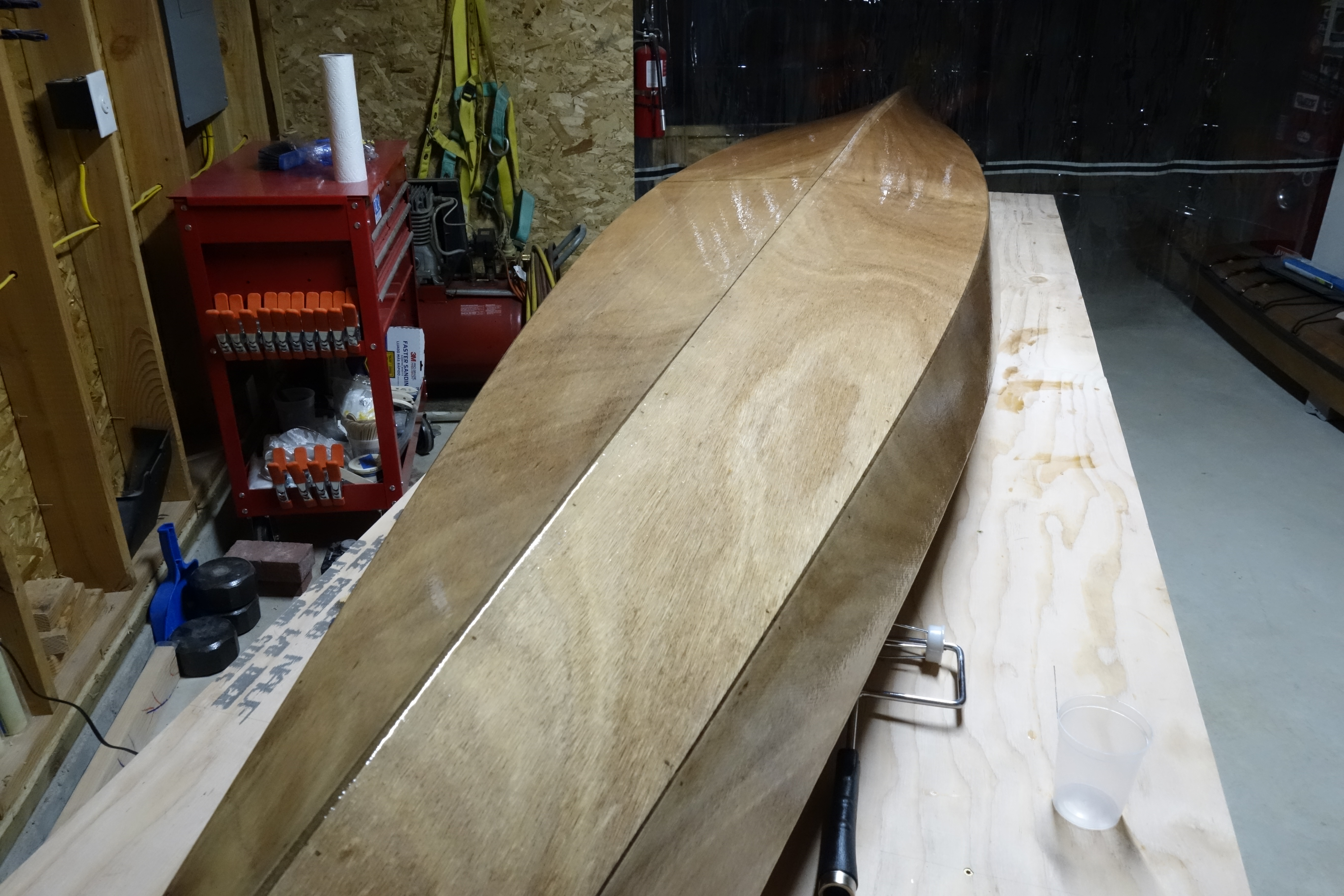
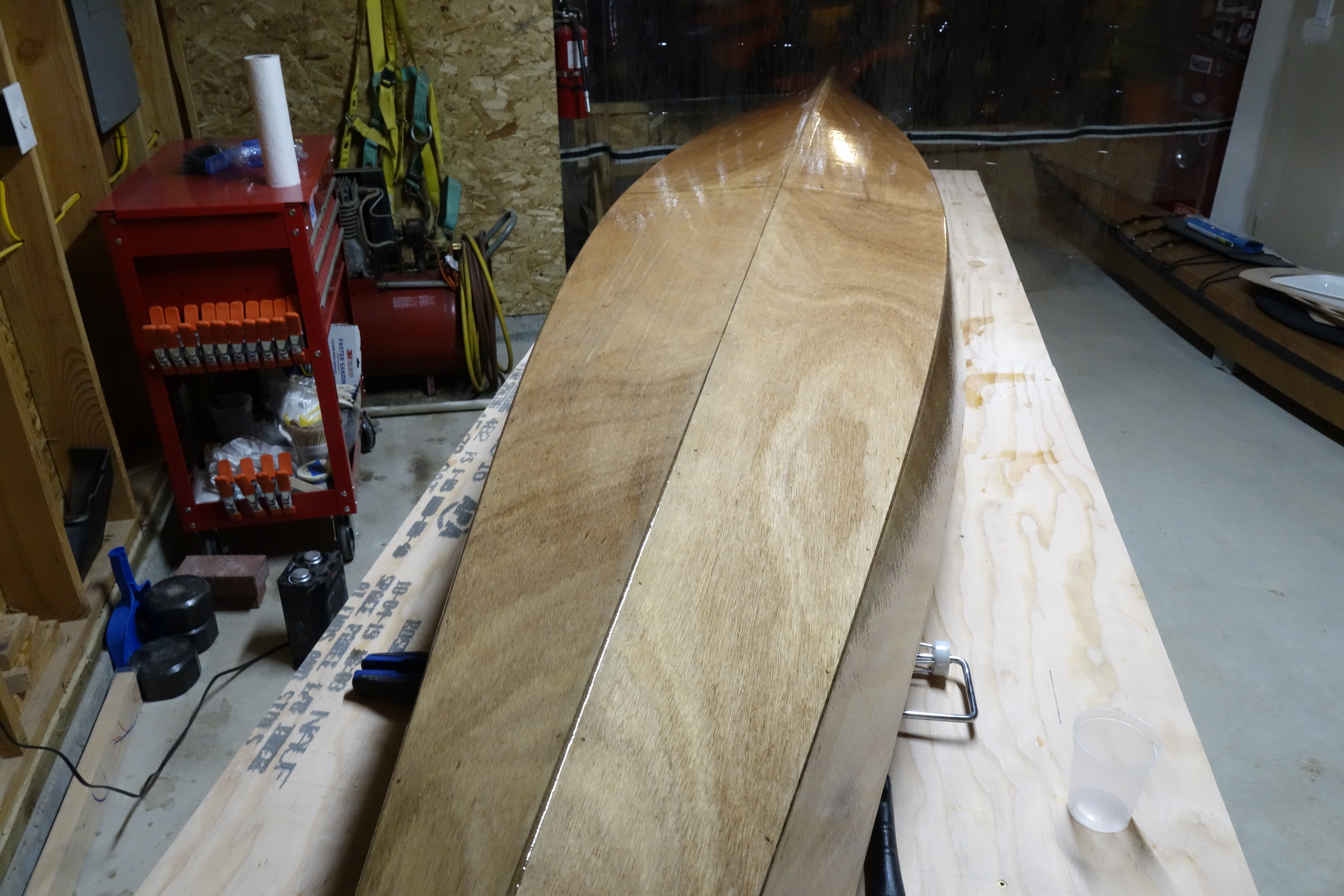
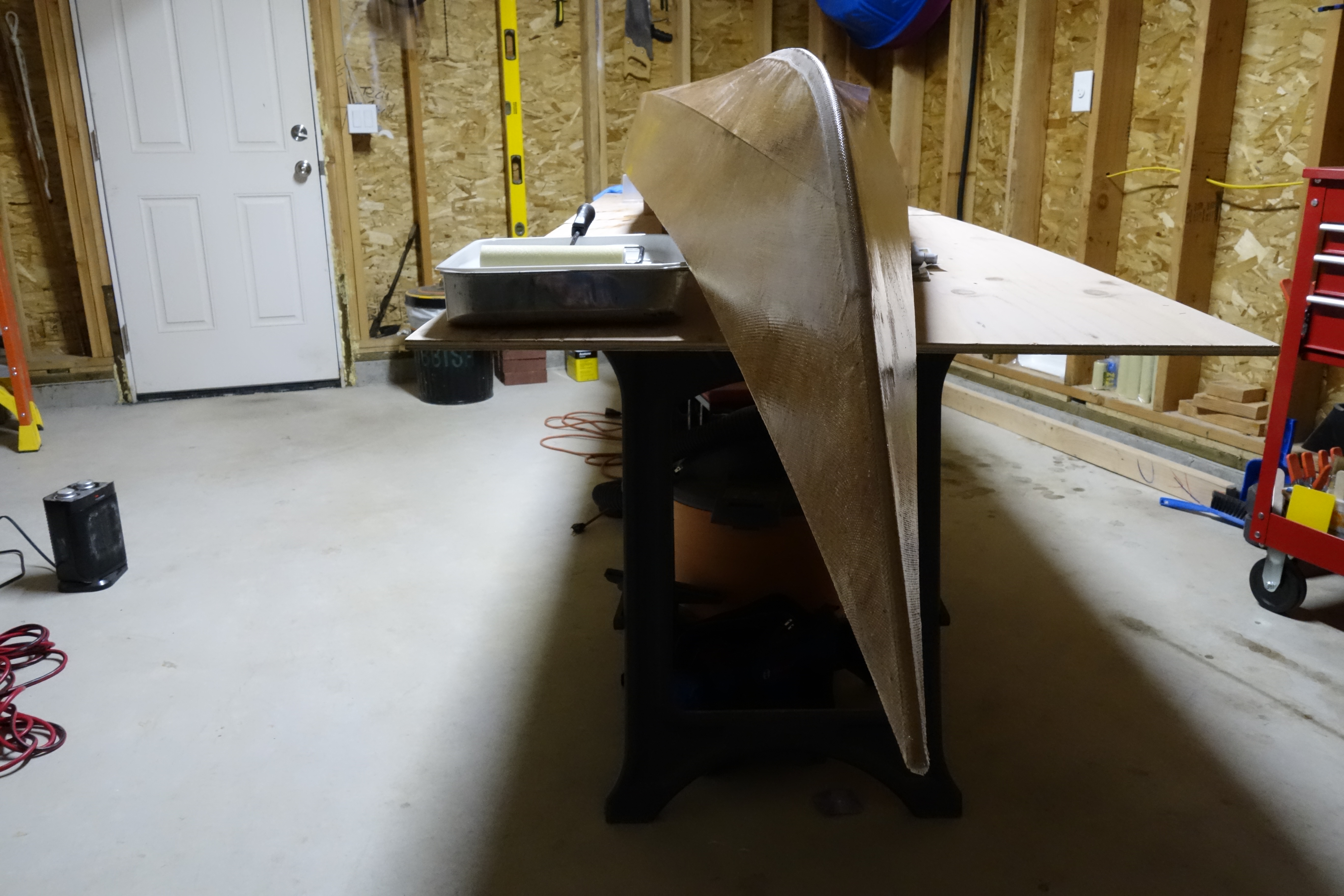
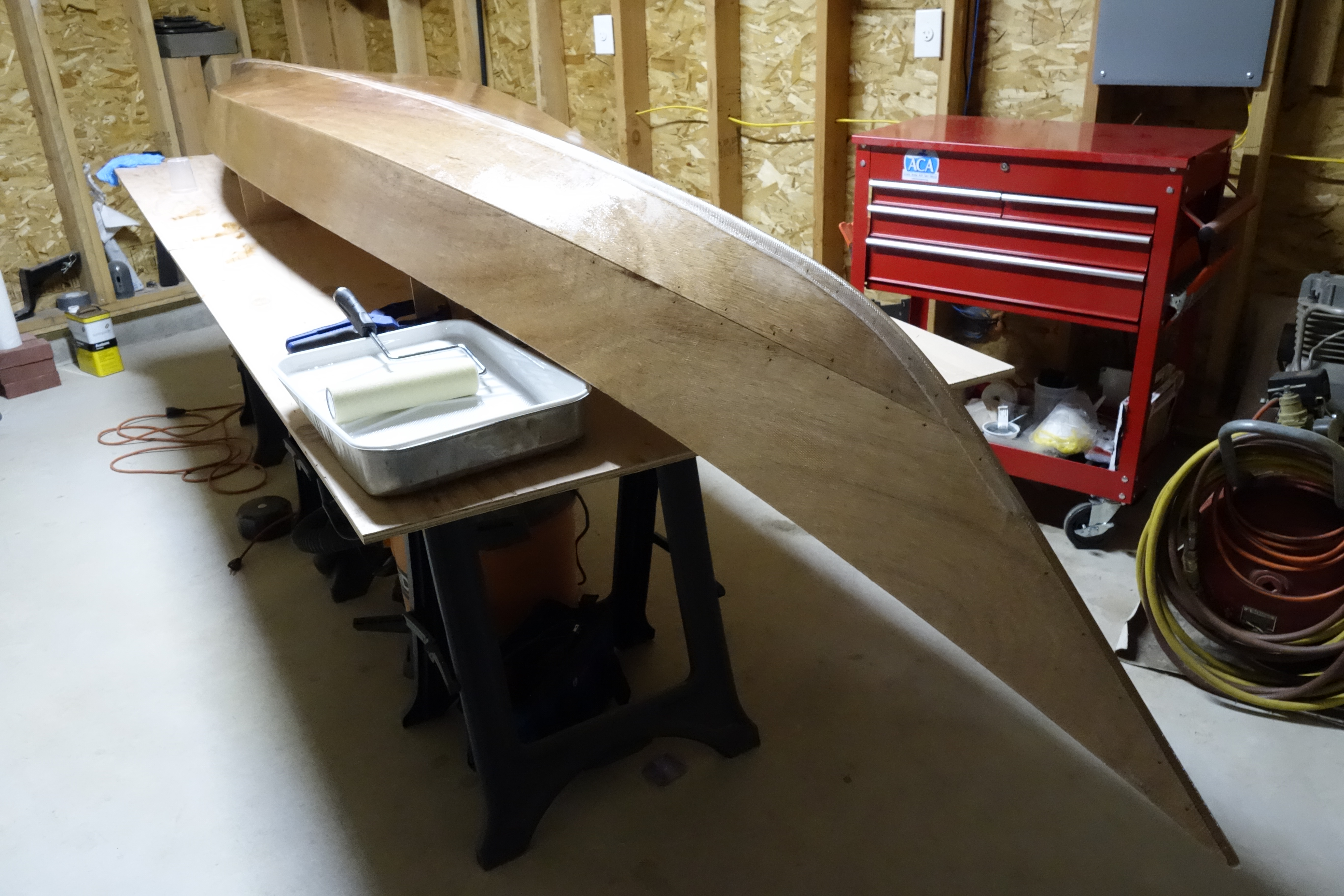
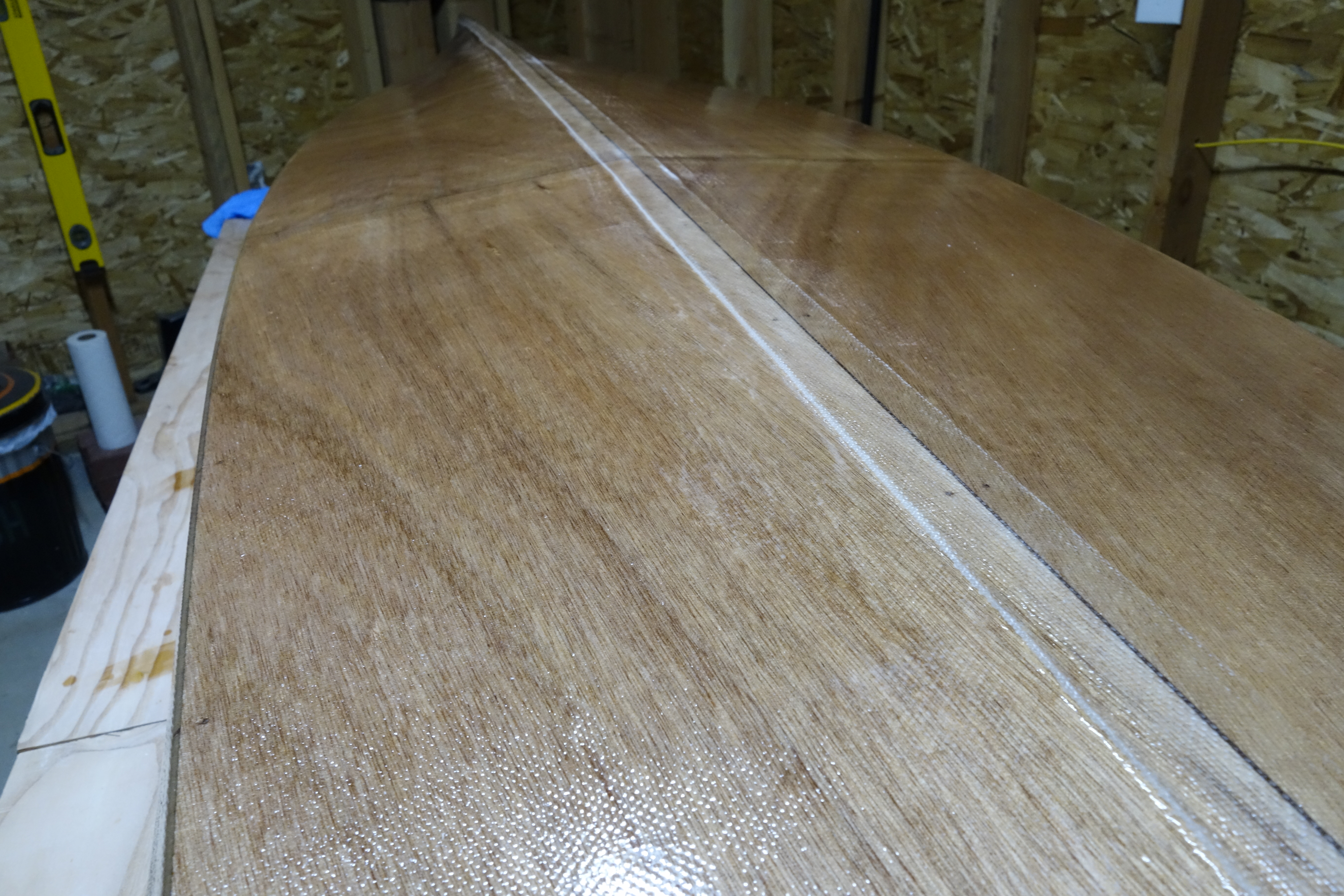
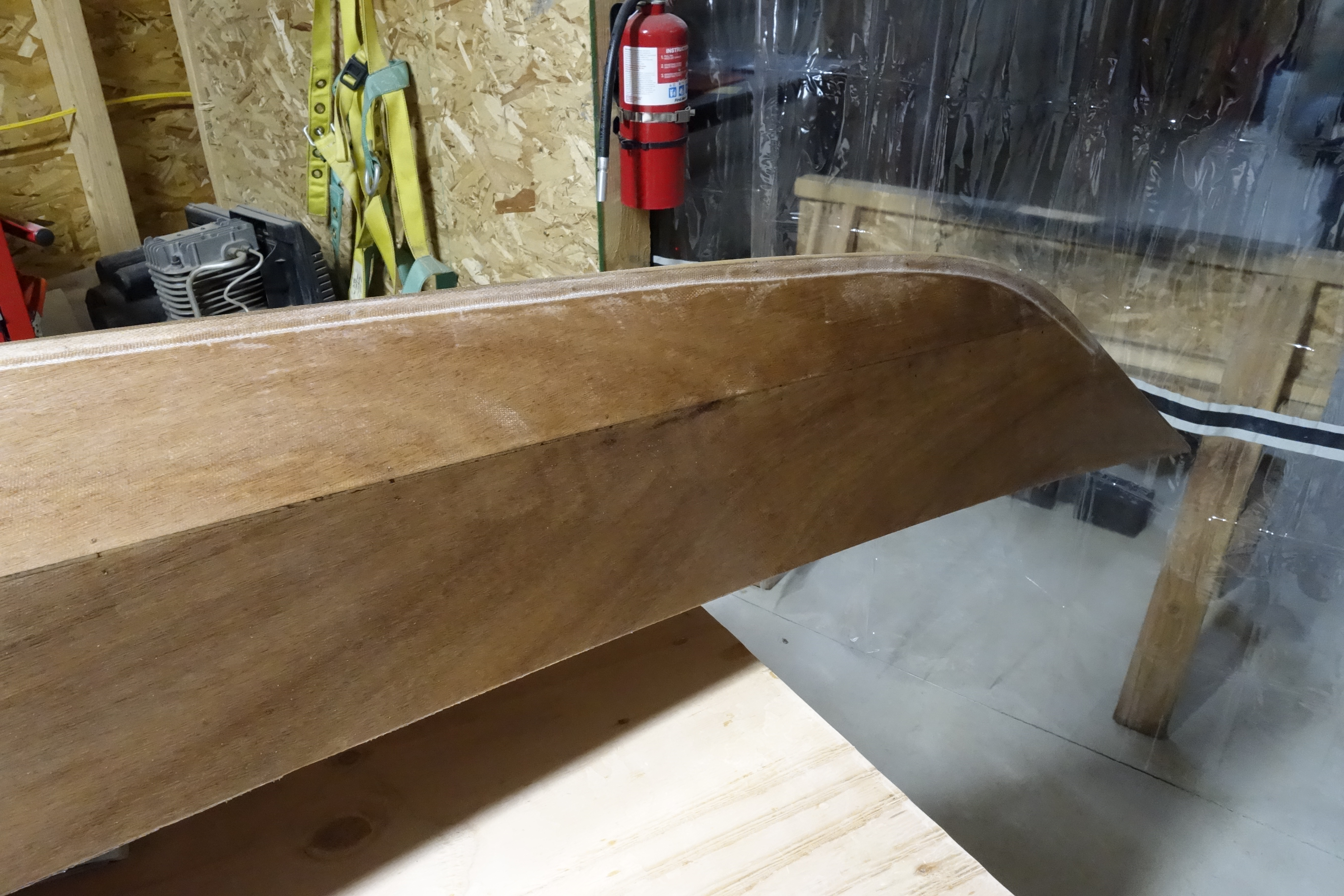
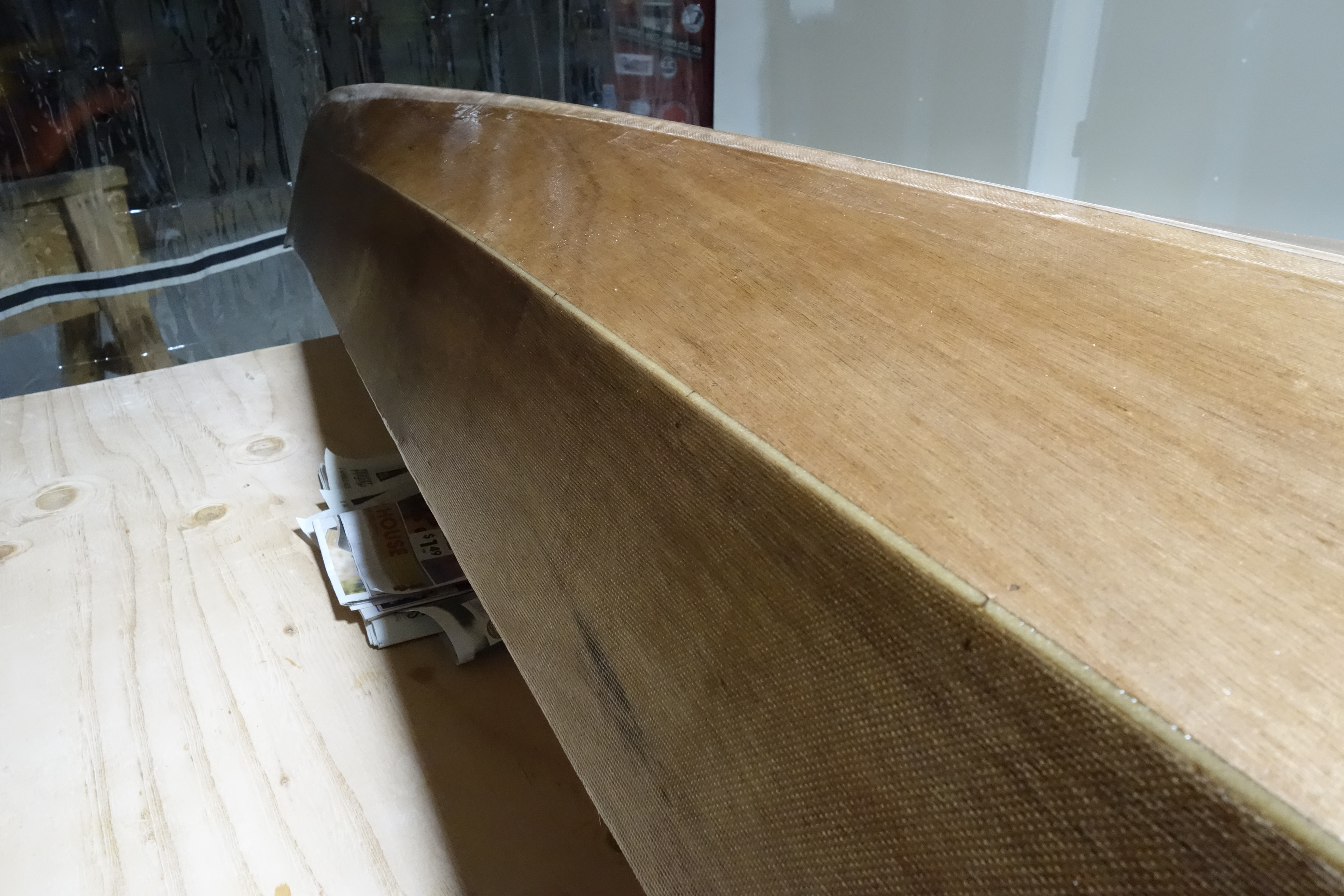
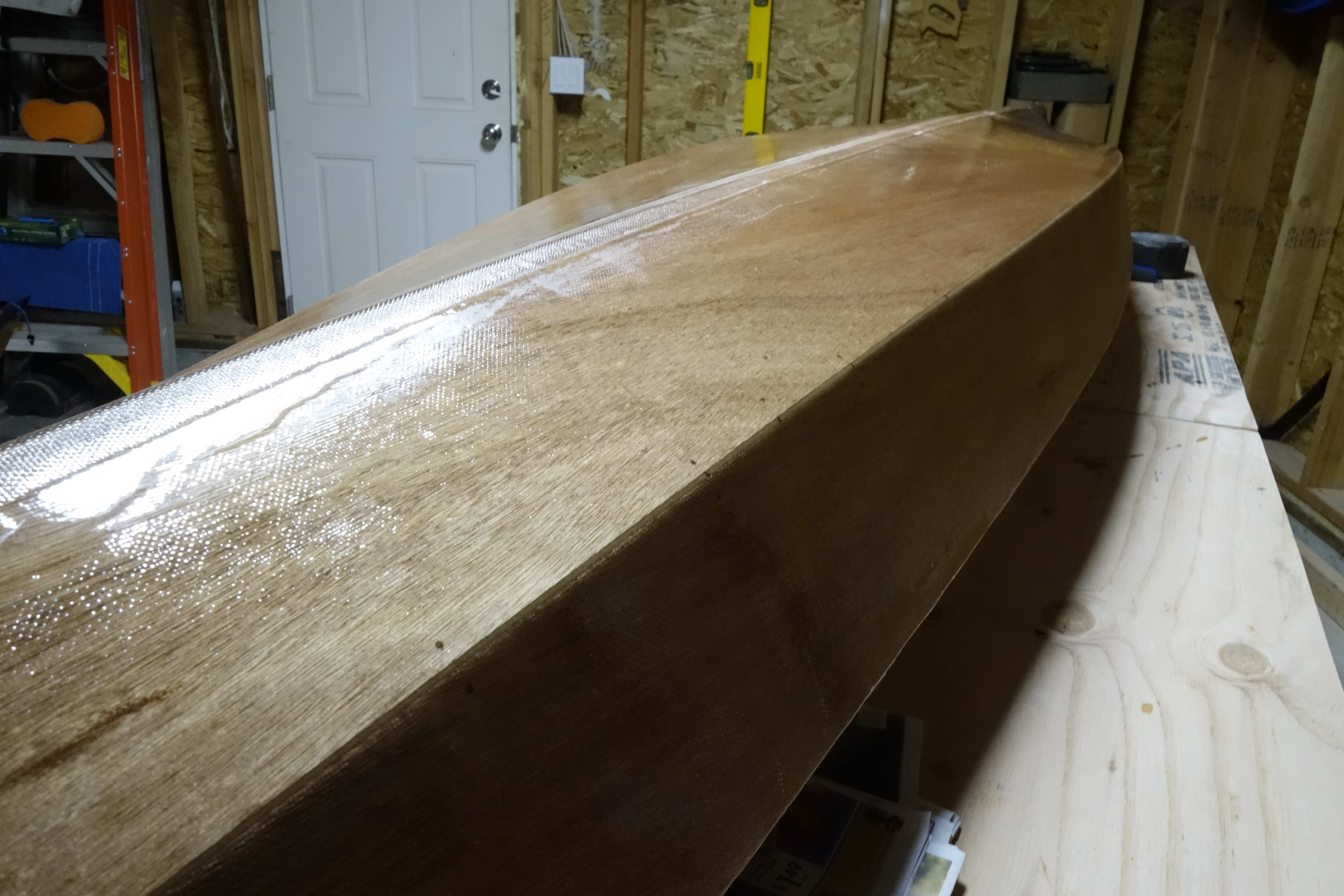
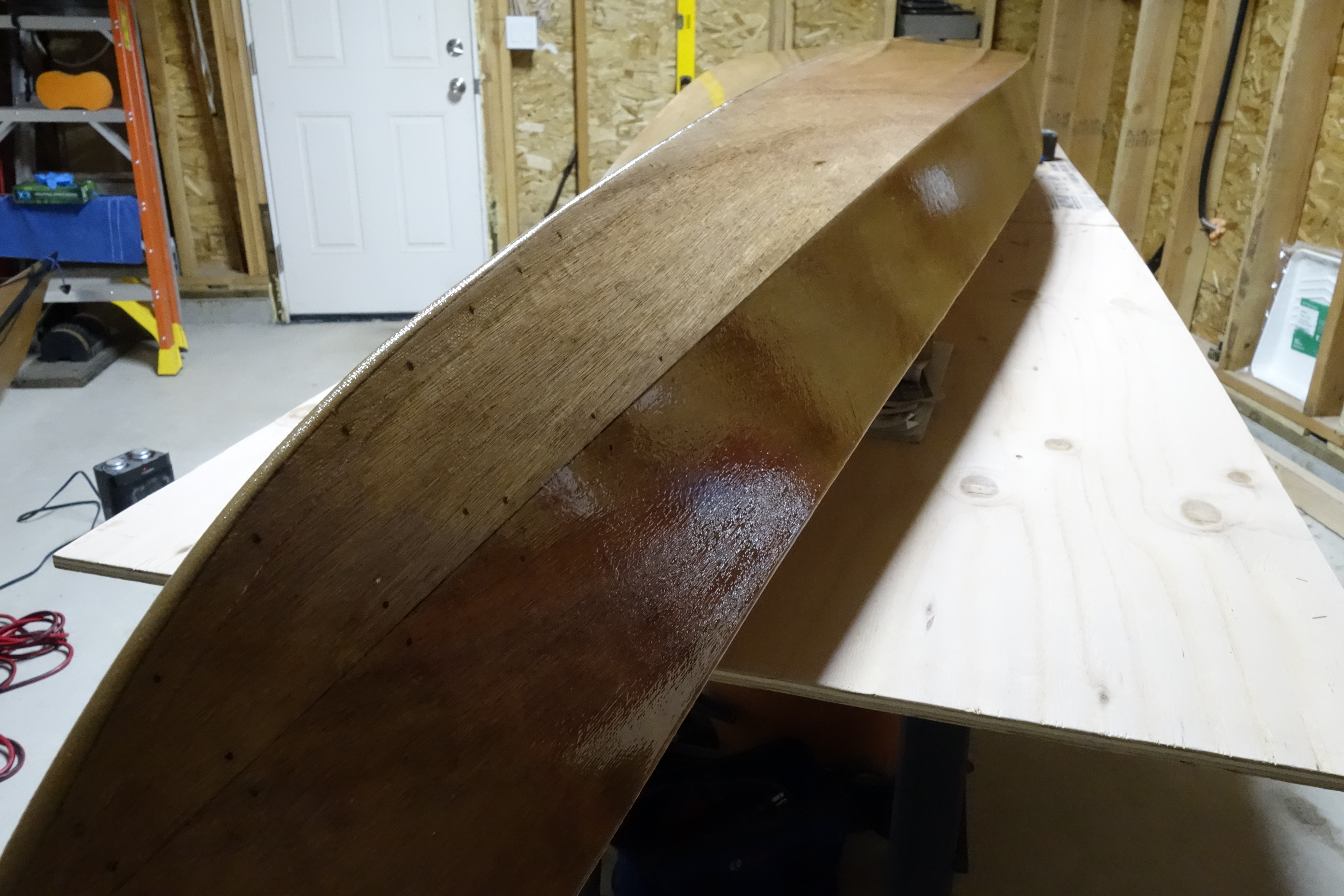
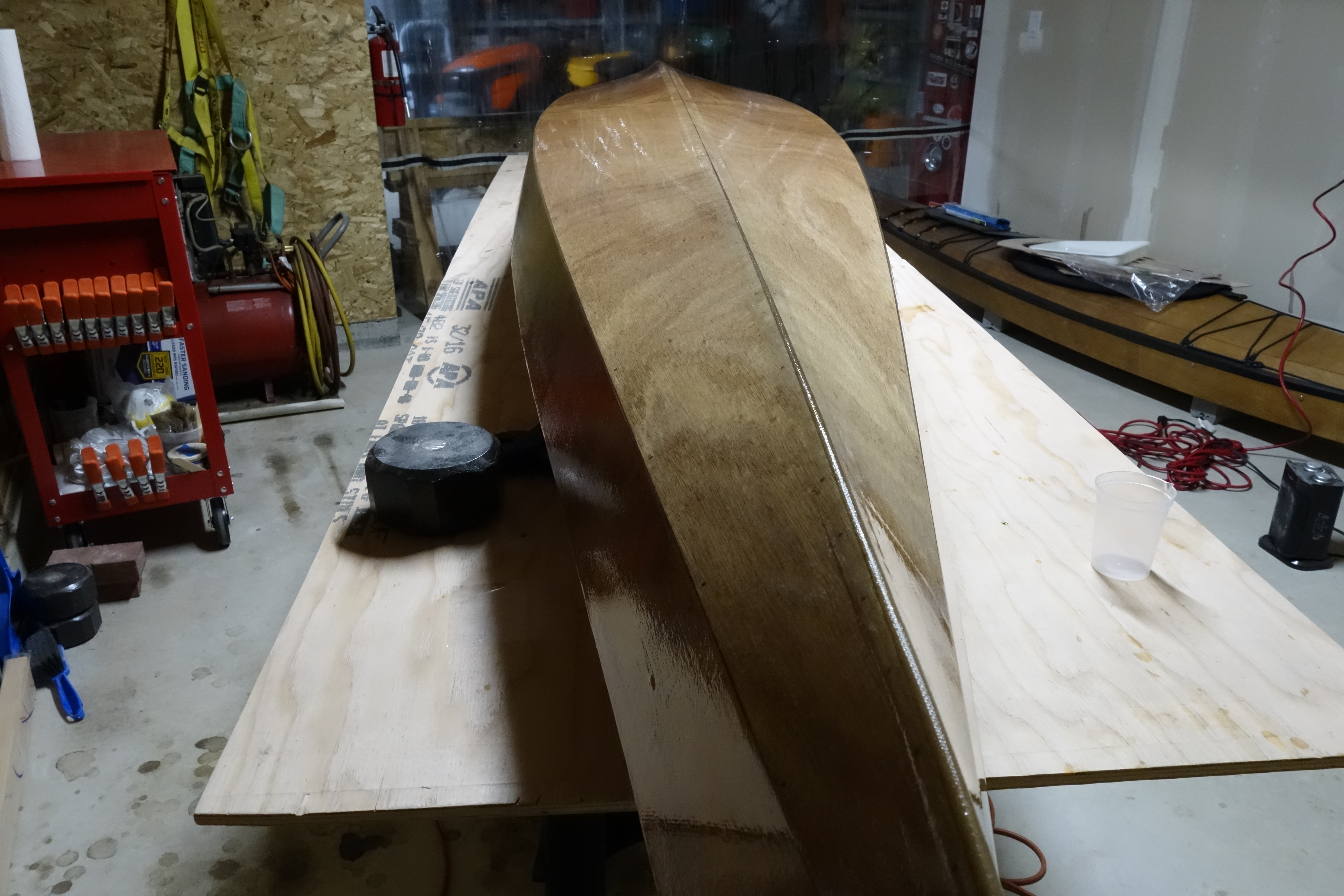
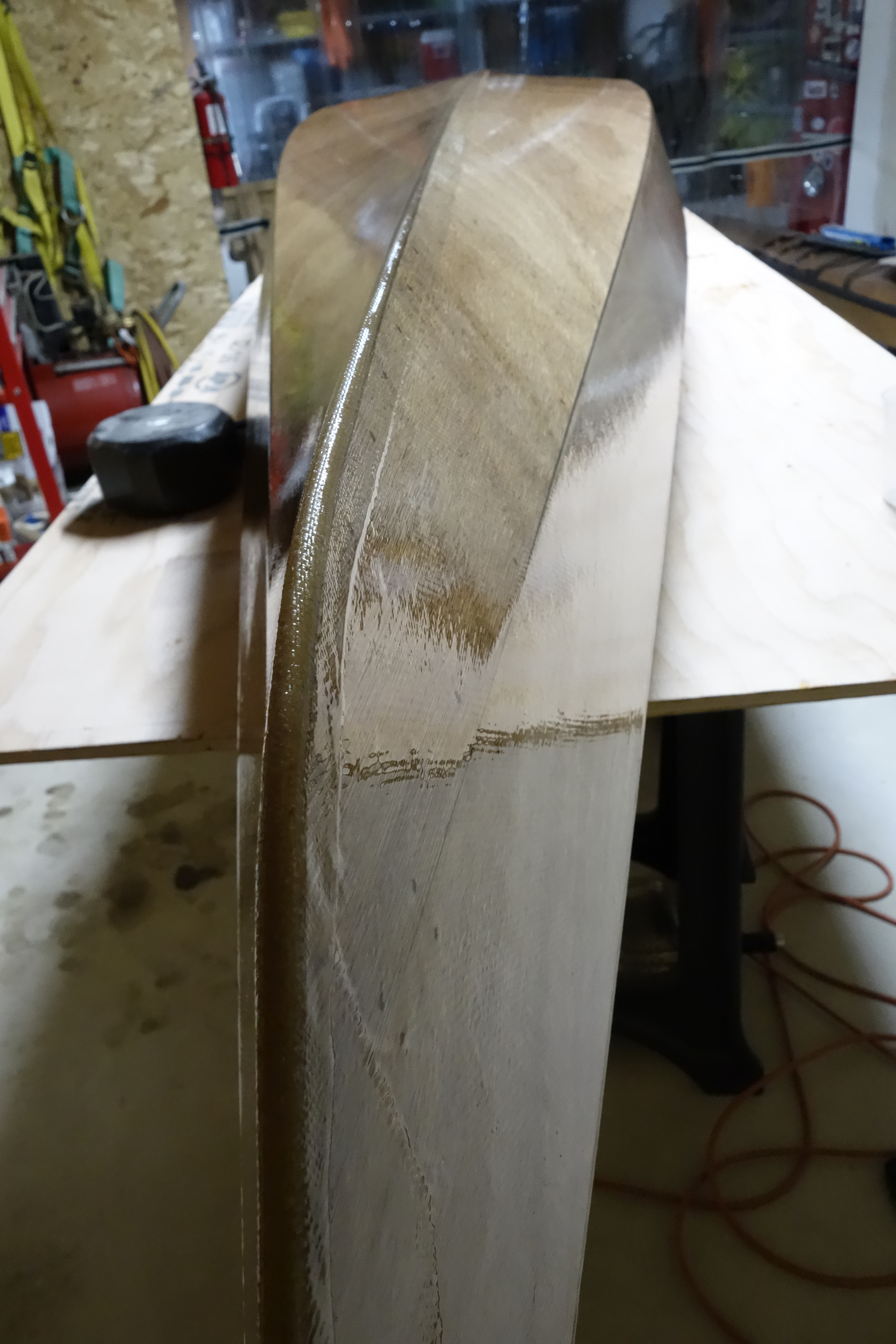
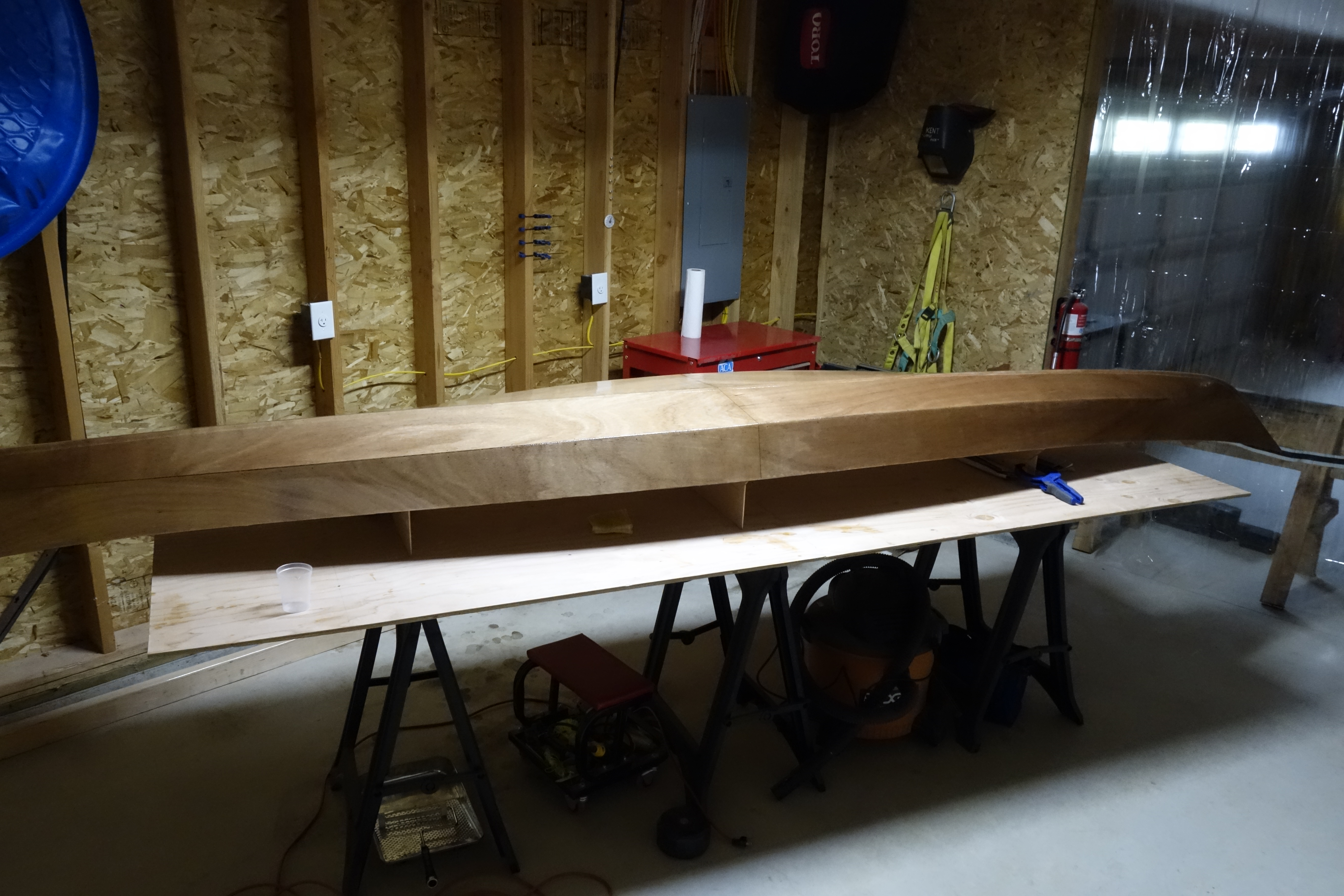
The hull will get three fill coats of epoxy. It will also get a sacrificial strip of fiberglass tape that will run the length of the hull and most of the way up the bow and stern stems. This tape will provide protection to the keel of the kayak when beaching the boat on sandy or rocky shores. This strip will get replaced/renewed every few years when the kayak gets refinished.
Getting the sacrificial keep tape to lay down straight, and smoothly was difficult for me. I really struggled to get the air out from under the fiberglass tape and keep the edges from lifting off the keel in the bow and stern curves. I thought it would be an easy step, but not so much. It worked out ok though.The sacrificial keep strip will be feathered in by sanding and with each fill coat of epoxy will become smother and less noticeable.Here the keel tape has been feathered in, and the hull has a couple of fill coats. I am sanding between coats with 220 grit sandpaper using a Bosch random orbital sander.This photo must be out of order as it is clear that I haven’t yet sanded smooth the fiberglass overlap or the keel tape.











 Lagom
Lagom 