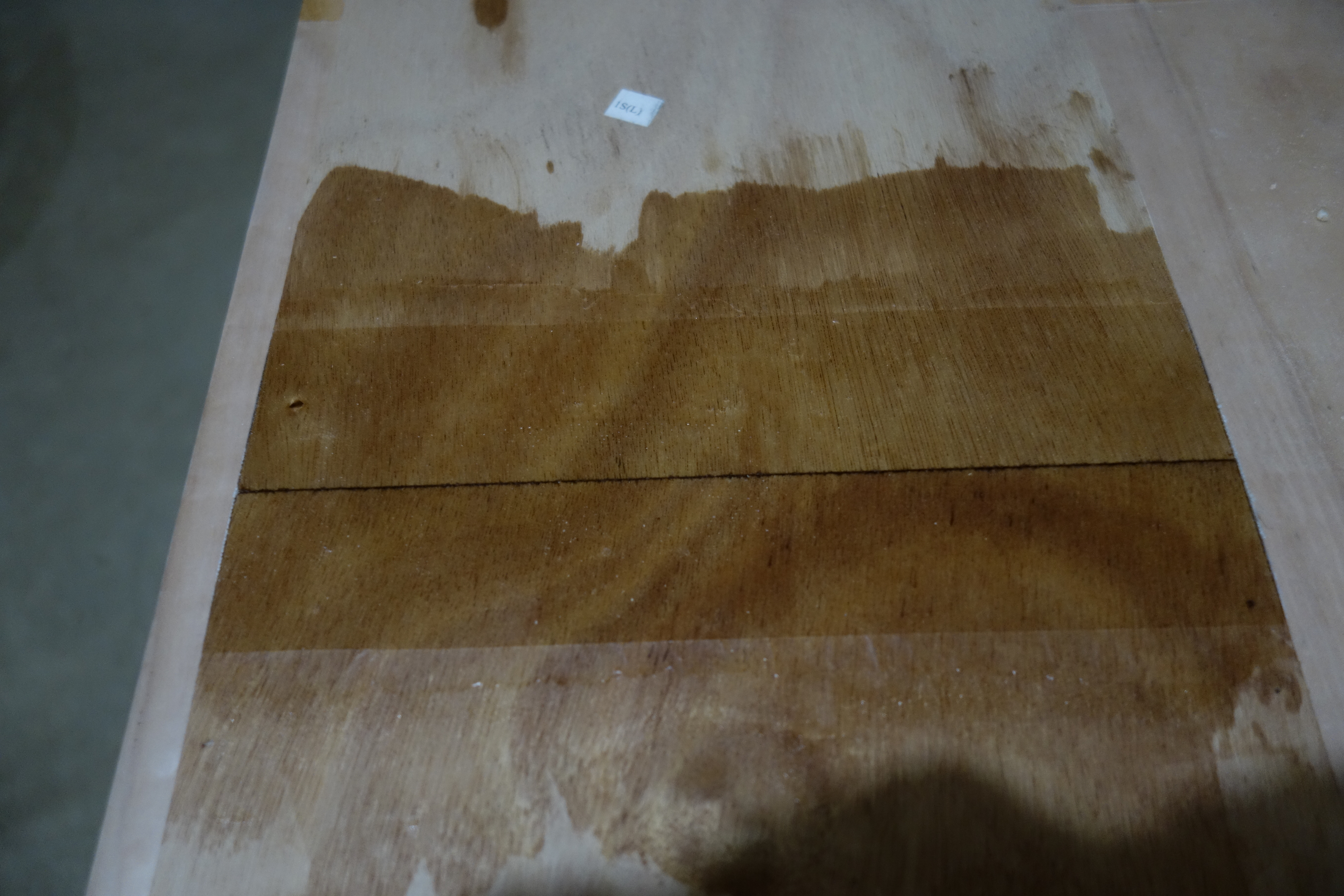
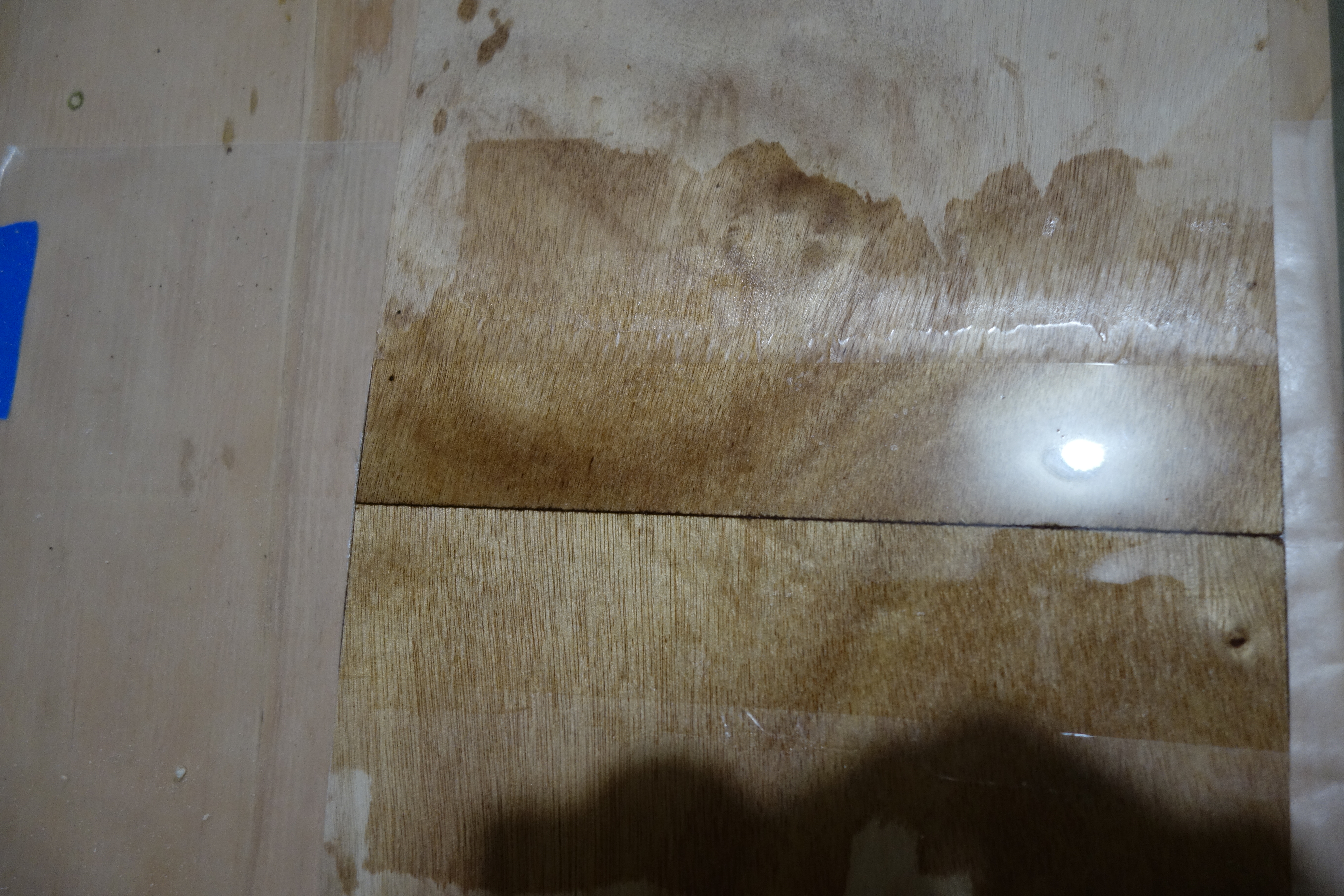
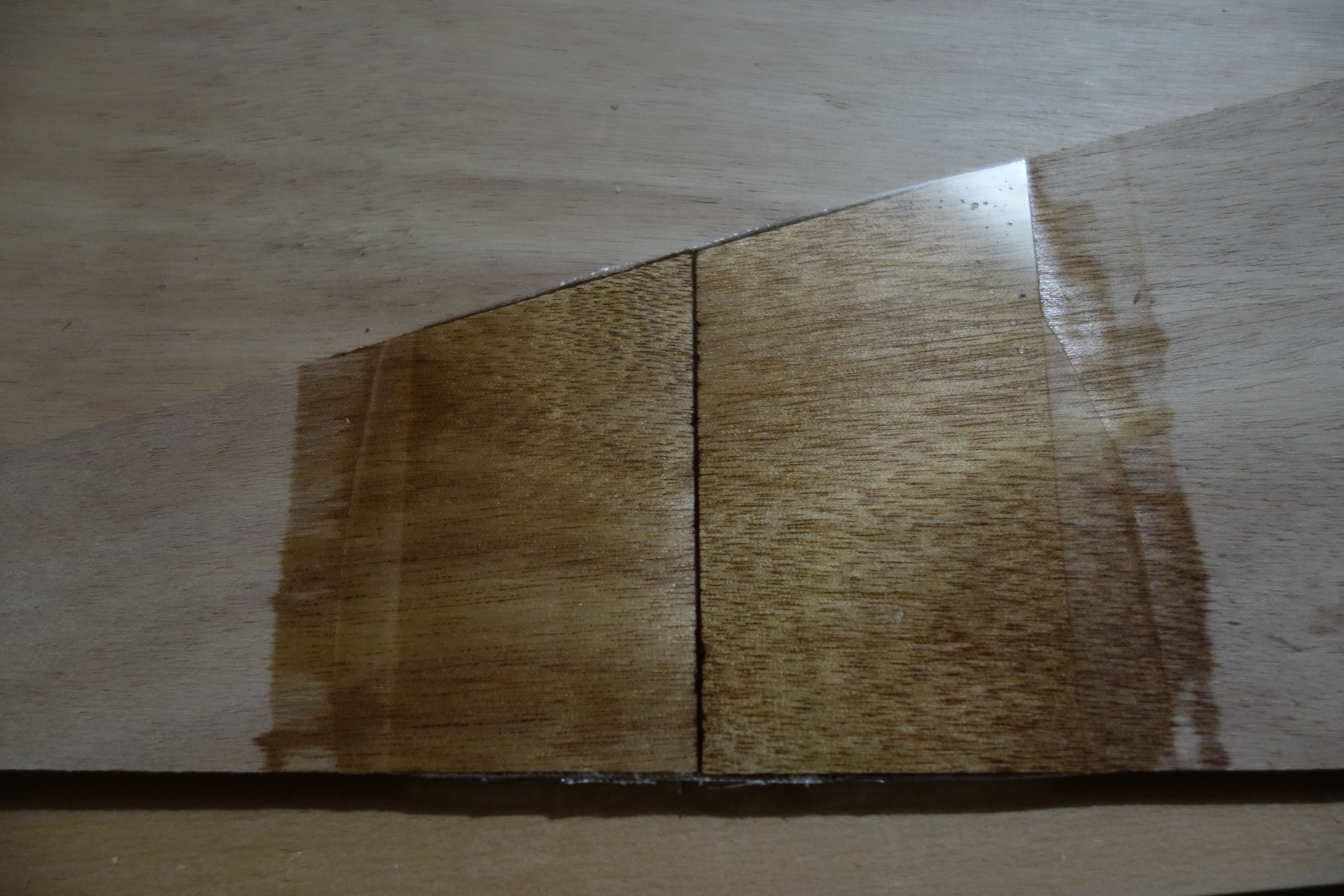
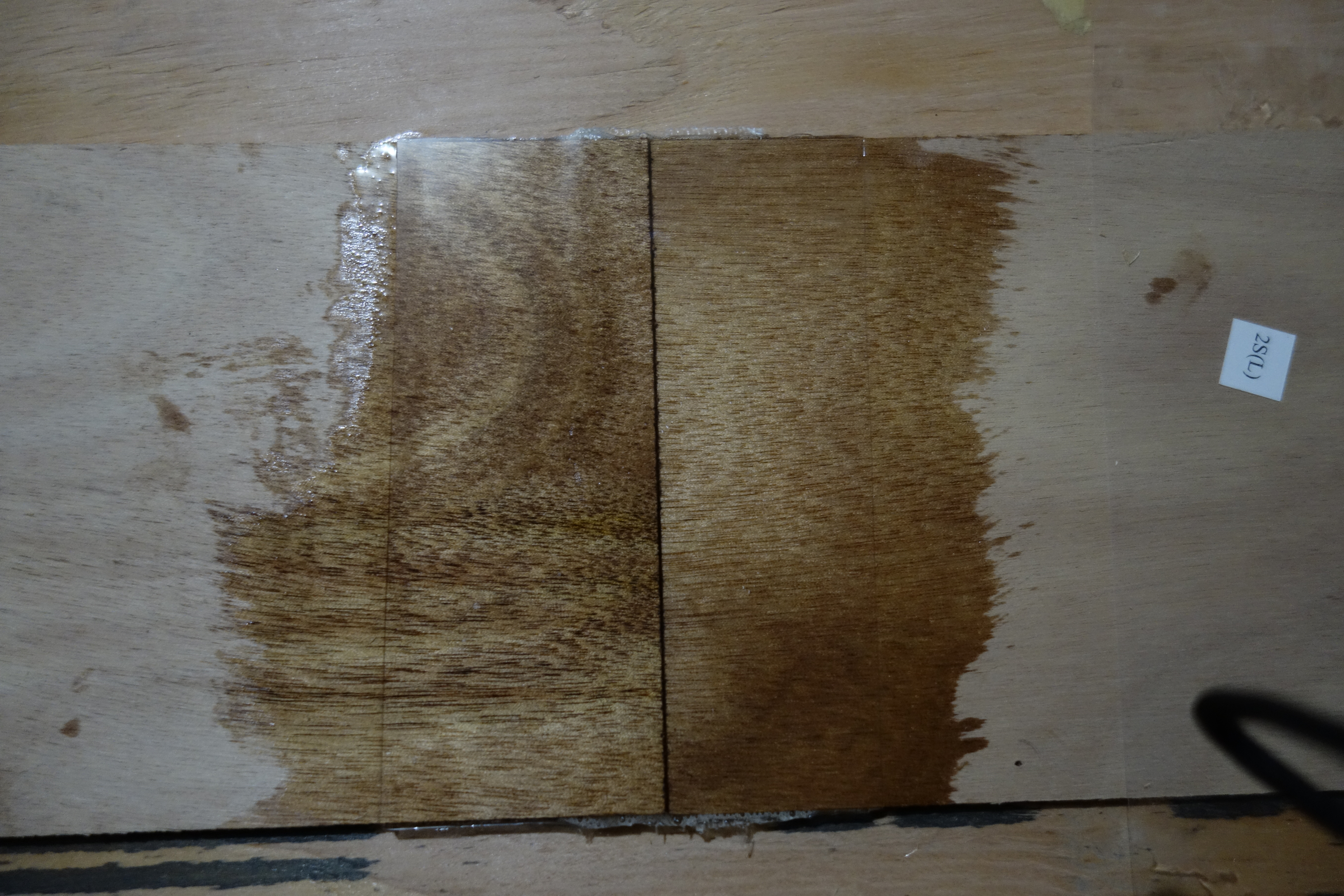
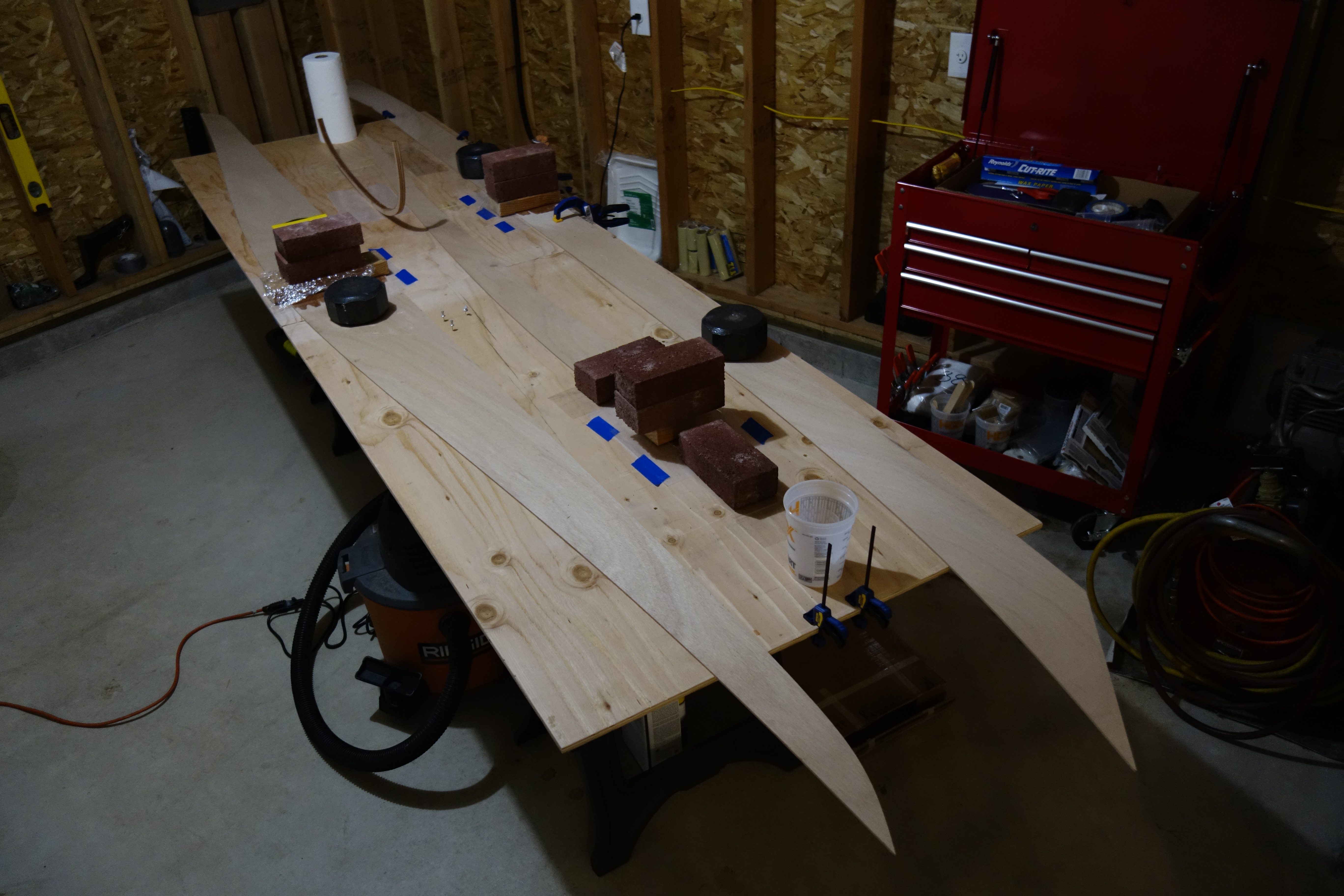
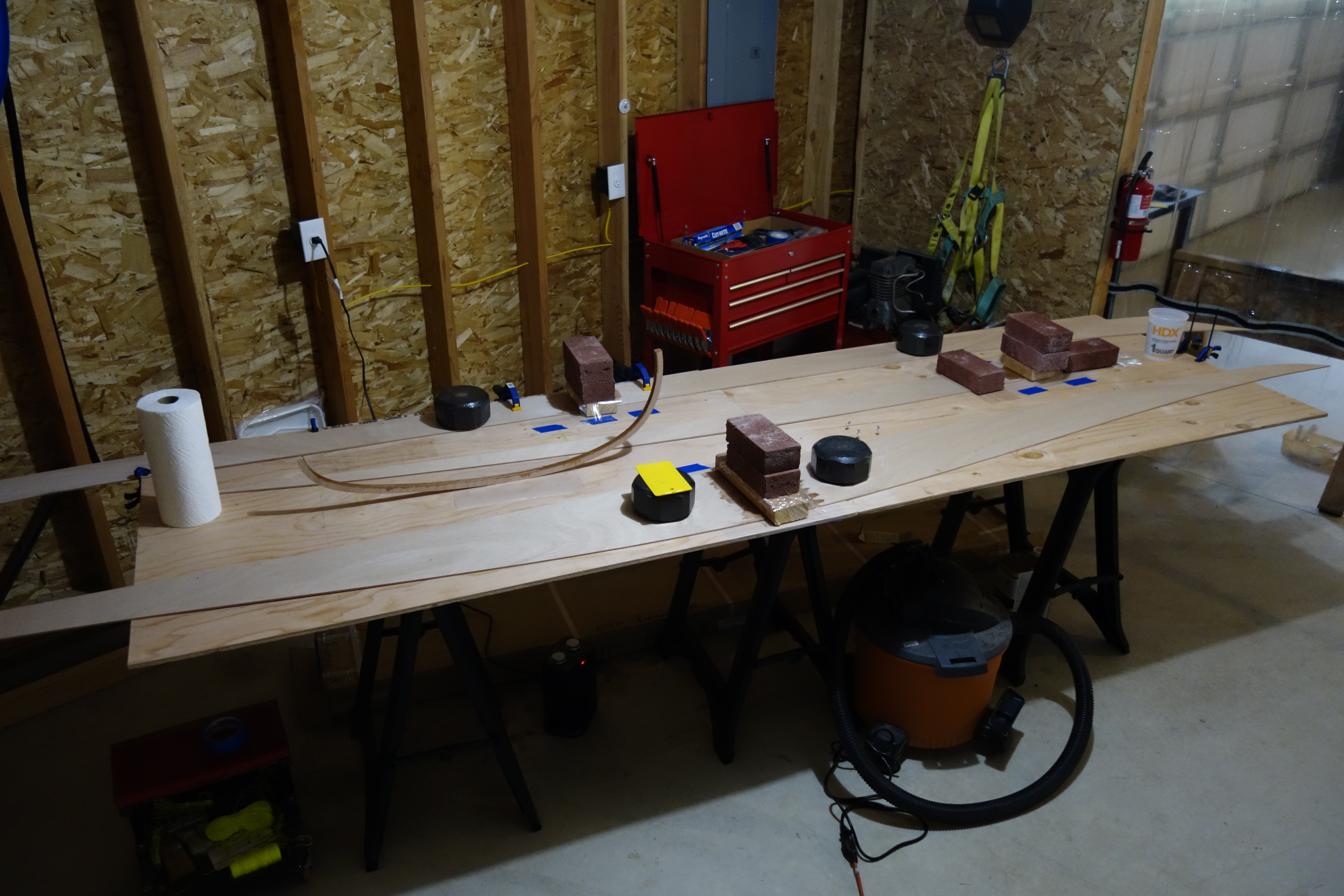
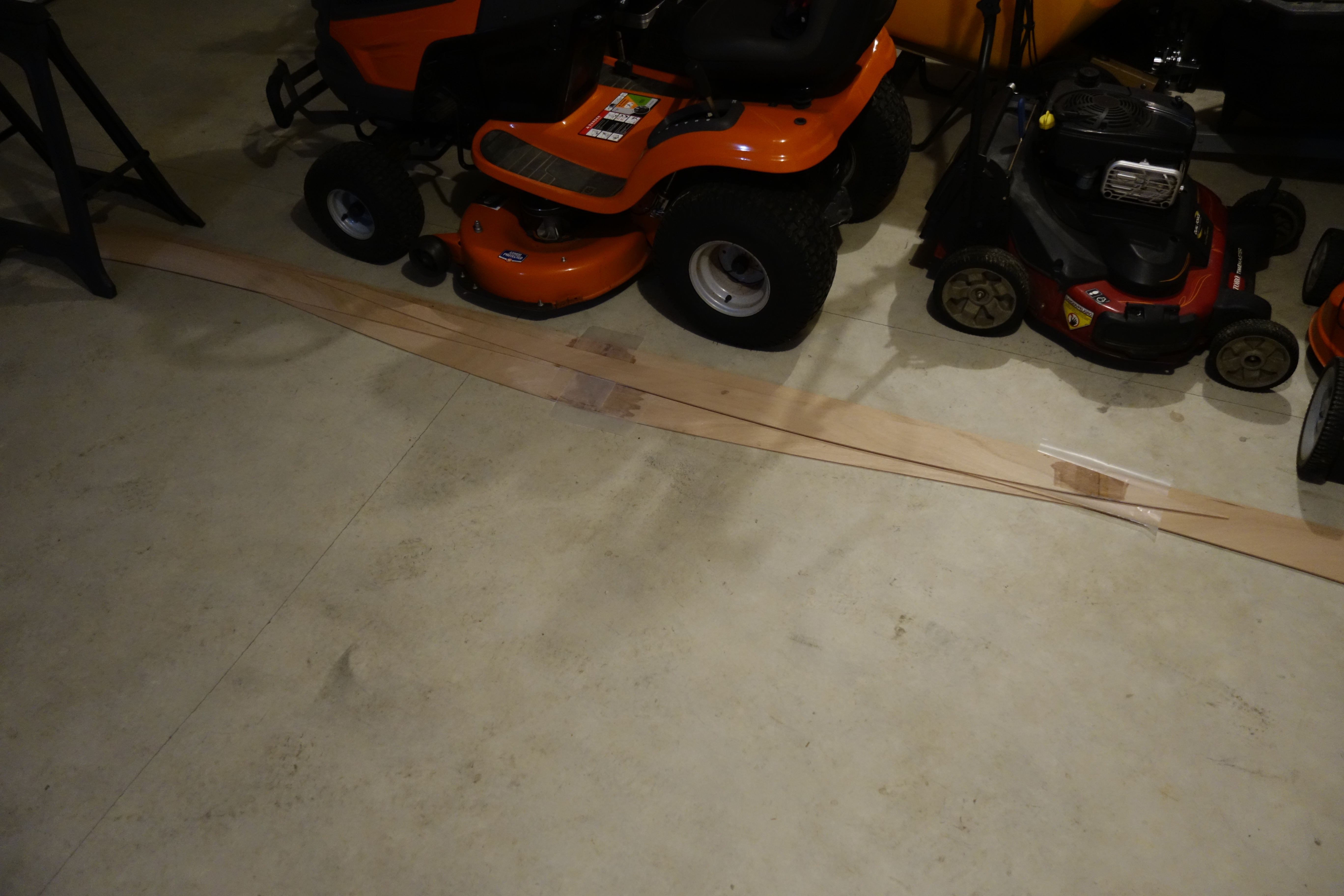
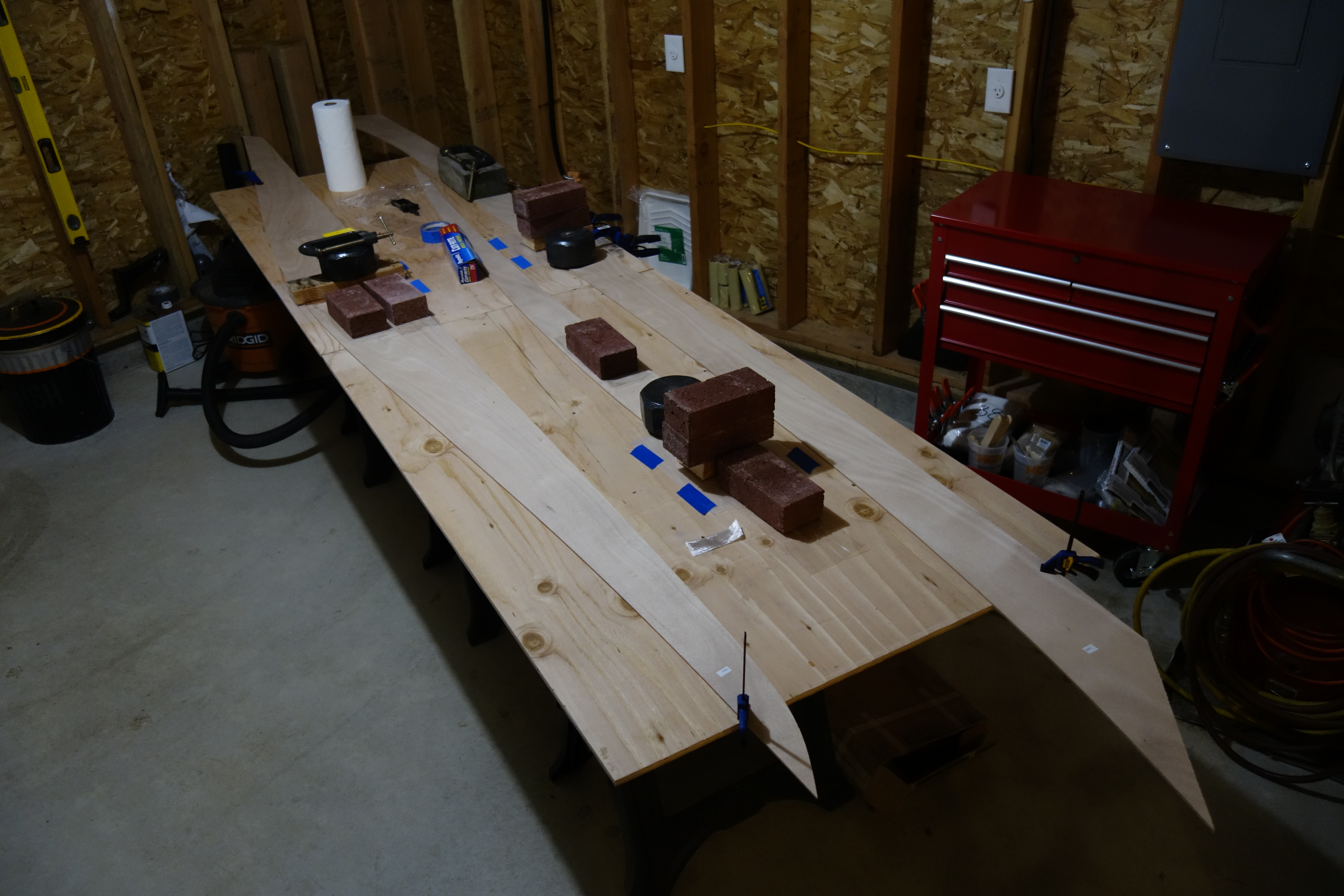
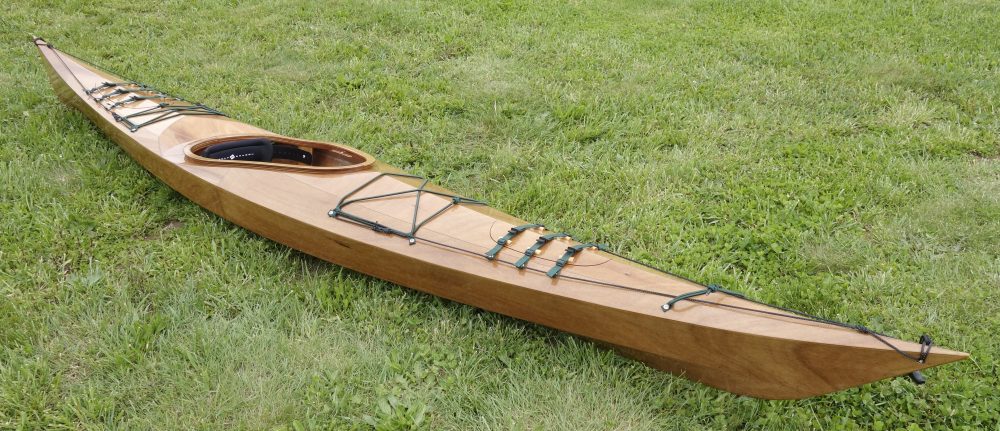

These are the starboard side panels (if memory serves). I used the left over epoxy to fill the open grain on the cockpit coaming pieces.


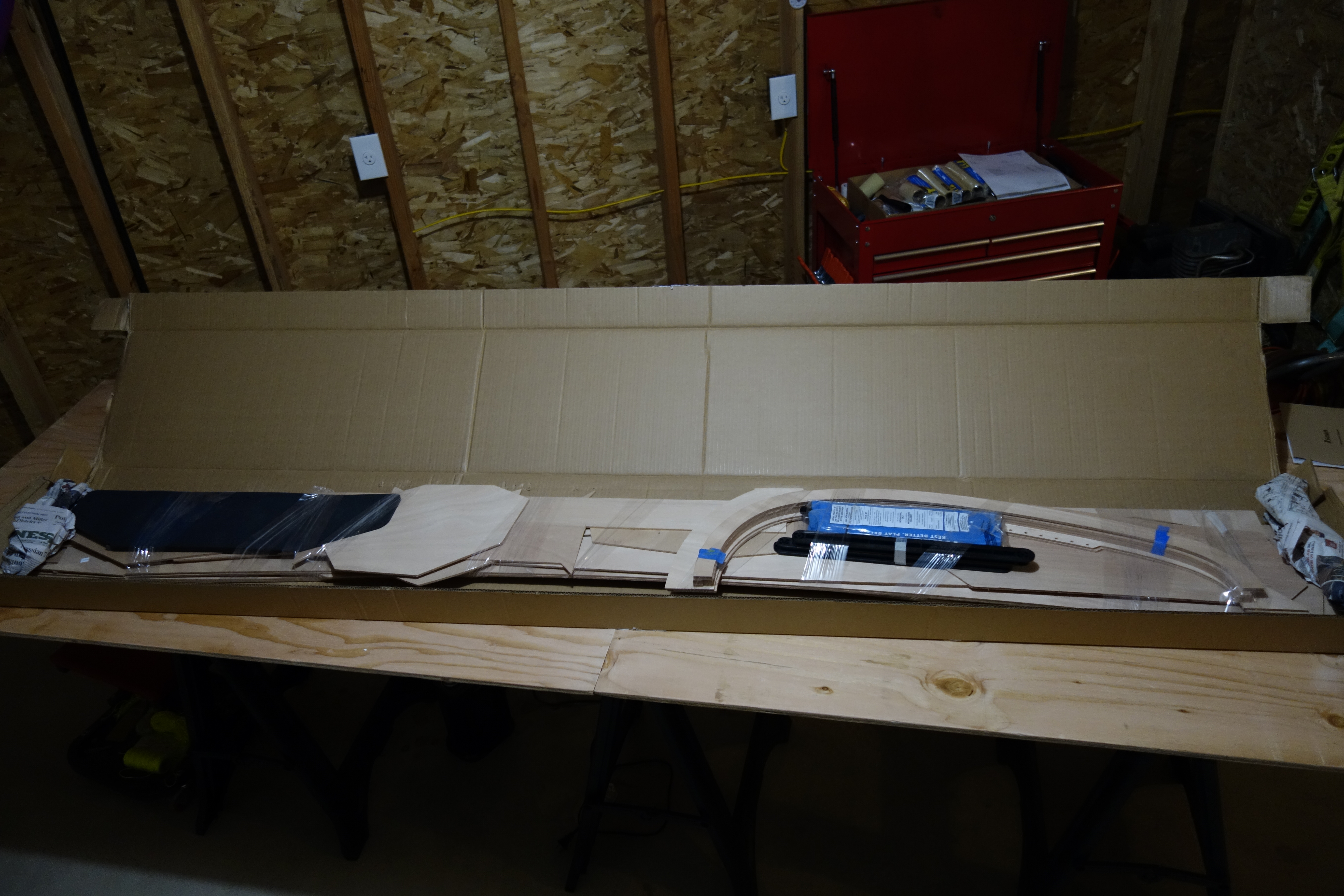
Hull panels out of the box and laid out, ready to be glued to their full lengths. You can see the deck panels still in the box on the floor. I will actually glue all of the panels for one side of the kayak at at time. I just had the hull panels for both sides on the table to look at the grain and kind-of get the “lay of the land.”
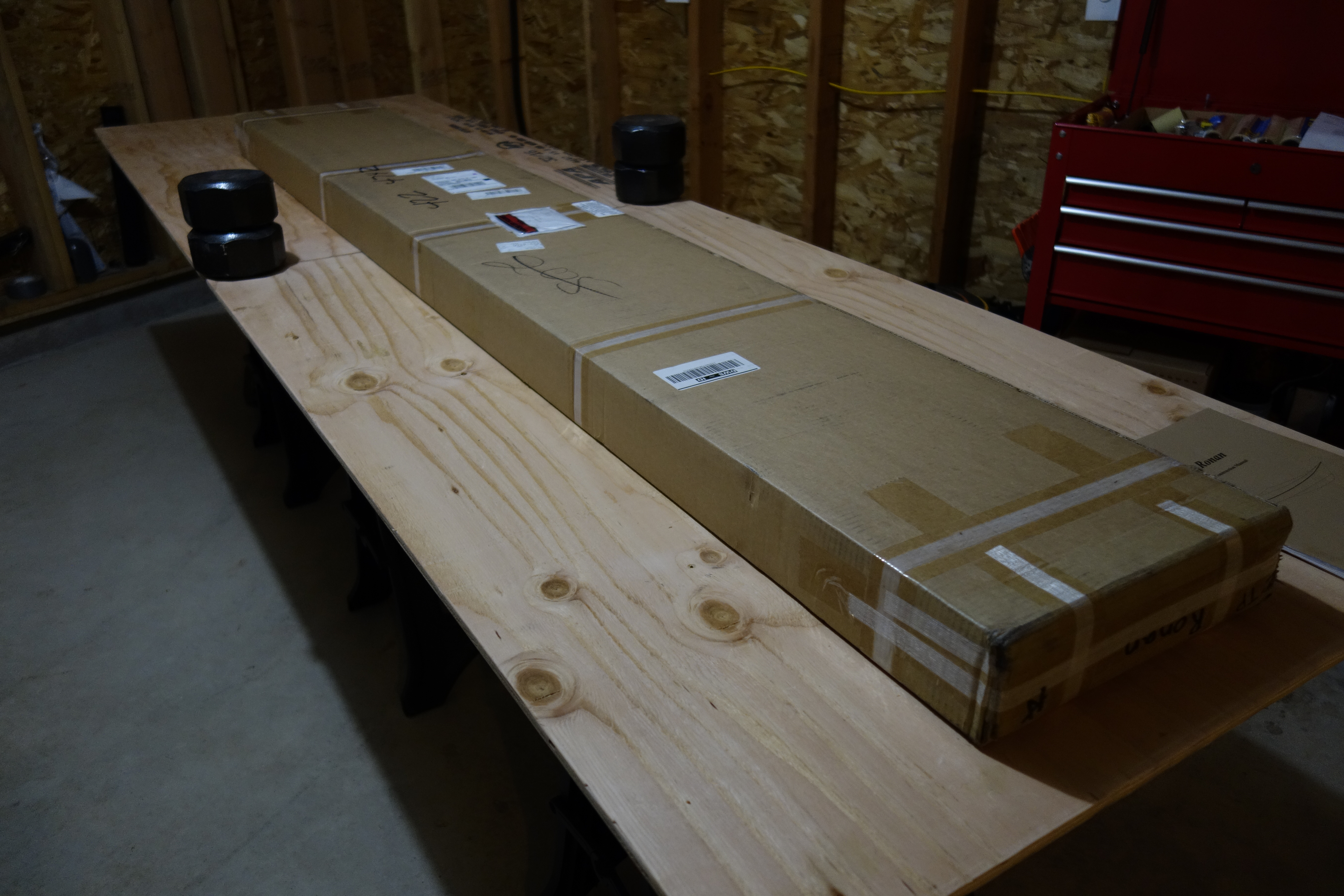
This is it. Kayak in a box. There is another box that has the epoxy, fiberglass, deck rigging, hatch and bulkhead kit, etc. in it.


I built a dust barrier out of scrap wood, shower curtain liners, and gaffer’s tape. I hope it will help to hold heat in the shop side of the garage and keep the sanding dust somewhat isolated.

I built a platform out of saw horses, 2 X 12s, and a couple of sheets of plywood, and made sure that it was flat and level.
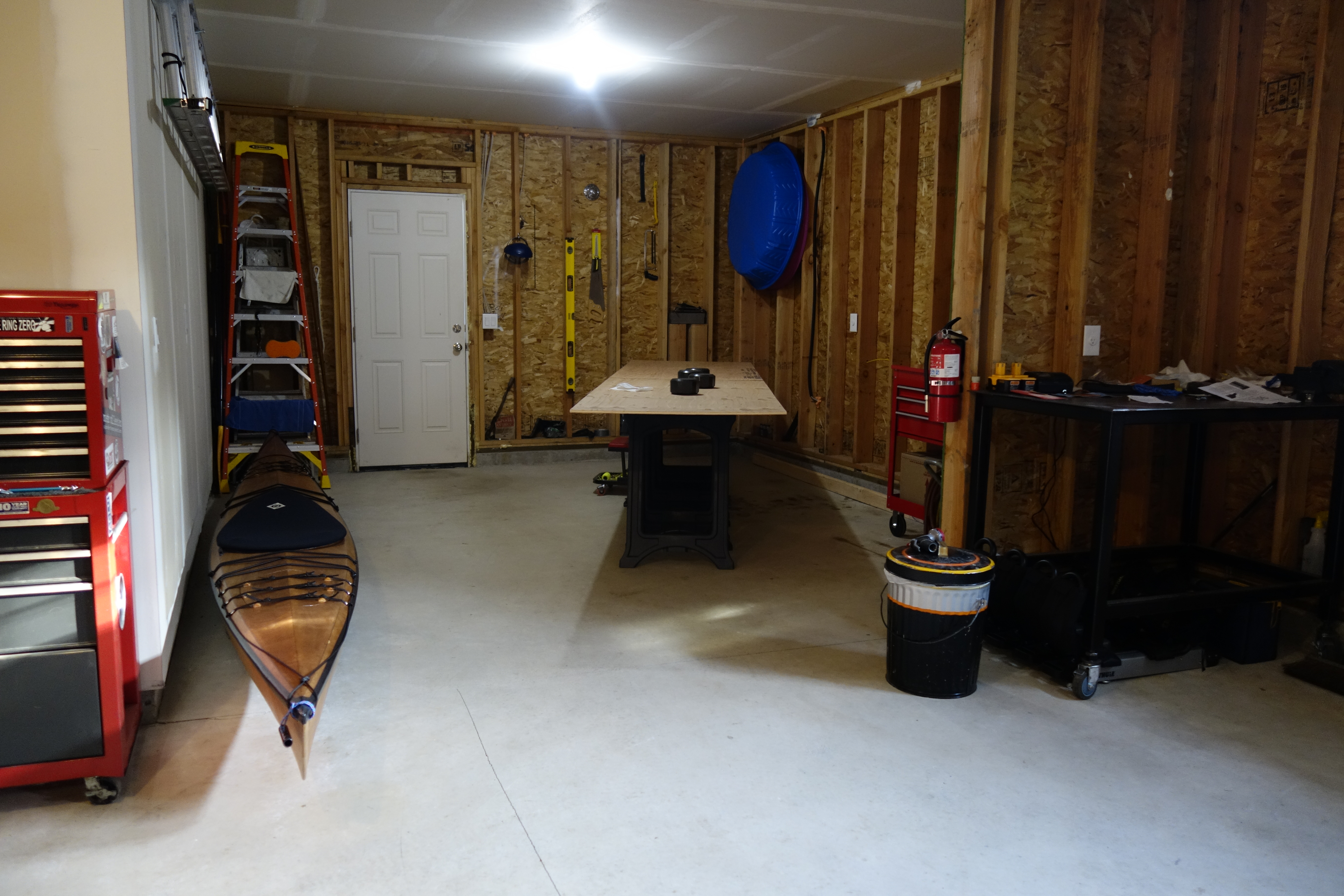
The kayak you see on the floor is a Pygmy, Arctic Tern. I bought her used at Portland Kayak Company and I loved her from the minute I first paddled her. There were two drawbacks for me with this kayak: One was that this Arctic Tern is a 17 foot touring kayak, built to haul a person and everything else including the kitchen sink. I really wanted a smaller “play” boat. And two, she was built by someone else. They did a fine job, but I saw things right away that I knew I would do differently (to put it as tactfully as I can). Also, every time I took her out on the water people would tell me what a beautiful kayak she is, and ask me if I built her, and it stung a little to have to tell them that I hadn’t. I knew after my first paddle that I was going to have to build my own or I’d never be able to look myself in the mirror.
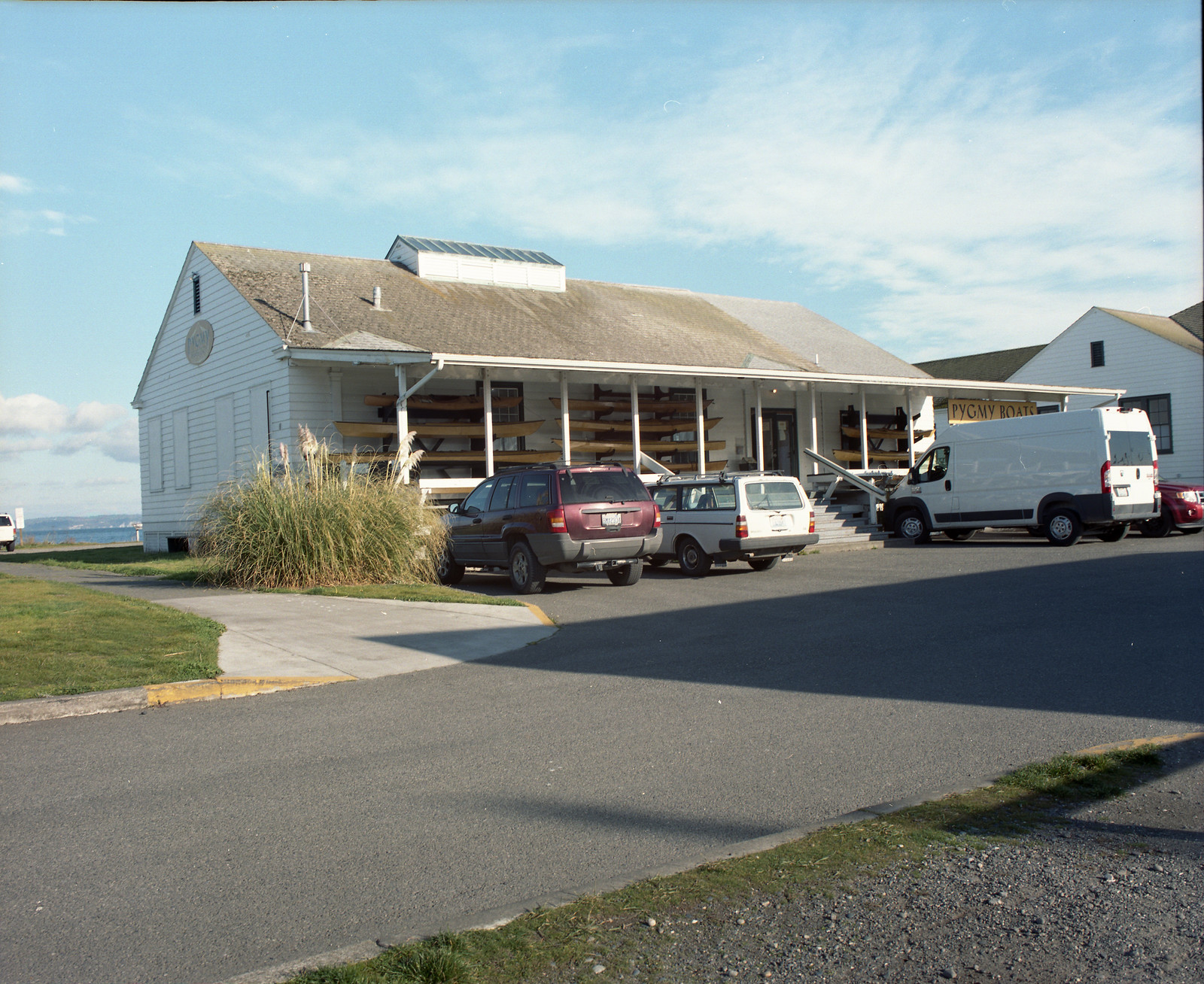
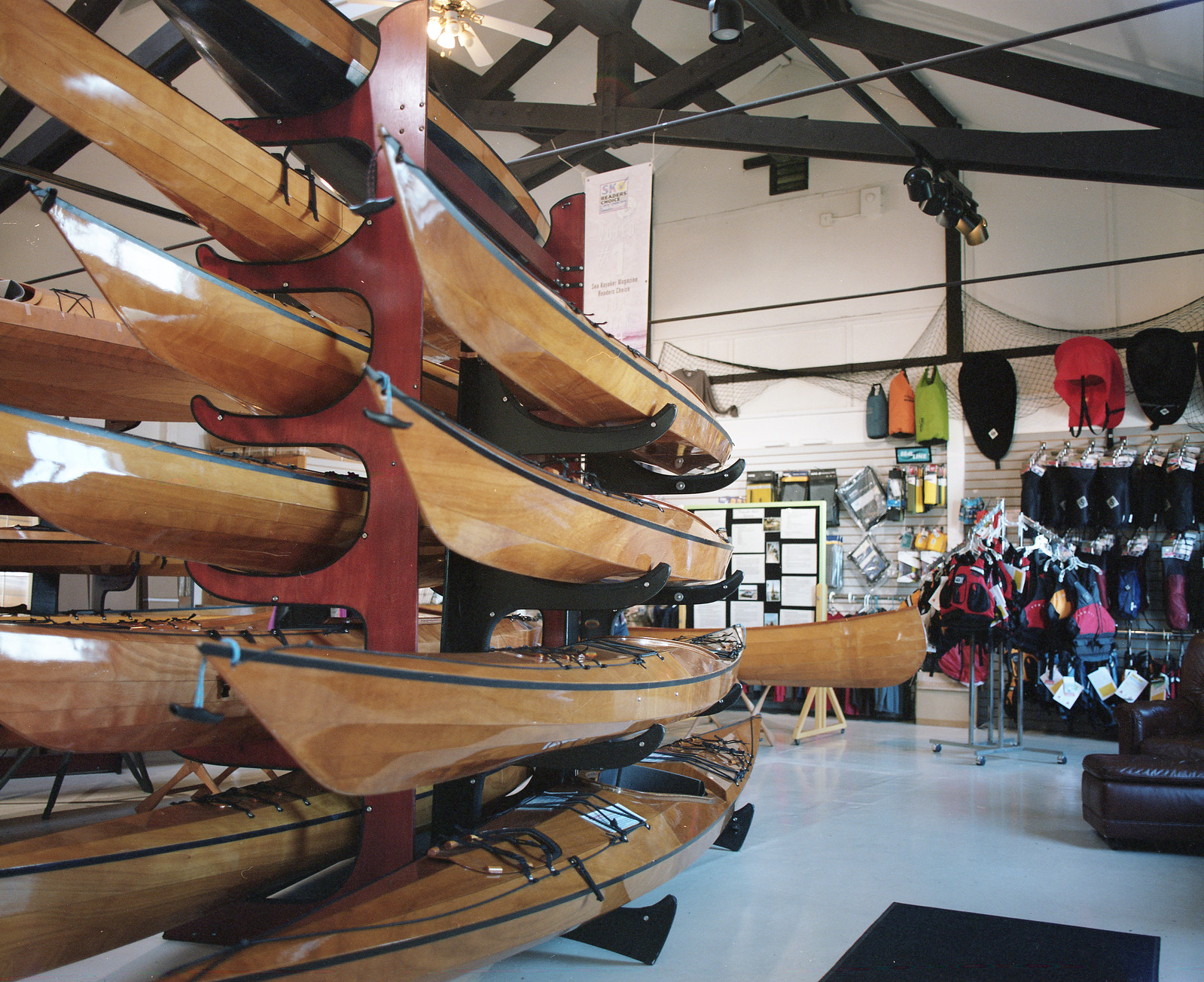
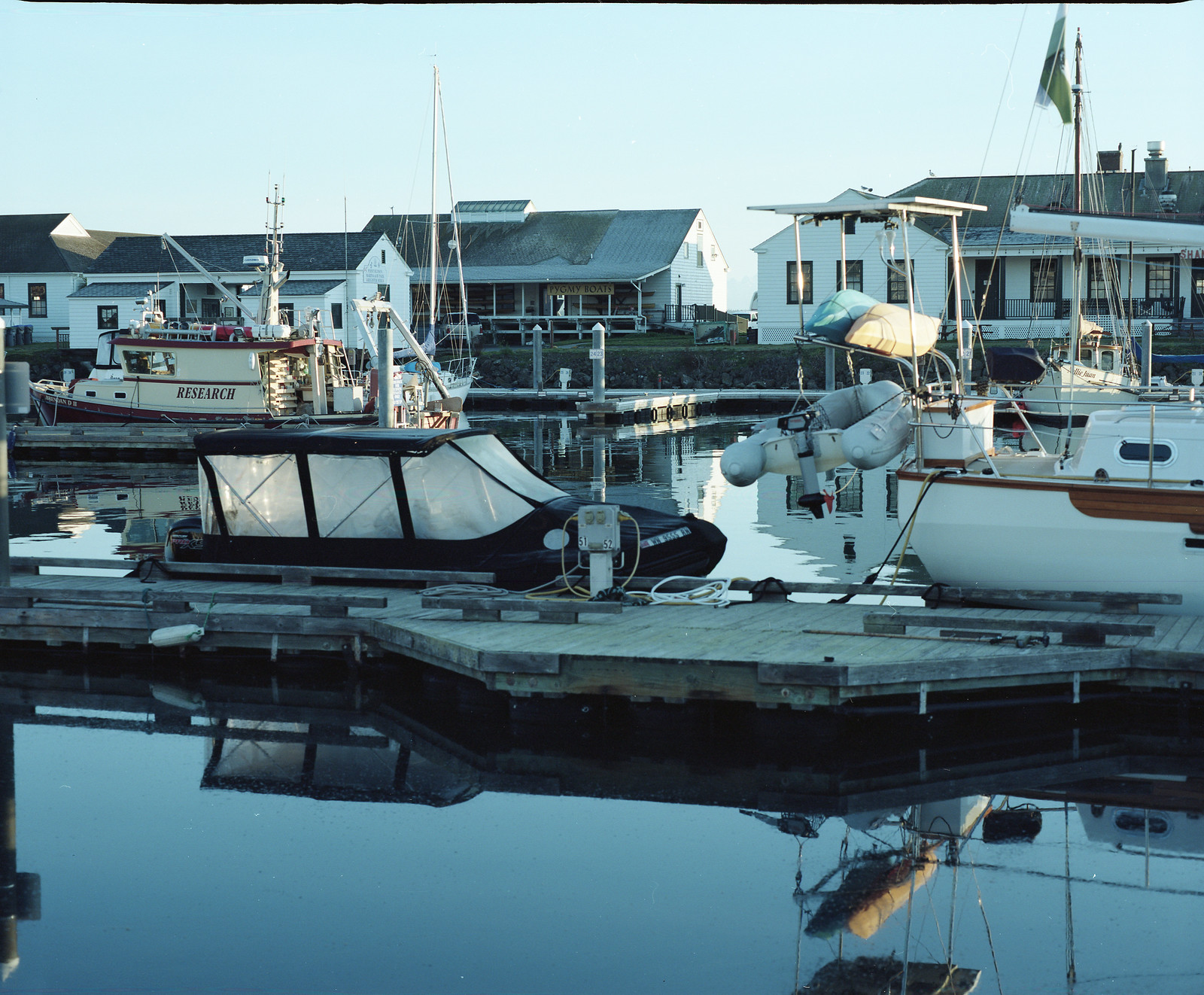
This week my wife and I drove to Port Townsend, Washington, the home of Pygmy Boats. We were there to decide if the original Pygmy Ronan would fit me, and if so, to buy the kit. So started my kayak building adventure.

 Lagom
Lagom 